- WEF dialogue underscores sustainability as a decisive lever for competitiveness and resilience
- Industry and policymakers align on green growth and manufacturing leadership
- Anupam Rasayan outlines roadmap to 100% renewable energy and net-zero ambitions
NE ECONOMIC BUREAU
DAVOS, JAN 24
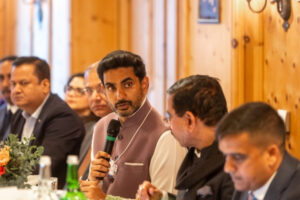
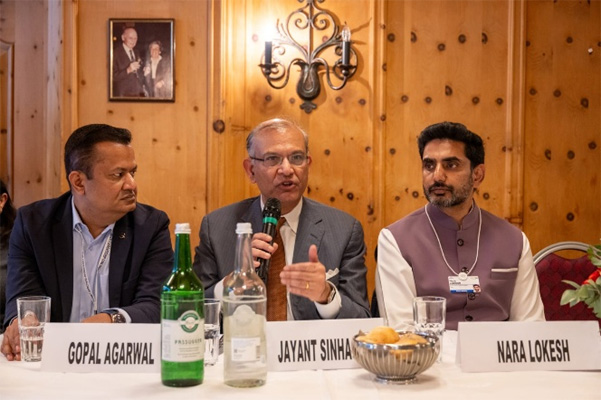
Global business and policy leaders gathered at the World Economic Forum (WEF) in Davos for a high-level exchange on the future of enterprise, competitiveness, and sustainability. Gopal Agrawal, CEO of Anupam Rasayan India Limited—one of India’s leading custom synthesis and specialty chemical companies—participated in an exclusive lunch dialogue hosted by the Confederation of Indian Industry (CII), where sustainability emerged as a central strategic theme.
The discussion brought together senior policymakers and industry leaders, including Pralhad Joshi, Union Minister for New & Renewable Energy and Consumer Affairs; Harsh Sanghavi, Deputy Chief Minister of Gujarat; Lokesh Nara, Minister for IT, Government of Andhra Pradesh; and Jayant Sinha, former Union Minister of State for Finance and Civil Aviation. Conversations focused on how sustainability is increasingly shaping global competitiveness, supply chain resilience, and long-term economic growth.
Speaking at the interaction, Agrawal underlined how sustainability has evolved from a compliance requirement into a market differentiator. “While Anupam Rasayan has built its reputation over the last 40 years on quality and reliability, sustainability has increasingly become our ‘hook to win’ in global markets. Customers today are not only evaluating products and pricing, but also the values and long-term commitments of their partners.”
He highlighted the company’s progress on its sustainability roadmap, noting that nearly two-thirds of Anupam Rasayan’s current energy requirements are already met through green sources. The company has committed to transitioning to 100% renewable energy by 2027.
A key milestone in this journey was achieved in 2023, when Anupam Rasayan signed three Memorandums of Understanding with the Government of Gujarat for afforestation across 150 hectares in the Narmada, Tapi, and Surat districts. The initiative aims to plant over 1,66,000 trees under the state’s Green Belt Development Drive, contributing to carbon offsetting and net-zero objectives.
Placing sustainability in a broader national context, Agrawal said, “If sustainability is embedded at the state and national level, India can position itself as a preferred global manufacturing destination, driving investments, strengthening supply chains, and enabling long-term economic growth.”
Platforms such as the World Economic Forum reinforce the message that sustainability is no longer optional but a strategic imperative. The Davos dialogue highlighted the need for close collaboration between industry and policymakers to accelerate green transitions, foster innovation, and build a resilient, future-ready India.
Summing up the business case, Agrawal concluded, “Sustainability is not just good ethics; it is good business. Those who integrate it into their strategy today will lead tomorrow’s global economy.”