- Youth & Democracy Conference 2026 calls for structural reforms to bridge participation and power
- Parshottam Rupala reflects on “Youth, Rajkot, and a Life in Democratic Politics”
- MLAs from Jammu & Kashmir and Tripura spotlight generational transition and regional leadership
- Digital activism, civic education and policy reform take centre stage in Rajkot dialogue
NE EDUCATION BUREAU
RAJKOT, MAR 3
Positioning youth participation as central to democratic resilience, Marwadi University concluded its Youth & Democracy Conference 2026 with a clear message: India’s demographic advantage must translate into political representation.
Held under the theme “Bridging Participation and Power,” the two-day conference sought to move beyond symbolic discussions and develop a structural blueprint for enhancing youth engagement in formal democratic systems.
Aim of the Meet: From Protest to Policy
The primary objective of the conference was to critically analyse the severe underrepresentation of youth in legislative institutions — both in India and globally. Discussions focused on identifying institutional and systemic barriers that prevent young leaders from entering politics, examining the shift from grassroots and campus activism to formal policymaking, and proposing actionable solutions.
From digital toolkits to structural policy reforms, the meet aimed to create pathways that enable meaningful civic engagement and sustained youth leadership within democratic frameworks.
Voices from the Political Frontline
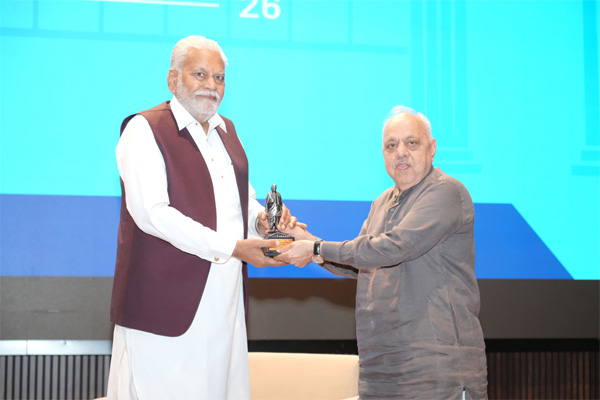
A major highlight of the second day, themed “Youth, Power and Democratic Renewal in the 21st Century,” was the keynote address by Parshottam Rupala, Member of Parliament (Lok Sabha, Rajkot). Reflecting on “Youth, Rajkot, and a Life in Democratic Politics,” he offered personal and political insights into public service and youth engagement in electoral democracy.
The event also featured a fireside chat with Devyani Rana, Member of Legislative Assembly, Jammu and Kashmir, who examined leadership in one of India’s most strategic regions and discussed generational transition, political responsibility, and youth representation in state politics.
Paul Dangshu, MLA from Tripura, highlighted the emergence of youth leadership from India’s northeastern region, underscoring the expanding geographic diversity of young political voices.
Outcome: Recognition of Barriers, Roadmap for Reform
Summing up the conference’s tangible outcomes, Jeet Marwadi, Trustee, Marwadi University, stated: “While the youth are highly active in digital spaces, campus activism, and grassroots protests, they remain systematically locked out of formal legislative bodies. This two-day event resulted in the recognition of structural barriers limiting youth participation, the need for administrative and technological reforms, the importance of local governance as a site of renewal, and the growing interconnectedness of youth politics across borders. We always aim to move beyond symbolic conversations and focus on structural reforms.”
Key themes deliberated during the conference included The Crisis of Representation and Systemic Barriers; Civic Education and Political Socialization; Marginalized Voices including Tribal Governance and Women in Politics; Digital Politics and International Activism; Global Demographics and Climate Policy Innovations; and the Future Outlook on Suffrage and Post-Protest Action.
Organised in collaboration with Konrad-Adenauer-Stiftung India and the Centre for Youth Policy, the conference brought together scholars, policymakers, administrators, student leaders and international experts to deliberate on reimagining youth participation in democratic systems.
A Democratic Blueprint for the Next Generation
As India continues to be one of the world’s youngest democracies demographically, the Rajkot conference positioned youth not merely as voters or activists, but as policymakers, legislators and architects of democratic renewal.
By identifying structural bottlenecks and advocating systemic reforms, Marwadi University’s Youth & Democracy Conference 2026 has laid the groundwork for a youth-led democratic transformation — one that seeks to convert demographic strength into institutional power.