NE BUSINESS BUREAU
NEW DELHI, JULY 16
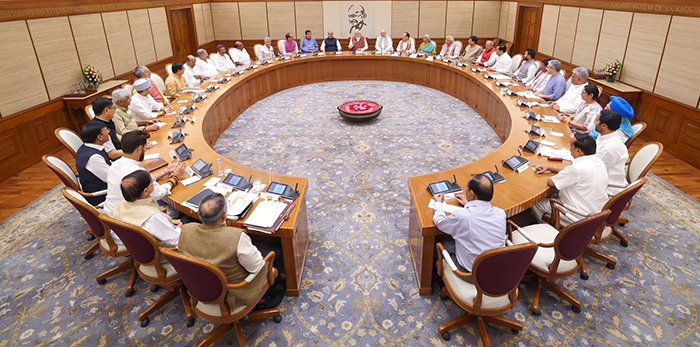
Prime Minister Narendra Modi-led Cabinet Committee on Economic Affairs (CCEA) on Wednesday gave a special exemption to NLC India Ltd from investment guidelines that govern government owned firms, which will enable NLCIL to invest Rs 7,000 crore in its green energy arm, NLC India Renewables Ltd (NIRL).
💠 #Cabinet approves enhanced delegation of power to @ntpclimited for investing in renewable energy
The green capacity of NTPC is 6 GW, currently. The resolution to enhance it to 26 GW is included in the decision and the target to reach 60 GW by 2032 has been set
💠 Cabinet… pic.twitter.com/2fCSGJfPSt
— PIB India (@PIB_India) July 16, 2025
NIRL will also be able to invest in various projects directly or through joint ventures (JVs), without seeking approvals, which are a must for all Navratna Central Public Sector Enterprises (CPSEs).
- The exemptions aim to support NLCIL’s target of developing 10.11 GW of renewable energy capacity by 2030 and taking it to 32 GW by 2047
- The cabinet also approved a Rs 20,000- crore investment by NTPC to expand its renewable energy projects across India
“This investment is further exempted from the 30 percent net worth ceiling stipulated by the Department of Public Enterprises (DPE) for overall investment by CPSEs in JVs and subsidiaries providing NLCIL and NIRL greater operational and financial flexibility,” the government said in a statement.
The exemptions aim to support NLCIL’s target of developing 10.11 GW of renewable energy capacity by 2030 and taking it to 32 GW by 2047.
At present, NLCIL operates seven renewable energy assets with a total installed capacity of 2 GW, which are either operational or close to commercial operation.
With the CCEA nod, these assets will now be transferred to NIRL. NIRL is exploring fresh opportunities in renewable energy, including participation in competitive bidding for new projects, the statement said.
The cabinet also approved a Rs 20,000- crore investment by NTPC to expand its renewable energy projects across India.
The approval aligns with India’s commitments made during COP26 for transition toward a low-carbon economy and achieve sustainable development.
The country has pledged to build 500 GW of non-fossil fuel energy capacity by 2030, as part of the “Panchamrit” goals and its long-term commitment to achieve net zero emissions by 2070.
On July 14, India crossed another milestone, with 50 percent of its total installed electricity capacity coming from non-fossil fuel sources, reaching the target five years earlier than planned under its Paris Agreement commitments.