NE DEFENCE BUREAU
CHENNAI, AUG 30
What happens when the stories etched into a war memorial stop being silent—and begin to speak to an entire generation? Can a monument to fallen heroes become a classroom without walls, where children discover not merely how India fought its wars, but why courage, duty and sacrifice continue to matter?
Chennai’s Victory War Memorial is beginning to answer those questions.
- Indian Army opens a new public-outreach chapter with immersive light & sound show at Chennai’s Victory War Memorial
- Tamil subtitles take stories of valour and sacrifice closer to families, students and the youth
- Saturday shows to turn military history into an experience, not just a memory
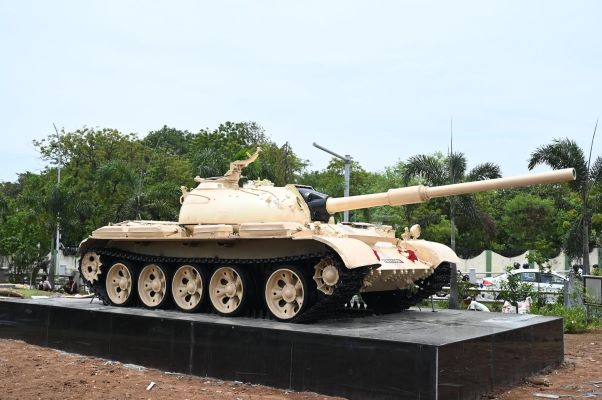
- From T-55 tank to naval legacy: Military artefacts add a tangible dimension to Chennai’s waterfront memorial
- Initiative seeks to bridge the distance between soldier and citizen, while inspiring young indians towards service
- Headquarters Dakshin Bharat Area’s outreach drive puts remembrance, education, patriotism and nation-building on one platform
In a significant new public-outreach initiative aimed at bringing the Armed Forces closer to society, Headquarters Dakshin Bharat Area of the Indian Army has introduced a specially curated Light and Sound Show with Tamil subtitles, transforming the iconic waterfront memorial into an immersive gateway to India’s military history.
The inaugural public presentation was held on August 29, 2026, and following the encouraging response, the show will now be presented every Saturday for the public.
The initiative goes beyond a conventional audiovisual programme. It seeks to make the country’s military heritage accessible to a much wider audience—families, schoolchildren, NCC cadets, tourists, veterans and ordinary citizens—while creating a deeper emotional and cultural connection between the people of Tamil Nadu and the Armed Forces.
When history speaks in the language of the people
The decision to incorporate Tamil subtitles gives the initiative an especially strong regional connect.
Through an evocative audiovisual narrative, the Light and Sound Show traces significant chapters of India’s military history, bringing alive stories of valour, sacrifice, courage and service, while linking them to the contemporary role of the Armed Forces in protecting the nation’s sovereignty, unity and integrity.
The presentation is designed not simply to recount historical events, but to make audiences experience the human stories behind them.
For visitors, the objective is clear: to move military history from the pages of textbooks and the names engraved on memorials into an experience that can be seen, heard and emotionally understood.
The enthusiastic response to the inaugural presentation, particularly from schoolchildren, NCC cadets, soldiers’ families and tourists, indicated the potential of such an approach.
The Tamil subtitles were also appreciated for making the presentation more meaningful and immersive for local audiences.
From remembrance to a living military classroom
A war memorial traditionally evokes remembrance. The new initiative seeks to add another dimension—education.
The Victory War Memorial, located on the iconic Marina waterfront near Fort St George, is being developed as a vibrant centre of remembrance, military heritage and public education.
Visitors can pay homage to fallen heroes while also gaining a tangible understanding of India’s military evolution through representative artefacts displayed within the precinct.
Among the prominent exhibits is the decommissioned T-55 main battle tank, representing an important chapter in the history of the Indian Army’s Armoured Corps.
The memorial also features replicas of iconic Indian Naval vessels INS Anjadip and INS Vikrant, creating a physical link between the country’s land, maritime and technological military heritage.
Together, the memorial and its exhibits provide a setting in which history is no longer distant or abstract.
A T-55, two warships and a story of India’s defence evolution
The military artefacts add a powerful visual dimension to the memorial’s educational purpose.
The T-55 tank offers visitors a glimpse into the evolution of armoured warfare and the role of the Indian Army’s Armoured Corps.
The naval replicas, meanwhile, introduce visitors to India’s maritime heritage and the transformation of the Indian Navy.
The replica of INS Anjadip carries an additional significance for Tamil Nadu, highlighting the State’s contribution to India’s indigenous shipbuilding and wider defence-manufacturing ecosystem.
The combination of the memorial, artefacts and Light and Sound Show creates a distinctive public space where military remembrance, technological history and civic education intersect.
For a child standing before a tank or a warship replica, military history can suddenly become something tangible; for an NCC cadet, it can become an encounter with the traditions of service; and for a family, an opportunity to understand the human cost behind the nation’s peace and security.
From soldiers’ sacrifice to citizens’ responsibility
The initiative is also designed to strengthen what the Army describes as the connection between the Armed Forces and society.
By bringing the stories of soldiers closer to citizens—particularly children and young people—the outreach programme seeks to cultivate patriotism, gratitude, responsibility and a sense of duty.
It also has a forward-looking objective: inspiring young citizens to consider a career in the Armed Forces and contribute to nation-building.
In that sense, the show does more than look backwards at battles already fought. It attempts to establish a bridge between the sacrifices of the past and the responsibilities of the future.
The larger philosophy is one of civil-military engagement—creating meaningful opportunities for citizens and service personnel to understand and interact with each other beyond formal occasions.
Every Saturday, a new generation can meet its military history
The decision to make the Light and Sound Show a regular Saturday public programme gives the initiative continuity rather than limiting it to a one-time ceremonial presentation.
It opens the possibility of making the Victory War Memorial a recurring destination for students, families, tourists and military enthusiasts seeking to understand India’s defence heritage.
The show brings together the emotional power of storytelling with the visual impact of military artefacts and the accessibility of the Tamil language.
That combination could help make the memorial particularly relevant to younger audiences who increasingly experience history through audiovisual and digital formats.
Remember the fallen. Understand the service. Inspire the future.
The transformation of the Victory War Memorial reflects the broader outreach philosophy of Headquarters Dakshin Bharat Area—to remember those who made the supreme sacrifice, honour those who continue to serve, educate today’s citizens and inspire tomorrow’s generation.
The initiative comes with a simple but powerful proposition: a nation that remembers its heroes must also ensure that succeeding generations understand what those heroes stood for.
By turning a memorial into a living space for storytelling, education and interaction, the Indian Army is seeking to narrow the distance between the citizen and the soldier.
And as the lights come on each Saturday at Chennai’s historic waterfront, the stories of India’s bravehearts will have an opportunity to do what monuments alone cannot always accomplish—speak directly to a new generation.