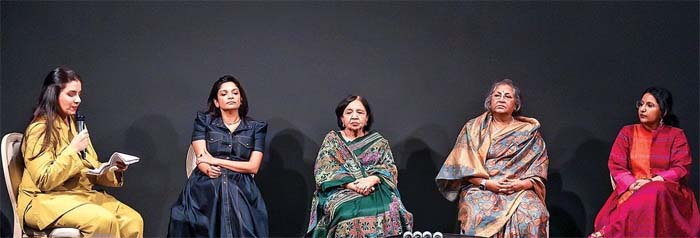
- IAF EDI+IONS brings 18 galleries and design participants to Baronet House, opening a new window for Ahmedabad’s artistic ecosystem
- Jaya Asokan says city’s art, architecture, textile and craft legacy can travel across South Asia
- Artisans, designers, institutions and patrons find a common platform as regional creative flavours take centre stage
- Sunday fair open 11 am–6 pm; IAF’s third EDI+IONS edition heads to New Delhi in February 2027
R MANICKAVASAGAM
AHMEDABAD, SEPT 19
Can a city’s artistic legacy become more than a matter of heritage? Can its artisans convert visibility into livelihoods, its design studios find new markets and its institutions build cultural bridges far beyond their immediate geography?
That is the larger conversation unfolding in Ahmedabad as the second edition of India Art Fair’s IAF EDI+IONS transforms the century-old Baronet House in Shahibaug into a vibrant meeting ground for contemporary art, design, architecture, craft and cultural exchange.
Following the encouraging debut of EDI+IONS in Hyderabad last year, the Ahmedabad edition brings together 18 participants, including five Ahmedabad-based galleries, two design participants and an institution, while extending the experience into the city’s galleries, museums and cultural spaces.
The choice of Ahmedabad itself is significant.
Why Ahmedabad?
Asked why IAF chose Ahmedabad for its second edition, Fair Director Jaya Asokan pointed to the city’s rich legacy of art, design, architecture and textiles.
The city, she noted, also possesses an ecosystem of culture enthusiasts, artisans, institutions that promote creative practices and patrons who have historically supported art and culture.
The larger objective, therefore, is to take Ahmedabad’s creative vocabulary around South Asia, connecting its distinctive traditions and contemporary practices with wider audiences.
Meha Patel, Vice Chairperson of the Zydus Foundation and an art connoisseur, captured the opportunity succinctly:
“Ahmedabad does not need an introduction to the art world; it needs a platform that allows its existing depth to speak to a wider audience.”
She said the Zydus Foundation hoped the initiative would create greater visibility, market access and meaningful opportunities for local and aspiring artists, artisans and craftspeople.
That perhaps explains why EDI+IONS is consciously moving beyond the conventional definition of an art fair.
From showcase to marketplace
The crucial question for Ahmedabad’s artisan community is whether cultural visibility can translate into economic value.
Asked whether the expo would help city artisans monetise their creations, Asokan was categorical:
“Of course, it will help them to get wider response beyond Ahmedabad.”
She also said IAF would consider taking the expo to other cities of Gujarat as and when it deems it necessary and depending on the response.
This regional approach is important at a time when India’s creative economy is increasingly being viewed not merely through galleries and museums, but through the combined strengths of craft, design, textiles, architecture, technology and entrepreneurship.
Patronising regional flavours through initiatives such as EDI+IONS can help preserve local creative vocabularies while exposing them to new consumers, collectors, designers and institutions.
For Ahmedabad, that means putting its textile traditions, craftsmanship and design sensibility into conversation with contemporary art—and potentially creating new pathways from heritage to innovation and creativity to commerce.
Ahmedabad’s creative voices take the stage
The Ahmedabad participants include 079 | Stories Art Gallery, Archer Art Gallery, Iram Modern, Samara Art Gallery and ZOCA.
The wider programme also features creative practitioners such as ceramic artist Khanjan Dalal, whose Truth is Stranger Than Fiction explores a decade of ceramic practice, and Ganesh Gohain, whose Parikrama brings together narratives associated with Gujarat, Arunachal Pradesh and Assam.
Watercolour artist Dharita Deliwala presents Anugoonj at Amdavad ni Gufa, while Ahmedabad-based design practice andblack, founded by Jwalant and Kanika, adds a strong design dimension to the regional showcase.
The institutional ecosystem is equally compelling, with programmes and cultural trails extending to Kanoria Centre for Arts, Museum of Contemporary Art Ahmedabad, Kasturbhai Lalbhai Museum, Shreyas Folk Museum and The Calico Museum of Textiles.
It is this network of artists, artisans, galleries, design studios, museums, educational institutions and patrons that gives Ahmedabad its distinctive creative character.
When a city itself becomes the exhibition
The fair remains open on Sunday, September 20, from 11 am to 6 pm at Baronet House, while parallel programmes continue across Ahmedabad, effectively turning the city into an extended cultural canvas.
Visitors can explore exhibitions, gallery walkthroughs, design presentations, artist-led activities and institutional programmes beyond the principal venue.
Jaya Asokan said the EDI+IONS format was fundamentally about bringing people together around art and culture, strengthening regional ecosystems and creating meaningful opportunities for exchange beyond IAF’s annual Delhi fair.
BMW Group India President and CEO Hardeep Singh Brar said Ahmedabad’s “rich artistic and architectural heritage, spirit of craftsmanship, and culture of innovation” provided a compelling setting for the next chapter of the initiative.
The experiment will move next to the national capital. The third edition of IAF EDI+IONS will be held at NSIC Grounds, New Delhi, from February 4 to 7, 2027.
For Ahmedabad, however, the more interesting legacy may not be measured merely by visitor numbers.
It could lie in whether a potter gets a new buyer, a textile artisan discovers a new market, a design studio finds a new patron, a gallery reaches a new collector—or whether a regional tradition once confined to a local cultural vocabulary begins speaking to a much larger audience.
The real canvas, perhaps, is not the gallery wall. It is the creative economy beyond it.