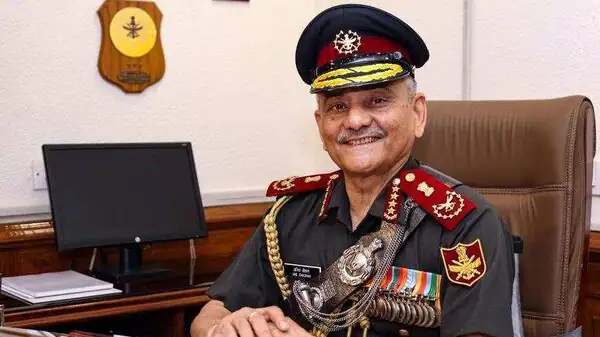
- The Chief of Defence Staff will address the Academia, Think Tanks and Researchers and speak on the topic ‘Future Wars and Warfare’
- General Anil Chauhan will hold bilateral meetings with Chiefs of Defence Forces and senior military leadership from several foreign countries
- Centre notifies key rules to ensure jointness, military discipline
NE NEWS SERVICE
NEW DELHI, MAY 29
Chief of Defence Staff General Anil Chauhan will visit Singapore from Friday, May 30, 2025 to Sunday, June 01, 2025 to attend the 22nd edition of the Shangri-La Dialogue, hosted annually by the International Institute for Strategic Studies.
During the visit, General Anil Chauhan will hold bilateral meetings with Chiefs of Defence Forces and senior military leadership from several foreign countries, including those from Australia, European Union, France, Germany, Indonesia, Japan, Netherlands, New Zealand, Philippines, Singapore, UK and USA.
The Chief of Defence Staff will address the Academia, Think Tanks and Researchers and speak on the topic ‘Future Wars and Warfare’. He will also participate in the simultaneous special sessions as part of the event and address on the topic ‘Defence Innovation Solutions for Future Challenges’.
Shangri-La Dialogue is Asia’s premier defence and security summit that brings together defence ministers, military chiefs, policy makers and strategic experts across the globe. The event will witness leaders from 40 nations addressing Indo-Pacific Security challenges. The engagements will provide a platform to strengthen defence cooperation, discuss mutual security interests and enhance India’s strategic partnerships in the Indo – Pacific region.
Centre notifies key rules to ensure jointness, military discipline
Amid the renewed push for implementing theatre commands, aimed at integrating the Indian Army, Navy, and Air Force under unified, joint command structures for specific geographical or functional areas, the rules formulated under the Inter-Services Organisations (Command, Control and Discipline) Act 2023 have come into effect from Tuesday.
The rules, which will boost effective command, control, and efficient functioning of Inter-Services Organisations (ISOs) and strengthen jointness among India’s armed forces, have been notified through a gazette notification. ISOs are designed to foster jointness, operational synergy, and efficient command structures across the country’s armed forces.
The Act empowers the Commanders-in-Chief and Officers-in-Command of the ISOs to exercise command and control over the service personnel serving under them, ensuring effective maintenance of discipline and administration within the organisations. This has been done without changing the unique service conditions applicable to different branches of the armed forces.
These rules will play a major role in the functioning of the ISOs and establish a comprehensive framework for discipline, administrative control, and operational synergy of the armed forces. The Act replaced the provisions contained in the specific service acts—Army Act 1950, Navy Act 1957 and Air Force Act 1950—in the ISOs.
The newly notified subordinate rules, framed under Section 11 of the Act, are intended to facilitate the effective implementation of the provisions laid down in the legislation, the defence ministry said.
“With the notification of these rules, the Act is now fully operational. This will empower the heads of the ISOs, enable the expeditious disposal of disciplinary cases, and help avoid the duplication of proceedings,” the ministry added.
The bill was passed in Parliament during the 2023 Monsoon Session and received the President’s assent on August 15, 2023. According to the defence ministry, the Act came into force with effect from May 10, 2024, as per the gazette notification dated May 8, 2024. Following this, the ISOs were notified in December.
This bill was among the prerequisites for the operationalisation of the ‘theaterisation’ process. Defence Minister Rajnath Singh, while initiating the bill in Parliament, had said it was “necessary to strengthen the armed forces in view of the global security scenario.”