NE INFRASTRUCTURE BUREAU
CHENNAI, JULY 31
Chennai’s real estate map is stretching—but the real transformation is happening inside the homebuyer’s mind. The city’s outward march is no longer driven merely by cheaper land or the search for a distant address. Increasingly, buyers are trading location prestige for better homes, lifestyle amenities, workplace convenience, flexibility and quality of life—putting Chennai’s peripheral corridors at the centre of the next housing wave.
- From Mylapore and West Mambalam’s old ‘periphery’ to today’s expanding suburbs, Chennai’s homebuyers are chasing quality of life beyond traditional city limits
- Navin Kumar, Managing Director, Navin’s, says younger buyers are entering the market earlier, putting lifestyle, convenience and workplace proximity alongside affordability
- Flexible homes, smarter layouts and changing food and work habits are forcing developers to rethink what ‘premium living’ means
- Peripheral growth can become sustainable only when transport, drainage, master plans and resilient infrastructure move ahead of real estate expansion
- Chennai’s next growth story must balance housing aspirations with ecological preservation and execution of long-pending urban infrastructure plans
But this outward expansion raises a more fundamental question: Can Chennai build the infrastructure, mobility and ecological resilience needed to make its expanding urban footprint genuinely liveable and sustainable?
The issue came into sharp focus at The Hindu Real Estate Summit 2026, where industry leaders examined Chennai’s evolving real estate landscape, emerging growth corridors and the future of urban development.
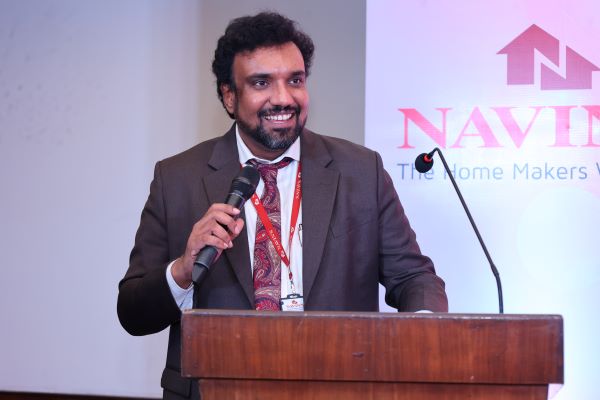
Participating in a panel discussion on “Beyond the City Limits: Why Peripheral Chennai is Becoming the New Investment Destination”, Navin Kumar, Managing Director, Navin’s, said the city’s definition of ‘periphery’ has itself changed with successive generations.
Navin's Managing Director, Navin Kumar, said cities grow through economic activity driven by skills, supporting industries, institutions, infrastructure and access to ports. Speaking at The Hindu Real Estate & Urban Infrastructure Summit 2026, for which The Federal is the Digital… pic.twitter.com/6C1VUUKFOj
— The Federal (@TheFederal_News) July 31, 2026
“Every generation has expanded Chennai’s boundaries. There was a time when even Mylapore and West Mambalam were considered the city’s periphery. As aspirations and quality of life improved, people naturally sought better amenities, thoughtfully designed homes and a superior lifestyle,” he said.
The summit was attended by B. Rajkumar, Minister for Housing and Urban Development, Government of Tamil Nadu, as chief guest.
At The Hindu Real Estate and Urban Infrastructure Summit 2026, Tamil Nadu Housing and Urban Development Minister B. Rajkumar spoke about the State’s urban growth vision, focusing on sustainable cities, affordable housing, infrastructure development and private sector… pic.twitter.com/CHqyyiws17
— The Hindu (@the_hindu) July 30, 2026
The new Chennai home: More life, less address
For today’s buyer, the traditional equation of location + price + square footage is being rewritten.
Navin Kumar pointed to a generation increasingly willing to look beyond established neighbourhoods if a home offers the amenities, flexibility and lifestyle they seek.
Younger buyers are also entering the housing market earlier than previous generations, he observed, with lifestyle, convenience and proximity to workplaces emerging as important purchase considerations alongside affordability.
That shift could have profound consequences for Chennai’s peripheral housing corridors. As employment centres, transport links, educational institutions, retail and social infrastructure spread outward, the home is increasingly being evaluated as part of a larger lifestyle ecosystem rather than merely as a property asset.
The kitchen is shrinking—and the home is expanding
Perhaps the clearest indicator of this change is happening within the four walls of the house itself.
Developers are increasingly being forced to reconsider layouts based on how people actually live, work, eat and pursue leisure.
Navin Kumar said: “We continue to experiment because home design is constantly changing. In one of our projects, we reduced the kitchen size to reflect changing food habits, while in another we introduced flexible multi-purpose room that homeowners can use as a workspace, studio or hobby room. Homes today must adapt to people’s evolving lifestyles,” he added.
The shift is significant. The pandemic-era work-from-home experiment has evolved into a broader demand for spaces that can change function through the day. A room may need to be an office today, a studio tomorrow and a hobby space at the weekend.
The emerging premium is therefore not simply about bigger houses, but more adaptable houses.
Chennai’s periphery needs more than new homes
The city’s outward expansion, however, cannot be sustained by real estate development alone.
As residential clusters move further from the traditional core, the quality of the surrounding infrastructure becomes as important as the quality of the apartment itself.
Navin Kumar stressed that sustainable urban growth depends on stronger execution of infrastructure plans and timely implementation of master plans.
The priorities, he indicated, should include long-term urban planning, stronger public transport, improved drainage and resilient infrastructure, particularly as new development pushes into areas more vulnerable to flooding and environmental stress.
This is where Chennai’s housing story meets its urban reality.
A new residential project may provide modern amenities, but its long-term liveability depends on whether residents can commute efficiently, whether roads and public transport can handle population growth, whether drainage networks can cope with extreme rainfall and whether natural ecosystems are protected from unplanned expansion.
The real test: Growth without ecological cost
Chennai’s next real estate cycle therefore presents a delicate balancing act.
Peripheral development can help ease pressure on established neighbourhoods, provide more housing choices and create new urban centres. But unchecked sprawl can also increase commuting distances, strain infrastructure, consume ecologically sensitive land and intensify the city’s existing vulnerabilities.
The challenge is to ensure that housing growth and infrastructure growth happen together, rather than allowing infrastructure to chase development after the fact.
For Chennai, the opportunity is substantial—but so is the responsibility. The emerging city must not simply become a larger city; it must become a better-planned, better-connected and climate-resilient city.
The discussion at the summit thus offered a revealing picture of Chennai’s housing future: the next generation may be prepared to move beyond the old city limits, but it will not necessarily compromise on quality of life, convenience or sustainability to do so.
And that could ultimately redefine what Chennai’s most valuable real estate asset is—not an address, but a liveable ecosystem around it.