
- Socially conscious filmmaker opens up on storytelling, spontaneity and creative instinct
- ‘Assi’ continues Sinha’s tradition of cinema driven by lived experiences and emotions
- Taapsee Pannu’s commitment and the film’s making described as a “beautiful experience”
- Director reiterates that stories find him naturally, not through deliberate provocation
NE ENTERTAINMENT BUREAU
AHMEDABAD, FEB 9
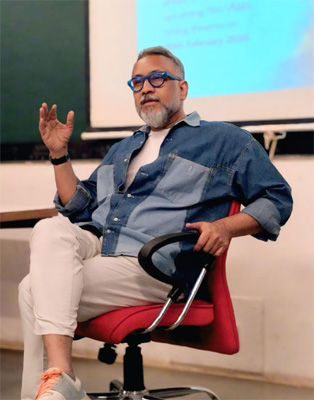
Renowned filmmaker Anubhav Sinha, celebrated for his socially reflective and thought-provoking cinema, recently interacted with the Ahmedabad media ahead of the release of his upcoming film Assi, starring Taapsee Pannu. The interaction offered a rare insight into Sinha’s creative philosophy, his evolving relationship with storytelling, and the real-life inspirations that shape his films.
Tracing his journey, Sinha recalled beginning his career with the television show Shikast in 1993 before making his feature film debut with the musical romance Tum Bin. Over the years, he explored varied genres with films such as Dus, Zeed and Ra.One, before firmly charting a path rooted in social realism and moral inquiry.
Sinha clarified that his inclination toward sensitive themes is organic rather than intentional. Speaking candidly about his creative process, he said: “But that does not mean that I look for the subject, but many times a conversation with someone or a situation leads me towards it. It often happens that if a thought stays in my mind for a long time, it becomes a story.”
Over the past decade, the filmmaker has carved a distinctive space in Indian cinema with impactful works such as Mulk, Article 15, Thappad and Bheed, films that challenge social norms while remaining deeply human at their core. With Assi, Sinha continues this trajectory, once again anchoring his narrative in real-life emotions and social truths.
Talking about the film, Sinha noted that Assi follows his long-standing tradition of addressing social issues through intimate human stories. He also praised lead actor Taapsee Pannu for her dedication and sincerity, describing the making of the film as a “very beautiful experience.”
While he acknowledged that many of his films mirror real societal concerns, Sinha reiterated that provocation is never the starting point. Instead, it is lived experience, observation and sustained reflection that guide him toward a story—allowing cinema to emerge as an honest response rather than a calculated statement.
With Assi, Anubhav Sinha once again reinforces his belief that meaningful cinema does not chase controversy—it discovers truth in everyday conversations, lingering thoughts and real lives.