- Adani named official partner for UNESCO’s World Engineering Day 2026 — a first for an Indian conglomerate
- WFEO recognition anchored in 30 GW Khavda Mega Project, the world’s largest renewable energy plant
- Sagar adani: “progress and sustainability must move forward together”
- Smart engineering, digitalization & ai-driven energy systems power the global sustainability agenda
- 15,200+ green jobs, 63.6 million tonnes CO₂ avoided — India’s climate model on the world stage
NE SCIENCE & TECHNOLOGY BUREAU
AHMEDABAD, MAR 5
In a landmark moment for Indian engineering and climate leadership, the Adani Group has been named an official partner for World Engineering Day for Sustainable Development 2026, an International Day proclaimed by UNESCO and delivered by the World Federation of Engineering Organizations.
This marks the first time an Indian organisation has been selected by WFEO to partner in recognising global engineering excellence on World Engineering Day — a milestone that positions India’s clean energy transition at the heart of the global sustainability narrative.
Khavda: The Engine Behind the Recognition
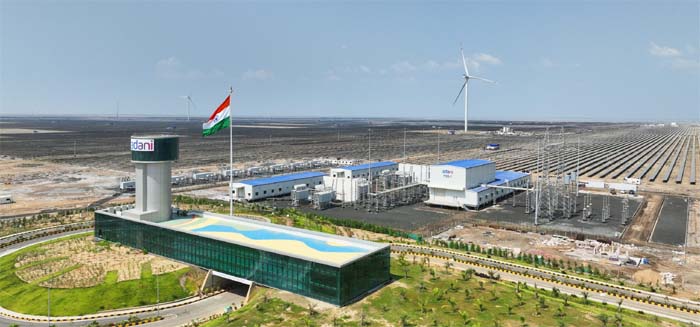
At the centre of this global endorsement is the Khavda Renewable Energy Project in Gujarat — the world’s largest renewable energy plant under development by Adani Green Energy Limited.
Spanning 538 sq km in the arid expanse of Kutch — nearly five times the size of Paris — the project is designed to deliver 30 GW of renewable capacity by 2029. Over 7 GW has already been operationalised, underscoring accelerated execution at unprecedented scale.
WFEO has highlighted Khavda as a defining example of India’s green transition under its World Engineering Day 2026 programme and has featured a short film showcasing its ambition, engineering depth and global impact.
Sagar Adani: “India’s Contribution to the World”
Reflecting on the recognition, Sagar Adani, Executive Director, Adani Green Energy, said:
“We are demonstrating that clean energy can be large-scale yet affordable, powerful yet inclusive. This is India’s contribution to the world—a model where progress and sustainability move forward together. Our Khavda renewable energy plant stands as an emblem of India’s climate action. It reflects the collective strength of Adani Green Energy, Adani Energy Solutions and Adani New Industries working in unison to advance an integrated renewable future.”
The ultra-large-scale development is being driven by AGEL, supported by specialised portfolio companies including Adani Energy Solutions and Adani New Industries — integrating transmission, grid intelligence and next-generation clean technologies into one cohesive renewable ecosystem.
Smart Engineering for a Sustainable Future
WED 2026 carries the theme: “Smart engineering for a sustainable future through innovation and digitalization.”
Adani’s engineering approach mirrors this vision through:
- India’s largest onshore wind turbine generator (5.2 MW capacity)
- Bifacial solar PV modules generating energy from both sides
- Horizontal single-axis trackers maximising solar capture
- AI and ML-enabled Energy Network Operation Centre (ENOC) for real-time plant monitoring
- Waterless robotic cleaning systems tailored to Kutch’s water-scarce terrain
Impact at Global Scale
Once completed, the 30 GW Khavda plant is projected to:
- Create 15,200+ green jobs
- Save 1,716 million litres of water annually through robotic cleaning
- Avoid 63.6 million tonnes of CO₂ emissions
- Generate ~87.4 billion units of clean electricity annually — enough to power entire nations such as Belgium, Chile or Switzerland
- Supply electricity to 17.4 million households — comparable to homes across Poland, Canada or Spain
The emissions avoided are equivalent to carbon sequestration by 3,000 million trees or removing 13.8 million cars from roads.
ESG Beyond Energy
Beyond power generation, Adani’s sustainability strategy includes education, healthcare, women empowerment, water conservation and rural infrastructure development across surrounding villages — reinforcing ESG commitments that extend beyond megawatts to community transformation.
As India advances towards its target of 500 GW non-fossil fuel capacity by 2030, the UNESCO–WFEO recognition affirms that Indian engineering is not merely participating in the global energy transition — it is helping shape it.