
NE NEWS SERVICE
GANDHINAGAR, APRIL 26
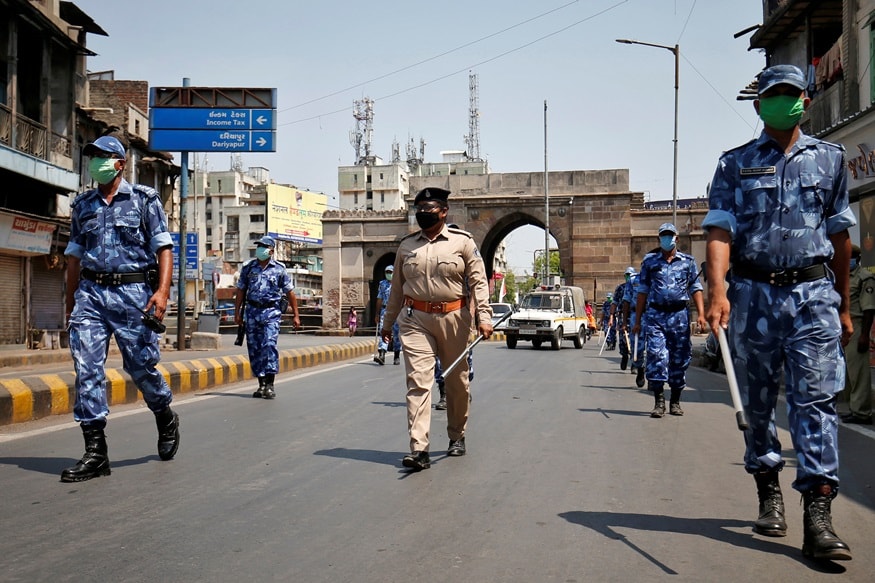
No shops apart from those dealing with essential items will be allowed to open till May 3 during the coronavirus-induced lockdown in Ahmedabad, Surat, Vadodara and Rajkot cities in Gujarat, an official said on Sunday.
પ્રવર્તમાન કોરોના વાયરસના વધતા સંદર્ભમાં અમદાવાદ, વડોદરા, સુરત અને રાજકોટ મહાનગરોના મ્યુનિસિપલ કમિશનર અને કલેકટરોએ સંયુકત રીતે નિર્ણય કર્યો છે કે આ ચારેય મહાનગરોમાં તા.3 જી મે સુધી દુકાનો – વ્યવસાયો ચાલુ કરવા દેવામાં આવશે નહિ અને બંધ રાખવામાં આવશે. #GujaratFightsCovid19
— Vijay Rupani Memorial (@vijayrupanibjp) April 26, 2020
Secretary to the Chief Minister Ashwani Kumar said, “Chief Minister Vijay Rupani, after a detailed deliberation with Municipal Commissioners of the four megacities, has decided that only services related to the provision of essential items shall be operational in Ahmedabad, Surat, Rajkot, and Vadodara. The decision comes ahead of CM’s decision to permit shops and businesses to operate from Sunday, April 26. Considering the severity of the outbreak, the state government has decided that the shops and businesses shall only resume in these four cities after May 3. The CM has clearly instructed that shops for essential items such as milk, vegetables, fruits, medicines, and related things shall remain operational.”
અમદાવાદ સિવિલ હોસ્પિટલ ખાતેની ડેઝીગ્નેટેડ કોવિડ19 હોસ્પિટલમાં સારવાર લઈ રહેલ કોરોના સંક્રમિત દર્દીઓનાં કપડાં, બ્લેન્કેટ, ચાદરો, ટોવેલ તથા મેડિકલ-પેરામેડિકલ સ્ટાફના કપડાંને જંતુમુક્ત કરવા રૂ.6 કરોડના ખર્ચે લોન્ડ્રી અને સ્ટરિલાઇઝેશનની વ્યવસ્થા ઉભી કરવામાં આવી.#GujaratFightsCovid19 pic.twitter.com/ORyPZC8JQp
— CMO Gujarat (@CMOGuj) April 26, 2020
The state government had conditionally eased some lockdown restrictions on shops, leaving aside those inside malls, etc, on Saturday following order to this effect by the Union Ministry of Home Affairs (MHA) a day earlier.
The Municipal Commissioners and District Collectors had a detailed discussion with the regional shop owners initially. Based on the discussion, the Municipal Commissioners had a detailed discussion with the Chief Minister.
We in India always knew that spitting in public places is wrong. Yet, it continued in places.
Now is the best time to ensure we do not spit.
This will increase basic hygiene and strengthen the fight against COVID-19. #MannKiBaat pic.twitter.com/8xG2ZWbEtw
— PMO India (@PMOIndia) April 26, 2020
A state government official said the decision to keep only shops dealing with essential items open was taken at a meeting on Sunday which was attended by the civic chiefs of the four cities, adding that traders and retail bodies had been consulted and they were in support.
पूरा देश शामिल है कोरोना के विरुद्ध इस युद्ध में…#Gujarat #IndiaFightsCorona #PMCaresFunds https://t.co/AuOAaJnxrJ
— Gujarat Information (@InfoGujarat) April 26, 2020
Ahmedabad Municipal Commissioner Vijay Nehra said the civic body had aimed to increase the span of COVID-19 cases doubling from the present eight days to 12 days by May 3, till when the nationwide lockdown is scheduled.
“To achieve this (12-day doubling) target, which is a little difficult, we have appealed to shopkeepers to not open shops till May 3. We have spoken to trade bodies and they have agreed. Police has also been informed. With shops open, the infection rate is likely to increase,” Nehra said.
While celebrating Ramzan the previous time, no one would have thought that there would be so many difficulties during Ramzan this time.
This time, let us pray that the world may be freed from the Coronavirus by the time of Id. pic.twitter.com/N0mMdxcCMy
— PMO India (@PMOIndia) April 26, 2020
The COVID-19 count in Ahmedabad has crossed the 2,000-mark. The state government has said that all shops, except those selling paan masala, as well as beauty parlours, saloons, spas, hotels-restaurants, will be allowed to remain open in other parts of the state if they are not located in malls and shopping complexes.
Commencing Monday, Gandhi bridge and Dadhichi bridge will also remain closed for all except the essential services, the AMC said.
However, no taxi, autorickshaw or public transport services will operate in the state till May 3, it added.
Ration distribution under PMGKY with social distancing . @CMOGuj @ijayeshradadiya @pkumarias @GujHFWDept @ahmedabad_info @nirala_kk pic.twitter.com/4TTWVVxwtI
— Ahmedabad Collector (@CollectorAhd) April 26, 2020
Providing details of additional provision of grains to 66 lakh NFSA families, Kumar said, “ A total of 15 lakh NFSA cardholders have availed 3.5 kg wheat and 1.5 kg rice. Around 5 lakh people availed food grains on the second day of distribution. Around 26,250 metric tons of wheat and 11,250 metric tons of rice have been distributed through 17,000 fair price shops.”
Sharing this beautiful ode to cops, full length song. We are thankful to all of you for appreciating our hardwork & determination. #KhakhiAnthem #KhakhiTaneSalaamChe pic.twitter.com/uam9fgs7w8
— Gujarat Police (@GujaratPolice) April 26, 2020
20,600 labourers have resumed their duties at 598 government construction sites. Around 7,500 labourers have resumed their duties at 73 private construction sites.
6 lakh 89 thousand quintals of Agri produce has been sold by farmers at the APMCs. A major portion of this includes 3,48, 042 quintals of wheat, 1,89, 567 quintals of castor, and 36,095 quintals of mustard. 1 lakh 14 thousand 541 quintals of vegetables and 13,255 quintals of fruits are available in the state.
COVID-19 વાયરસ અનુસંધાને લોકડાઉનનો ભંગ કરનાર ઇસમોને પકડી પાડતી અમદાવાદ પોલીસ. #AmdavadFightsCorona #AhmedabadPolice pic.twitter.com/dcFMaWkURI
— Ahmedabad Police અમદાવાદ પોલીસ (@AhmedabadPolice) April 26, 2020
Odisha to bring back migrant workers stranded in Gujarat
The Odisha government has decided to bring back migrant workers from the state who are stranded in Gujarat amid the nationwide lockdown over the novel coronavirus or Covid-19 pandemic.
On Sunday, Odisha Chief Minister Naveen Patnaik spoke to his Gujarat counterpart Vijay Rupani and discussed the safe passage of Odisha migrants workers stuck in the western state amid lockdown.
The decision was taken after Naveen Pattnaik, Vijay Rupani and Union Minister Dharmendra Pradhan held a meeting via video-conference on Sunday.
#NationalCadetCorps #Gujarat #Anand #4GujBn #13GujBn #2CTC #ExNCCYogdan Early morning young volunteer cadets don uniform fired by motto #UnityAndDiscipline guiding citizens2follow social distancing #MoDAgainstCorona @SpokespersonMoD@HQ_DG_NCC
@drajaykumar_ias @PIBAhmedabad pic.twitter.com/LW3bVHb4VX— PRO Defence Gujarat (@DefencePRO_Guj) April 26, 2020
It was decided that for the safe return of the Odisha migrant workers, a coordination committee comprising two senior officers, each from Odisha and Gujarat, will be formed to chalk out the details of the transport.
While most of the workers will be brought back to Odisha in buses, both the state governments will decide to bring the remaining workers through other modes of transport after a review.
The Odisha government is also in talks with the governments of Maharashtra, Madhya Pradesh, and Chhattisgarh and will request these states to exempt road tax on the busses carrying the migrant labourers from Gujarat to Odisha.
#NationalCadetCorps Day 18 #Gujarat #Valsad #20GujBn Cadets deployed 4 Q mgmt in rural areas at fair price shops to ensure social distancing under nodal officer Lt Cdr Vishal Nair #ExNCCYogdan #MoDAgainstCorona @SpokespersonMoD@HQ_DG_NCC @PIBAhmedabad @InfoGujarat @CMOGuj pic.twitter.com/gqPKnNZ7Rl
— PRO Defence Gujarat (@DefencePRO_Guj) April 25, 2020
Earlier, the Odisha government has made the registration mandatory for these migrant Odisha workers who will be kept in government quarantine for 14 days.
Recently, to ensure mandatory registration of the returnees and for effective management of COVID-19, sarpanches were empowered with powers of a collector and the law has been changed accordingly by Naveen Pattnaik
In the past few weeks, hundreds of migrant workers from parts of the country staged violent protests in Surat, demanding they be sent back to their native places. Many of them were detained by the Gujarat police and were later released.
#IndiaFightsCorona
He is Dineshkumar Nagvadia of Morbi. Even in this different time with relief he says, "in lockdown, it was very difficult to get food grains. But we have got wheat, rice and pulses from government. We are thankful for this help."@PIB_India pic.twitter.com/7xolQzDU0p— PIB in Gujarat 🇮🇳 (@PIBAhmedabad) April 26, 2020
Aggressive coronavirus strain more prevalent in Wuhan behind Gujarat’s higher death rate, say experts
The high COVID-19 mortality rate in Gujarat could be due to the dominance of the L-type strain of coronavirus, found to have been more prevalent in Wuhan in China, where the outbreak started, experts said.
The dominance of the more virulent L-type coronavirus strain as compared to the S-type one could be behind the high mortality rate in the state, which has reported 133 deaths so far. However, no research has been conducted to confirm this, they said.
#IndiaFightsCorona
In pandemic of Corona, 1000 refugees staying in Morbi from Pakistan are observing lockdown strictly. They
are also getting help from central government schemes, for which they are thanking government.@PIB_India pic.twitter.com/XtQf1JivuD— PIB in Gujarat 🇮🇳 (@PIBAhmedabad) April 26, 2020
A scientist at the state-run Gujarat Biotechnology Research Centre (GBRC) said that the novel coronavirus used for genome sequencing recently conducted by it was found to contain the L-type strain. “Analysis done by scientists abroad has shown that the
The L-type strain has been dominant where more mortality is reported among coronavirus patients. This strain was found to be more prevalent in Wuhan,” director of GBRC, C G Joshi, said. “The coronavirus sample we collected from a patient for genome sequence contained the L-type strain. This strain has a much higher virulence as compared to the S-strain,” he said.
અમદાવાદ: પ્રધાનમંત્રી ઉજવલા યોજના અંતર્ગત વિનામૂલ્યે ગેસ બોટલ વિતરણ,
મહિલા લાભાર્થીઓને ૩ મહિના ગેસ બોટલ વિતરણ,
100 થી વધુ ઉજવલા ગ્રાહકોએ ગેસ બોટલ રીફીલીંગ કરાવ્યા@CMOGuj @PMOIndia @CollectorAhd#PradhanMantriUjjwalaYojana#Gujaratcorona pic.twitter.com/8YvXYmrzoq
— DD News Gujarati (@DDNewsGujarati) April 26, 2020
“Variation in coronavirus is in terms of number and percentage of mutations. As per the analysis, the L-type strain is dominant where more mortality is reported. Scientists have earlier found that this strain has caused more deaths,” he said.
The GBRC recently succeeded in decoding the entire genome sequence of the novel coronavirus and identified its three new mutations Joshi added that the patient from whom the virus sample was collected for sequencing has fully recovered. So far, no study has been conducted here to establish which strain of coronavirus is predominant in patients here.
राज्य सरकार द्वारा राज्य के बीपीएल राशन कार्ड धारकों को 1000 रुपये की राशि सीधे उनके बैंक खाते में दी गयी है। कनुभाई अभी धोड़का तालुका के त्रासद गांव में रहते हुए खेती कर अपना गुजरान चलाते है। इन्हें भी सरकार द्वारा 1000 रुपये उनके बैंक खाते में मिले। pic.twitter.com/VLzKbffxOl
— DD News Gujarati (@DDNewsGujarati) April 26, 2020
Atul Patel, a specialist in infectious diseases, attributed the presence of the L-type strain more than the S-type one in Gujarat is behind a high mortality rate. Patel has said that a little higher presence of the L-type strain, or the original Wuhan strain, could be behind a higher death rate in the state. The state government has also attributed the high mortality among coronavirus patients in the state to co-morbidities and high-risk factors.
Heart and lung diseases, diabetes, and hypertension are among common diseases that have been found among COVID-19 patients who passed away in Gujarat. The risk factors include patients in the age group of above over 60 years and under five years of age and pregnant women, and they account for 90 percent of patients who passed away, Principal Secretary (Health), Jayanti Ravi had recently said.