- Landmark MoU powers cutting-edge training for NCB officers in scientific crime detection
- Focus on synthetic drugs, cross-border trafficking and evidence-based investigations
- Top experts decode behavioural forensics, bias in adjudication and modern policing gaps
- Hybrid programme draws 35 officers from Eastern Zone for high-impact learning
- From conviction rates to scientific rigour: redefining success in narcotics enforcement
NE EDUCATION BUREAU
GANDHINAGAR, MAR 19
In a decisive step towards strengthening India’s fight against drug trafficking, Rashtriya Raksha University (RRU) has launched its first-ever capacity-building training programme for officers of the Narcotics Control Bureau (NCB), focusing on advanced scientific and strategic crime scene investigation in narcotics enforcement.
The initiative follows a landmark MoU between Vice Chancellor Prof. Dr. Bimal N. Patel and NCB Director General Anurag Garg, aimed at elevating investigative standards through academic–enforcement collaboration.
A New Blueprint: Science at the Core of Narcotics Policing
Opening the programme, coordinator Ridhi Banerjee outlined a forward-looking curriculum:
“The programme is designed to address emerging challenges such as synthetic drugs, cross-border trafficking, and the growing need for evidence-based investigations.”
Academia Meets Enforcement: Building Future-Ready Officers
Dr. M. Sanjeev Singh, Campus Director, RRU Arunachal Pradesh, highlighted the importance of collaboration: “Institutional synergy like this strengthens both knowledge and practice. RRU is committed to developing professional academic pathways, including doctoral programmes for officers.”
Echoing the sentiment, Prof. Nirmal Kanti Chakrabarti said: “Criminological research can significantly enhance NCB operations through this partnership with RRU.”
Timely Initiative: Strengthening the Enforcement Ecosystem
Deputy Director General (P&A) T. G. Venkatesh described the initiative as: “A vital and timely endeavour, underscoring the need for continuous professional development and a stronger long-term partnership between RRU and the NCB.”
Beyond Evidence: Behavioural Science Takes Centre Stage
Concluding the inaugural session, Dr. S. L. Vaya emphasised: “The integration of behavioural and scientific approaches is essential in modern crime investigation.”
The technical sessions brought deep insights, featuring:
- Dr. Vaya on Behavioural Forensic Science in NDPS Investigations
- Dr. Ankita Parmar on Forensic Science in Narcotic and Psychotropic Drug Identification and Evidence Handling
- Subrata Biswas on “Confirmation Bias in Drug Adjudications: Why Conviction Rate Is Not a Good Indicator of Quality of Investigations”
Rethinking Justice: From Convictions to Credibility
A key takeaway from the programme was a paradigm shift in evaluating investigations—moving beyond conviction rates to objective, evidence-driven standards that ensure fairness, consistency, and judicial integrity.
Pan-India Participation, Hybrid Delivery
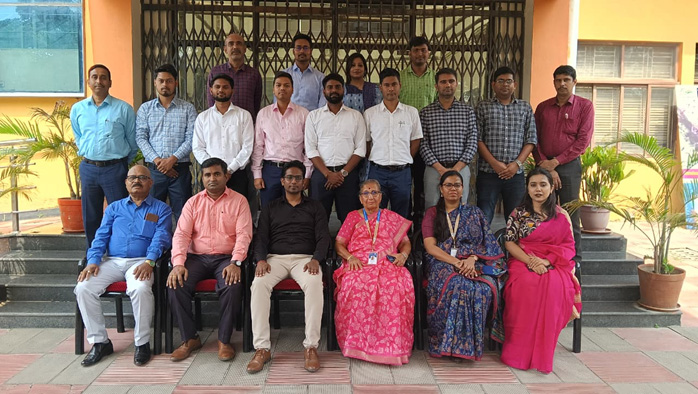
Hosted in a hybrid format from Kolkata, the programme has drawn 35 NCB officials from across the Eastern Zone, including Patna, Bhubaneswar, Ranchi, Raipur, and Kolkata.
RRU acknowledged the efforts of Dhananjay Som, Assistant Director, NCB Kolkata, for coordinating logistics and venue arrangements at short notice.
A Strategic Leap Forward
This initiative marks a significant step in modernising India’s narcotics enforcement framework—where science, data, and behavioural insights converge to create smarter, stronger, and more accountable investigations.