NE DEFENCE BUREAU
NEW DELHI, DEC 30
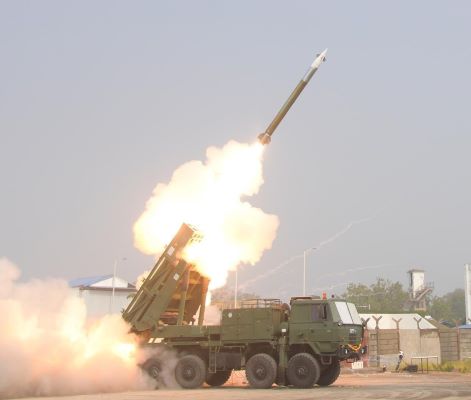
Defence Research and Development Organisation (DRDO) successfully conducted the maiden flight test of the Pinaka Long Range Guided Rocket (LRGR-120) at the Integrated Test Range (ITR), Chandipur (Odisha) on December 29, 2025. The test validated the rocket’s performance at its maximum strike range of 120 km, with the system executing all planned in-flight manoeuvres and impacting the target with “textbook precision.”
The maiden flight test of Pinaka Long Range Guided Rocket (LRGR 120) was conducted successfully at ITR, Chandipur today.
Raksha Mantri Shri @rajnathsingh has congratulated @DRDO_India and other stakeholders on this achievement. pic.twitter.com/SAIL8jj8KI
— रक्षा मंत्री कार्यालय/ RMO India (@DefenceMinIndia) December 29, 2025
- India achieves precision strike capability with 120 km range rocket
- Maiden flight test at Chandipur Demonstrates Pinaka LRGR’s full performance
Full Range Test Validates Advanced Precision Strike Capability
The LRGR-120 was fired from an in-service Pinaka launcher, proving the operational flexibility and versatility of the Pinaka Multiple Launch Rocket System (MLRS) across variants. All deployed range instruments successfully tracked the rocket throughout its trajectory, capturing performance data and telemetry during the full flight envelope.
This round of tests marks a pivotal enhancement in India’s indigenous precision artillery capabilities, significantly extending the operational reach of the Pinaka system.
Indigenous Development and Collaborative Expertise
The Pinaka LRGR-120 has been designed and developed by DRDO’s core laboratories:
- Armament Research and Development Establishment (ARDE) – Lead design
- High Energy Materials Research Laboratory (HEMRL) – Propulsion support
- Defence Research and Development Laboratory (DRDL) – Technical collaboration
- Research Centre Imarat (RCI) – Guidance and navigation systems
The flight test was coordinated by ITR along with the Proof & Experimental Establishment (PXE), ensuring all mission objectives were met.
Strategic Impact on Armed Forces Modernisation
Government and Leadership Reactions
Defence Minister Rajnath Singh congratulated the entire DRDO team on the successful test, describing the development of long range guided rockets as a “game changer” that will significantly enhance the combat strike capabilities of the Armed Forces.
From social media, official handles also echoed similar praise, with congratulatory messages highlighting the achievement as a milestone in India’s defence innovation journey.
Prime Minister’s Comments (from Web & Social Sources)
While no full official quote from the Prime Minister’s office has yet been released in the primary press statements, senior government social media channels and affiliated accounts celebrated the success. These posts emphasised the significance of self-reliance in defence technology and DRDO’s role in strengthening India’s strategic deterrence.
Enhancing India’s Precision Strike Arsenal
The LRGR-120 test represents a significant leap for India’s rocket artillery and stand-off strike capabilities, augmenting existing Pinaka variants that currently serve with shorter ranges; earlier versions include:
- Pinaka Mark-I (~40 km range)
- Pinaka Mark-II (~75 km range)
The integration of guidance and control systems in the LRGR enables high-precision engagement, making it an important addition for modern battlefield requirements.
What This Means for Indian Defence
- Boosts artillery range and lethality for land forces
- Demonstrates modular launcher versatility across Pinaka variants
- Enhances indigenous defence production and Make-in-India goals
- Improves deterrence and precision strike options against emerging threats
The success of LRGR-120 adds to India’s growing suite of advanced indigenous weapon systems, reinforcing strategic autonomy in defence technology development.