R ARIVANANTHAM
CHENNAI, OCT 9
Family-owned enterprises remain the cornerstone of India’s economy, contributing to over 70% of the nation’s GDP and 60% of total employment, according to a new study released by Great Lakes Institute of Management, Chennai.
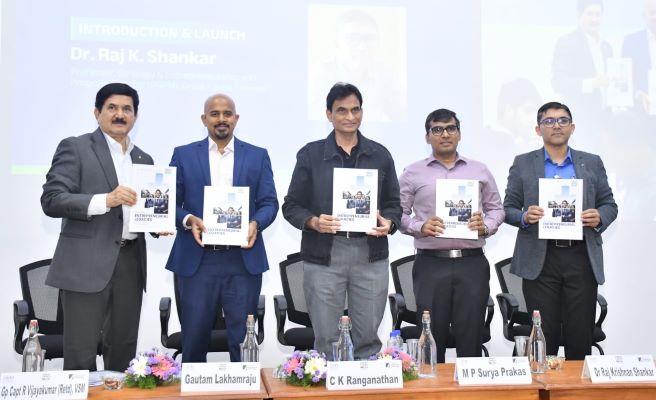
The report — “Building Entrepreneurial Legacies: Understanding the Role of Family Offices” — was unveiled at the Family Business Conclave 2025, jointly hosted by Great Lakes Institute of Management and the Madras Management Association (MMA). The conclave was held on the theme “Creating Entrepreneurial Families – The Role of Family Offices.”
- Report underscores the pivotal role of family enterprises in nation-building, job creation, and intergenerational entrepreneurship
- Report calls for stronger governance through family offices
- The report was unveiled at the Family Business Conclave 2025, jointly hosted by Great Lakes Institute of Management and the Madras Management Association (MMA).
Authored by Dr Raj Krishnan Shankar, Professor of Strategy & Entrepreneurship at Great Lakes, the study explores how family offices are fast emerging as strategic engines of governance, legacy planning, and intergenerational entrepreneurship in India’s evolving business landscape.
Key Findings of the Report:
- Family-owned businesses currently contribute 70% of India’s GDP, with projections to reach 80–85% by 2047.
- These enterprises provide over 60% of national employment, particularly within the MSME sector.
- India’s top 300 business families collectively hold a net worth of ₹134 lakh crore (US$1.6 trillion) and employ more than two million people.
- The number of structured family offices in India is expected to exceed 1,000 within the next decade, reflecting rising focus on succession and wealth management.
Dr Raj Krishnan Shankar, the report’s lead author, observed:
“Family businesses are the invisible backbone of India’s economy. They don’t just create wealth—they create continuity. As India’s business families collectively manage over a trillion dollars in private wealth, the real challenge is not growth, but governance. Family offices play a crucial role in ensuring entrepreneurship strengthens through succession rather than fading with it.”
Delivering the keynote address, C.K. Ranganathan, Chairman & Managing Director of CavinKare, urged family business owners to blend meritocracy with values and foster a culture of learning and accountability.
“Money is a responsibility, not just a privilege,” he said. “Business acumen comes from common sense, emotional intelligence, and sound math. Families must let the next generation learn by experience—fail fast, fail cheap, and keep learning.”
The conclave also featured interactive panels with business leaders from Mehta Hospitals, TSM Group, Sargam Metals, and Maya Appliances, who shared insights on succession planning, governance frameworks, and next-gen leadership.
Sameer Mehta, Director, Mehta Hospitals, highlighted the strategic importance of family offices:
“A family business is about stewardship, not just ownership. A family office isn’t a luxury—it’s a necessity for structure, longevity, and credibility.”
In his closing remarks, Yash Merchant, Director – Brand Marketing & Alumni Relations, Great Lakes Institute of Management, said:
“At Great Lakes, we’re building a vibrant ecosystem for family business owners and next-gen leaders. Through education and research, we aim to help them professionalise, innovate, and sustain their entrepreneurial spirit across generations.”
The conclave also saw the launch of the Great Lakes Insight Dossier, alongside stimulating sessions on family constitutions, succession readiness, and the future of family enterprises in India’s economic and educational landscape.