
- From Sabarmati to Navagam, a 2026 Walk Rekindles Gandhi’s Moral Compass
- NCC Cadets, Veterans and Citizens Unite in a Quiet, Powerful Act of Patriotism
- On the First Day of the Dandi Path Yatra, History Was Not Reenacted—it Was Re-engaged
NE DEFENCE BUREAU
AHMEDABAD, JAN 4
The morning at Sabarmati Ashram carries a stillness that resists haste. The Sabarmati flows gently beside the modest structures that once sheltered a man who reshaped the moral geography of the world. It was from this very soil that Mahatma Gandhi, with 78 satyagrahis, stepped out on March 12, 1930, launching the Salt March—an act of quiet defiance that would shake the foundations of an empire.
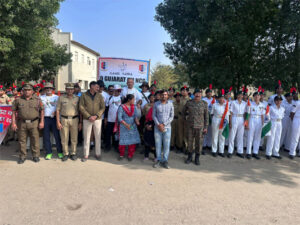
On January 3, 2026, the same ground bore witness once again as walkers assembled to begin the Dandi Path Yatra, retracing the first stretch from Sabarmati Ashram to Navagam. Nearly a century separates the two journeys, yet the intent felt unmistakably connected. This was not an attempt to reenact history, but to walk in conversation with it.
Before stepping forward, the group paused beneath a large image of Gandhiji—his gaze calm, probing and resolute. There were no speeches and no slogans. Instead, there was a shared prayer for a better world and a silent reaffirmation of simplicity and frugality. The absence of noise lent the moment its strength.
As the yatra moved out of the Ashram gates, it followed the Sabarmati riverfront promenade for nearly nine kilometres. Ahmedabad gradually receded into open roads and villages. Modern life flowed alongside—vehicles slowed, passers-by watched, mobile phones were raised—yet the road itself seemed to remember older footsteps. Gandhi’s walk had never been about speed; it was about visibility, discipline and moral clarity. That spirit guided every step.
 NE photo
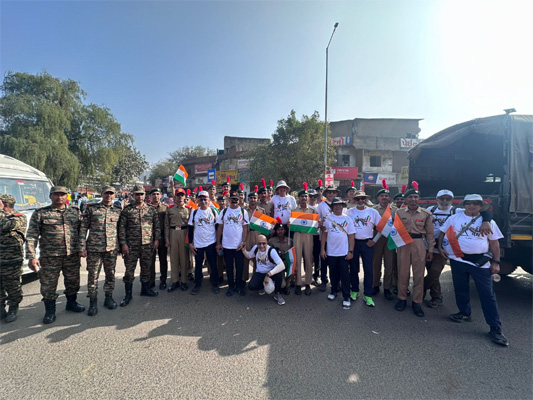
The march took on a stirring dimension as NCC cadets joined in, walking in formation, uniforms crisp, berets marked by bright red plumes. They carried the Indian tricolour—held high yet steady—fluttering softly in the morning light. The sight was deeply moving: youth alongside age, discipline alongside reflection, the baton of national memory passing silently between generations.
Without demanding attention, the yatra drew it. People slowed, folded their hands, smiled, or asked questions. Gandhi had chosen salt because it touched every Indian life. Today, the simple act of walking struck a similar chord—accessible, inclusive and quietly powerful.
A halt near Aslali became more than a pause for rest. During the original march in 1930, Gandhi had used such stops to speak to villagers about unjust laws, peaceful resistance and personal responsibility. Standing there in 2026, amid walkers, cadets, soldiers, civilians and locals, the message felt undiluted by time.
Photographs from the day captured a remarkable tableau—men and women of different ages and uniforms standing shoulder to shoulder, the tricolour recurring not as a symbol of triumph, but of stewardship. Patriotism here was calm, conscious and unselfconscious.
The stretch to Navagam tested endurance. The sun climbed higher, steps grew heavier and conversations thinned. Yet morale never dipped. All participants were over sixty, and more than once a thought surfaced naturally: Gandhi ji himself was over 60 when he began the Salt March. Age, it was evident, has never been a barrier to purpose.
By late afternoon, Navagam came into view. In 1930, reaching this village had marked the completion of the first phase of the historic march, affirming that the journey—long and uncertain—was indeed possible. In 2026, the arrival carried a similar reassurance. Fatigue was visible, but so was quiet satisfaction.
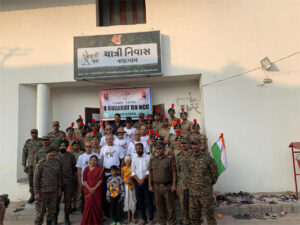
At the Dandi Path Yatri Niwas, the group gathered again—dust on shoes, sun on faces and smiles that needed no explanation. Bougainvillea bloomed at many points along the way, splashing colour against the settling evening, offering a gentle, symbolic close to the day.
One moment stood out with particular poignancy. A young boy, dressed simply as Gandhiji—with bald cap, round spectacles and walking staff—waited to greet the yatris. When he stood beside one of the senior walkers for a photograph, the image captured something profound: memory and future sharing the same frame, without words.
As night fell over Navagam, reflection replaced fatigue. Gandhi had often said the Salt March was not merely about salt, but about awakening Indians to their own strength and dignity. Walking the Dandi Path in 2026 reaffirmed that freedom is not a static inheritance—it is a living responsibility, renewed through awareness, ethical conduct and conscious action.
The first day—from Sabarmati to Navagam—proved that history does not live only in books or monuments. It lives in roads walked again, in values practiced rather than proclaimed, and in the quiet determination of ordinary people who choose to remember.
Tomorrow, the road leads onward to Nadiad via Matar—towards the sea and the symbolic culmination at Dandi. But the foundation has been laid, step by deliberate step, on a path where freedom once found its feet—and continues to do so.
Nadiad, here we come.
Garmin reading at day’s end: 59,000 steps.