- Third edition of CEPT Conference spotlights the engineering, governance and institutional drivers shaping modern India
- Veteran project leaders decode lessons from ports, airports, metros, tunnels and hydropower megastructures
- Sessions emphasise decision-making, coordination, financial models and capacity building
- Experts underline sustainability, technology integration and transformative mobility outcomes
- CRDF and CEPT University reaffirm commitment to advancing civil engineering education and research
NE EDUCATION BUREAU
AHMEDABAD, DEC 3
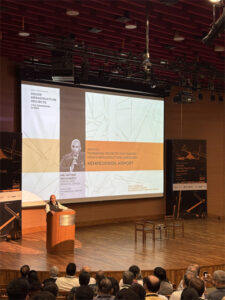
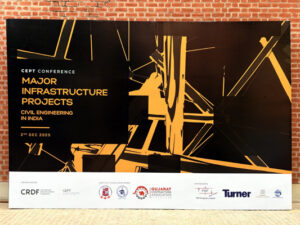
The CEPT Research and Development Foundation (CRDF) on Tuesday hosted the third edition of the CEPT Conference on Civil Engineering in India, uniting India’s most influential engineers, policymakers, project leaders and industry experts for a rigorous examination of the country’s landmark infrastructure achievements.
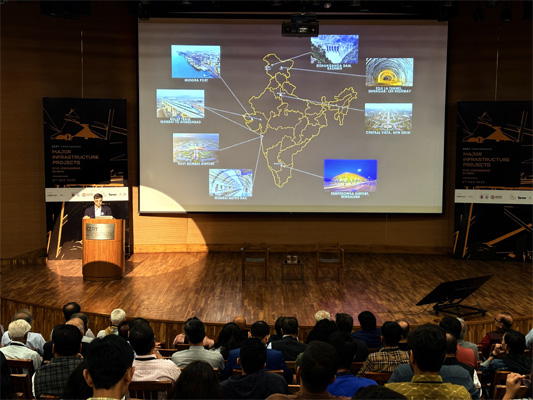
Held under the theme ‘Major Infrastructure Projects – A Key Driver of India’s Economic Transformation’, the conference focused on what truly drives successful delivery of India’s most challenging and iconic projects—from the making of Mundra Port to the engineering of the Zoji La Tunnel. Through reflective sessions and case-driven discussions, the event sought to extract lessons on planning, institutions, financing, governance, and engineering excellence that enable India to execute complex projects at scale.
The conference convened veterans who have shaped India’s infrastructure story, exploring not just engineering breakthroughs but also the frameworks—decision-making, stakeholder alignment, risk management, and organisational capacity—that underpin successful execution.
Mundra Port: A Story of Grit, Vision and Institutional Ingenuity
The opening session, ‘Pioneering Projects that Shaped India’s Infrastructure Landscape’, featured a keynote address by Dr Malay Mahadevia, Director, Adani Ports & SEZ Ltd., who offered an intimate account of how Mundra Port was conceived and built.
Dr Mahadevia said, “Mundra’s journey, from marshy land in 1992 to India’s largest port, was built on purpose, clarity of intent, perseverance, positivity, and passion. We faced tough challenges in land acquisition, regulations, and engineering, but an entrepreneurial mindset pushed us to move ahead without waiting for government support. Flexible, multi-purpose terminals, cost-saving in-house solutions, and a strong focus on quality helped shape Mundra into a global gateway with powerful rail, road, and industrial links. This journey proves that grit, clear decisions, collaboration, and constant improvement are essential for any mega project. Flexibility may bring inefficiency, but it also gives hope to survive.”
Speaking on airport expansion and mobility architecture, Satyaki Raghunath, Former Chief Operating Officer, Bangalore International Airport Ltd., said, “At Kempegowda Airport, our expansion master plan aims to scale capacity to nearly 105 million passengers annually by the 2030s. The focus is clear – ensure smooth circulation, free aircraft movement, and seamless passenger journeys. Alongside major works like terminal upgrades, metro connectivity, and the eastern access tunnels, we continue to strengthen customer experience through thoughtful hospitality and innovations such as Digi Yatra. With Terminal 2 rated 5-star and Terminal 1 rated 4-star, our commitment to quality is consistent. Sustainability remains central, driven by solar and wind energy adoption. Good project management is always about balancing time, cost, and quality, winning key battles, and keeping stakeholders aligned. Whether it’s choosing SPM over an offshore jetty for practical depth and cost reasons or crafting unique spaces, the idea is not just to build physical infrastructure but to create memories and a distinct sense of place.”
Metro and Airport Leaders Stress Institutional Alignment and Foresight
The thematic session ‘Building Transformative and Connected Infrastructure’ brought insights from leaders in metro rail and airport development.
Ramana Rachaprolu, Director Planning, Mumbai Metro Rail Corporation, presented critical learnings from building Mumbai Metro Line 3—India’s most complex urban transit tunnel. He emphasised smooth government approvals, JICA-driven institutional discipline, rehabilitation of 734 families, challenges of heritage structures and fragile ground conditions, and the project’s record of zero accidents.
Charudutt Deshmukh, Joint President and Head – Planning & Design, Navi Mumbai International Airport, outlined the design and operational framework of the upcoming airport, envisioned as India’s largest for general aviation. He detailed its functional segregation of cargo and private aviation, introduction of sustainable aviation fuel for all aircraft, digital passenger experiences, and its potential to enable 100,000 jobs. He also noted India’s academic gap in specialised airport management.
Cracking India’s Toughest Engineering Frontiers
The session on ‘Complex Engineering Challenges’ showcased two of India’s most formidable infrastructure feats.
Iftikhar Drabu, energy-sector expert and former consultant for the Kishanganga Hydroelectric Project (KHEP), unpacked the project’s technical, geopolitical and logistical challenges—from driving a long Himalayan TBM tunnel to navigating treaty obligations, severe winters, environmental clearances, and proximity to the Line of Control.
Love Anandjiwala, Director, Anandjiwala Infra Advisory Pvt. Ltd., discussed the engineering of the Zoji La Tunnel, one of the world’s longest high-altitude tunnels. He highlighted extreme cold, seismic vulnerabilities, avalanche-prone slopes, unstable formations, and the necessity for heated winter facilities, specialised equipment and robust ventilation systems.
Conference Reinforces CEPT’s Role in Building India’s Infrastructure Capacity
Delivering the vote of thanks, Prof Aanal Shah, Dean, Faculty of Technology, CEPT University, noted how the CEPT Conference continues to catalyse critical conversations for India’s next leap in infrastructure development.
Supported by the Gujarat Technological University and the Gujarat Institute of Civil Engineers and Architects, the conference has become a leading platform for knowledge exchange and interdisciplinary dialogue. Organised by the Faculty of Technology, CEPT University, and CRDF, it underscores CEPT’s commitment to strengthening civil engineering education, research and practice, shaping the next generation of India’s infrastructure leaders.