
- A legacy dating back to 1946 offers lessons in democratising Sanskrit education
- Graded examinations helped bridge traditional learning and mainstream education
- Government support could expand student participation across Gujarat’s schools
- Spoken Sanskrit, theatre, music and digital learning can make the language more engaging
- Collaboration with universities and education authorities can build a sustainable Sanskrit ecosystem
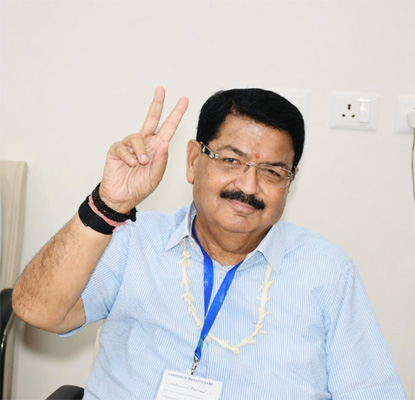
PARIMAL NATHWANI
Gujarat has the intellectual heritage, educational institutions and policy opportunity to make Sanskrit learning more accessible to a new generation. The challenge is to move beyond preserving an ancient language and build a vibrant educational ecosystem in which Sanskrit can be studied, spoken, explored and experienced as a living intellectual tradition. Revitalising the Shri Brihad Gujarat Sanskrit Parishad, a voluntary institution established in 1946, could be an important step towards achieving this goal.
The Parishad’s history demonstrates how a voluntary educational institution can create structured learning opportunities, encourage students to pursue Sanskrit alongside conventional education and connect traditional scholarship with the wider academic system. Its experience also raises a pertinent question: can an institution that once played a significant role in expanding Sanskrit education be given renewed recognition and support to contribute more effectively to Gujarat’s contemporary educational landscape?
A legacy built through voluntary initiative
Established in 1946, the Shri Brihad Gujarat Sanskrit Parishad set out to promote traditional Sanskrit learning, assist students of Sanskrit pathshalas and encourage school students to study the language.
One of its significant contributions was the development of a graded examination system that enabled students to pursue Sanskrit through a structured progression of learning. Its examination network connected schools, colleges, pathshalas and other educational institutions, creating a bridge between traditional Sanskrit scholarship and mainstream education.
The Parishad also went beyond examinations. Lectures, seminars, elocution and essay competitions, Vedic and Bhagavad Gita recitation, Sanskrit drama, storytelling, shloka-gāna and other cultural activities offered students opportunities to engage with the language in different ways.
This approach reflected an important educational principle: a classical language cannot be sustained through textbooks and examinations alone. Students must also be encouraged to appreciate its literature, philosophy, expressive possibilities and cultural relevance.
Recognition that could reopen educational pathways
The Gujarat Government’s Resolution dated October 19, 1985, is an important part of the Parishad’s institutional history. It recognised specified Parishad qualifications as equivalent to certain modern educational qualifications, including Prathama to SSC, Madhyama to HSC, Shastri to graduation, Acharya to postgraduation and Shiksha Shastri to B.Ed.
The subsequent withdrawal of the validity or applicability of these equivalences in certain circumstances is a separate matter that warrants examination in the light of the relevant government orders and prevailing rules.
The historical precedent nevertheless underlines the potential of constructive government engagement in strengthening Sanskrit education. A fresh review of the Parishad’s present status, academic standards and eligibility for appropriate recognition could help identify practical avenues for its revival.
Recognition need not be viewed merely as an administrative concession. Subject to academic standards and applicable regulations, it could help restore confidence, widen participation and strengthen the institution’s ability to serve students interested in Sanskrit.
A school-level movement, not just an institutional revival
The Parishad’s future contribution will depend substantially on its ability to reach students at the school level. The Gujarat Government could examine the feasibility of encouraging schools across the State to familiarise students with the Parishad’s examinations and learning programmes.
Such an initiative should be voluntary, inclusive and supported by appropriate learning resources, teacher guidance and awareness among parents. The objective would be to create additional opportunities for students to explore Sanskrit without placing an unnecessary burden on schools or learners.
The Parishad, for its part, can build on its experience by presenting Sanskrit in forms that appeal to young minds. Spoken Sanskrit sessions, storytelling, drama, music, recitation and translation exercises can help students discover the language beyond formal lessons. Sanskrit garba, creative performances and translations of selected film songs into Sanskrit could also make learning participatory and enjoyable.
The wider objective should be to make Sanskrit accessible to students from different educational and social backgrounds, rather than confining it to a small circle of traditional learners.
Connecting tradition with a modern educational ecosystem
Gujarat’s Sanskrit education landscape has expanded considerably since the Parishad was founded. The Gujarat State Sanskrit Board, Shree Somnath Sanskrit University, Sanskrit departments in universities, traditional pathshalas, gurukuls and other institutions now contribute to teaching, scholarship and research.
The National Education Policy (NEP) 2020 provides a broader policy framework for strengthening Indian languages and encouraging engagement with the country’s classical knowledge traditions. These developments create an opportunity for institutions with different strengths to work towards a shared educational objective.
The Parishad could explore academic collaboration with Shree Somnath Sanskrit University and other recognised institutions. Such partnerships could support curriculum development, teacher training, student activities, academic exchanges and the review of examination standards. Collaboration would allow the Parishad to build on its historical experience while benefiting from contemporary academic expertise.
The State Government and the Union Ministry of Education could also examine whether the Parishad qualifies for relevant schemes or other forms of institutional support for Sanskrit education, subject to the applicable guidelines.
digital access can take Sanskrit beyond classrooms
Technology offers another practical avenue for expanding the Parishad’s reach. Digitising its educational materials, publications and historical records would help preserve its legacy while making resources available to a wider audience.
Online learning modules, virtual lectures, digital practice materials and suitable online examination facilities could help students who do not have easy access to traditional Sanskrit-learning centres. A well-designed digital platform could also connect teachers, students, scholars and institutions across Gujarat.
These efforts would require careful planning, reliable educational content and appropriate technical support. Partnerships with universities, technology institutions and other educational organisations could help make such initiatives sustainable.
Digitalisation should complement, rather than replace, classroom teaching and traditional forms of scholarship. Its purpose should be to remove barriers to access and create more opportunities for meaningful engagement with Sanskrit.
A coordinated effort to carry the legacy forward
The Shri Brihad Gujarat Sanskrit Parishad has a history of encouraging Sanskrit learning through examinations, educational activities and voluntary initiative. Its experience offers a foundation on which a renewed programme can be built.
The way forward calls for a coordinated effort involving the Parishad, the Gujarat Government, educational institutions, Sanskrit scholars, schools and the wider academic community. A considered review of institutional recognition, wider school outreach, academic collaboration and digital access could help the Parishad contribute more effectively to the State’s educational priorities.
Gujarat does not have to choose between preserving its Sanskrit heritage and embracing modern education. The two can reinforce each other. With appropriate recognition, institutional cooperation and an engaging approach to learning, Sanskrit can reach more young minds and remain relevant to future generations.
The central question is no longer simply how Gujarat can preserve its rich Sanskrit tradition, but how it can make that tradition accessible, meaningful and educationally rewarding for the generations to come.
Parimal Nathwani is a Member of the Rajya Sabha, Chancellor of the Shri Brihad Gujarat Sanskrit Parishad and Director, Corporate Affairs, Reliance Industries Limited.