- 10-day faculty programme equips 25 NIFT educators to turn innovation into viable ventures
- IIMA Ventures has backed 3,000+ ventures, deployed nearly ₹180 crore in catalytic capital
- NIFT’s Launchpad Initiative to establish Entrepreneurship Cells across campuses
- Textiles, tourism and technology positioned as powerful engines of Viksit Bharat
NE EDUCATION BUREAU
GANDHINAGAR, AUG 3
From the fashion classroom to the startup boardroom, a new entrepreneurial fabric is being woven as IIM Ahmedabad and NIFT Gandhinagar join forces to equip educators with the ideas, tools and business acumen needed to turn student creativity into sustainable enterprises.
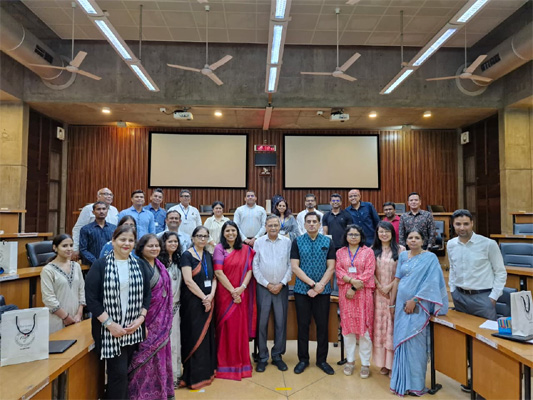
IIM Ahmedabad has successfully concluded a 10-day Faculty Development Programme (FDP) on Entrepreneurship for NIFT faculty members, coordinated by NIFT Gandhinagar, bringing together 25 faculty members from NIFT campuses across India in an intensive learning journey spanning innovation, entrepreneurship, startup incubation, business models, intellectual property, venture financing and industry-academia collaboration.
The programme went beyond conventional faculty training, seeking to create a multiplier effect: train the mentors today who will nurture thousands of entrepreneurs tomorrow.
‘Become a student once again’
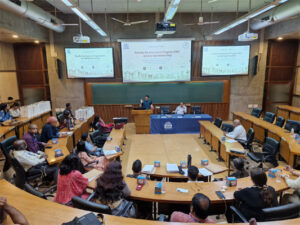
At the valedictory ceremony, Professor Bharat Bhasker, Director, IIM Ahmedabad, congratulated participants on completing the intensive programme and praised their enthusiastic engagement throughout the 10 days.
He emphasised that effective learning begins with the willingness to “become a student once again”, irrespective of professional designation, and observed that the faculty members had embraced this spirit wholeheartedly.
Professor Bhasker noted that while India was making remarkable advances in frontier areas such as artificial intelligence, deep technology and space technology, the country equally needed strong, sustainable sectors that touch everyday lives.
He identified fashion and fashion technology as major contributors to economic growth, creativity and human well-being, stressing that innovation in these fields would remain relevant regardless of technological change.
But, he cautioned, entrepreneurship cannot thrive on ideas alone.
Successful ventures, he emphasised, require sound business understanding, particularly financial and commercial viability, encouraging NIFT faculty to build entrepreneurship ecosystems within their institutions and tap the opportunities emerging from the Government of India’s startup initiatives.
₹180 crore catalytic capital, 3,000+ ventures
Professor Bhasker showcased the scale of IIMA’s entrepreneurial ecosystem, revealing that IIMA Ventures has supported more than 3,000 ventures, deployed nearly ₹180 crore in catalytic capital and facilitated cumulative investments exceeding ₹800 crore.
He explained that IIMA Ventures specialises in helping startups cross the critical “Valley of Death”—the precarious phase between early technological development and market readiness—through mentoring and structured support.
Inviting NIFT faculty to collaborate closely with IIMA Ventures, he expressed confidence that innovative ideas emerging from fashion and design could similarly be nurtured into successful enterprises.
The message was unmistakable: creativity may spark an idea, but entrepreneurship gives it the wings to reach the market.
‘Three Ts’ to power Viksit Bharat
Dr. Sameer Sood, Director, NIFT Gandhinagar, underlined the strategic importance of the textile sector in advancing the vision of Viksit Bharat.
Referring to Prime Minister’s emphasis on the “Three Ts”—Textiles, Tourism, and Technology, he said textiles remained one of the most significant pillars of India’s economic and sustainable development.
Dr. Sood stressed that India’s development could not be measured merely through the progress of metropolitan cities, but through the prosperity of its villages, where nearly 100 crore citizens reside.
He highlighted the role of textiles, handlooms, handicrafts and artisan-based industries in creating sustainable livelihoods, strengthening rural economies and preserving India’s craft heritage.
Institutions such as NIFT, he said, had a unique responsibility to combine innovation with heritage, empowering local communities while creating new economic opportunities.
NIFT’s launchpad to turn ideas into enterprises
Dr. Sood identified entrepreneurship, employment and innovation as three major drivers of India’s future growth and said NIFT was committed to transforming itself into a leading centre of entrepreneurial excellence.
He announced that NIFT would strengthen entrepreneurship initiatives across its campuses through the proposed Launchpad Initiative, under which dedicated Entrepreneurship Cells would be established to mentor aspiring student entrepreneurs and promote innovation-driven ventures.
He also acknowledged the support of IIMA Ventures and expressed confidence that the IIM Ahmedabad-NIFT collaboration would generate new avenues for startup incubation, innovation, mentoring and industry partnerships.
Calling the participating faculty members future mentors and catalysts, Dr. Sood said they would play a crucial role in nurturing the entrepreneurial aspirations of thousands of NIFT students across the country.
The FDP combined expert lectures, case discussions, interactive workshops, mentoring sessions and best-practice exposure, covering innovation management, startup incubation, business model development, intellectual property, venture financing and entrepreneurial leadership.
Participants also engaged with experts from IIMA Ventures, gaining insights into India’s rapidly evolving startup ecosystem and institutional innovation frameworks.
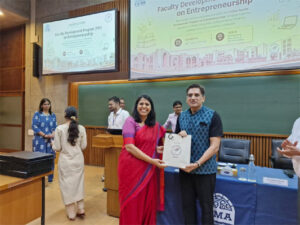
The programme concluded with certificates being presented to participants, marking not merely the completion of 10 days of learning, but the beginning of a potentially much larger entrepreneurial journey across NIFT campuses.
As India seeks to build an economy where design meets technology, heritage meets innovation and creativity meets capital, the IIMA-NIFT initiative offers a compelling proposition: the next generation of entrepreneurs may not emerge only from technology laboratories—they could emerge from fashion studios, design classrooms, craft clusters and the imagination of India’s young creators.