- ICFAMMT-2026 positions materials, manufacturing and thermal sciences as pillars of India’s future-ready innovation ecosystem
- Global experts from Japan, UK, Malaysia and India converge in Ahmedabad for three days of cutting-edge research exchange
- 246 research papers, 30 technical sessions and policy-aligned discussions underline focus on real-world impact
- Conference outcomes stress collaboration, translational research and Industry–Academia synergy
NE EDUCATION BUREAU
AHMEDABAD, JAN 20
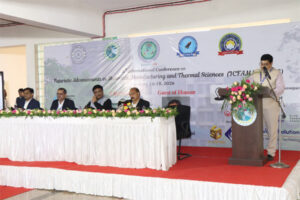
The 3rd International Conference on Futuristic Advancements in Materials, Manufacturing and Thermal Sciences (ICFAMMT-2026), hosted at the Institute of Infrastructure, Technology, Research and Management (IITRAM), has emerged as a key global platform aligning advanced engineering research with India’s Viksit Bharat vision.
Held from January 16 to 18, 2026, the conference brought together academia, industry and national research bodies to deliberate on how breakthroughs in materials science, manufacturing technologies and thermal engineering can translate into scalable solutions for national development, sustainability and industrial competitiveness.
Conference Aim: Engineering Solutions for a Future-Ready India
Jointly organised by IITRAM, IIT Roorkee, SSME, Space Applications Centre (SAC), ISRO, and NIT Uttarakhand, ICFAMMT-2026 was conceived to bridge fundamental research with applied engineering, while encouraging international collaboration and interdisciplinary problem-solving.
Inaugurating the conference, Dr. Shivkumar Kalyanraman, CEO, Anusandhan National Research Foundation (ANRF), Government of India, underlined the importance of policy-backed research ecosystems.
“India is investing significantly in building a strong research-to-innovation pipeline. Conferences such as ICFAMMT are vital because they bring together ideas, institutions and industries that can convert research outcomes into national assets,” Dr. Kalyanraman said, highlighting various Government of India initiatives supporting technological advancement.
Prof. Pramod Kumar Jain, Director General, IITRAM, stressed the strategic relevance of the conference themes.
“Materials, manufacturing and thermal sciences are not isolated disciplines. They are central to achieving the goals of the Viksit Bharat Mission, from infrastructure and energy to aerospace and advanced manufacturing,” Prof. Jain said.
Global Participation, High-Impact Research Exchange
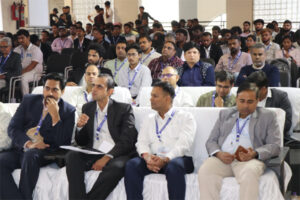
The three-day event witnessed 295 participants, with 246 peer-reviewed research papers presented by scholars from India and abroad. The technical programme featured 11 keynote lectures and 19 invited talks delivered by eminent experts from Japan, Malaysia, the United Kingdom and India.
A total of 29 technical sessions were conducted across four focused tracks—Design & Automation, Manufacturing Science, Materials & Metallurgy, and Thermal Engineering—with 27 distinguished session chairs ensuring rigorous technical deliberations and scholarly depth.
Key Outcomes: Collaboration, Translation and Excellence
The valedictory session was graced by Prof. Ramesh Babu (IIT Madras) and Prof. Masahiro Motosuke (Tokyo University of Science, Japan). Best Paper Awards were presented across all four tracks, recognising outstanding and application-oriented research contributions.
The conference outcomes underscored:
- The need for translational research linking laboratories to industry
- Cross-border academic collaboration for advanced engineering challenges
- Strengthening industry–academia partnerships to accelerate innovation cycles
A Platform Beyond Presentations
ICFAMMT-2026 reaffirmed IITRAM’s role as a national hub for future-facing engineering research, providing a structured forum for knowledge exchange, global networking and collaborative ideation. Participants noted that such conferences are essential in ensuring that scientific advancements directly contribute to industrial growth, infrastructure development and technological self-reliance.