
- India’s ITEC programme strengthens entrepreneurship and enterprise-development skills among international participants
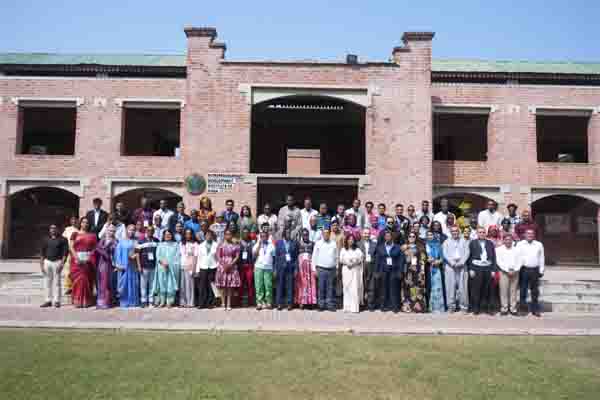
- 68 participants from 17 countries complete capacity-building programmes at Ahmedabad’s EDII
- Training spans rural microenterprises, market access, business planning and sustainable livelihoods
- Women participants feature prominently in both programmes, with practical learning tailored to local economic needs
NE EDUCATION BUREAU
AHMEDABAD, OCTOBER 28
Can a local business idea become a sustainable livelihood—and can practical entrepreneurship training help communities turn untapped resources into economic opportunity? Sixty-eight participants from 17 countries have explored these questions through capacity-building programmes at the Entrepreneurship Development Institute of India (EDII), Ahmedabad, under the Indian Technical and Economic Cooperation (ITEC) programme of the Ministry of External Affairs.
The two programmes, which concluded on Tuesday, focused on strengthening entrepreneurial capabilities, promoting informal-sector enterprises, developing viable business plans and supporting sustainable livelihoods. The training combined practical tools and case studies to help participants adapt enterprise-development approaches to the economic and institutional realities of their home countries.
Local resources, new enterprises
The programme on Informal Sector Enterprise, Entrepreneurship and Local Economic Development brought together 33 participants—19 men and 14 women—from Bangladesh, Ethiopia, Ghana, Iraq, Mali, Namibia, Nigeria, Sri Lanka, Tanzania, Uganda, Venezuela and Zimbabwe.
Participants explored how to identify local business opportunities, map resources and value chains, and improve market access through value addition, quality enhancement, packaging and branding. Community enterprises, self-help groups and cluster-based business models formed part of the learning.
India’s Start-up Village Entrepreneurship Programme (SVEP) was examined as a case study in promoting rural microenterprises through entrepreneurship training, access to finance and community-based support.
From business ideas to business plans
The second programme, Entrepreneurship Development and Skill Upgradation, had 35 participants—15 men and 20 women—from Bangladesh, Ethiopia, Iraq, Liberia, Mali, Mauritius, Mozambique, Nigeria, Seychelles, South Africa, Sri Lanka, Tanzania, Uganda and Zimbabwe.
The two-week course covered opportunity identification, market research, feasibility assessment, business-plan preparation, project costing and financial planning. Participants also explored digital marketing, customer acquisition, pricing and financial viability.
Practical exercises included developing a Business Model Canvas, interacting with start-ups, visiting industries and business units, participating in decision-making simulations and preparing individual action plans for enterprise creation and skill upgradation.
Knowledge that crosses borders
Emphasising the link between local opportunity and practical business capability, Dr Sunil Shukla, Director General of EDII, said:
“Entrepreneurship development requires both the ability to identify opportunities within local economies and the skills to translate those opportunities into viable enterprises. Through these programmes, participants gain practical insights into market assessment, value-chain development, business planning and financial management. The learning can help them explore context-specific approaches to enterprise development and sustainable livelihoods in their respective countries.”
EDII has been associated with the Ministry of External Affairs’ ITEC programme since 2000–01, conducting capacity-building programmes for international participants in entrepreneurship promotion.
The initiative reflects the broader role of technical cooperation: sharing knowledge across borders while equipping participants with practical approaches they can adapt to local needs. Its ultimate test will be how effectively that learning translates into viable enterprises, stronger local economies and sustainable livelihoods in the participating countries.