
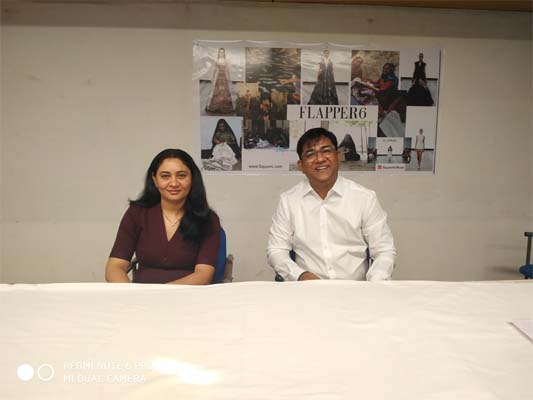
- ‘I dedicate this international achievement to my entire community’: FLAPPER6 founder Sonal Desai takes Maldhari craftsmanship to an international fashion platform
- 25 designer garments, centuries of heritage: Summer 2027 collection ‘BECOMING’ blends traditional Rabari embroidery with contemporary luxury silhouettes
- 80-plus women artisans power the dream: Community craftsmanship finds a new expression through hand embroidery, Jeko beadwork, wool, leather and hand painting
- From pastoral traditions to modern couture: Gujarat’s distinctive needlework moves beyond conventional ethnic wear into contemporary designer fashion
- Make in India, rooted in Gujarat: Sonal and Shailesh Desai seek to connect indigenous skills with global fashion audiences and new opportunities for artisans
NE FEATURES BUREAU
AHMEDABAD, OCT 13
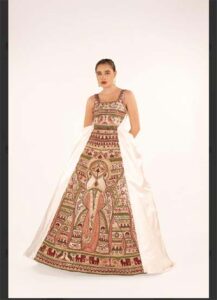
What happens when the intricate needlework of Gujarat’s pastoral communities leaves the familiar world of traditional garments and arrives on an international fashion runway? It carries more than colour, craftsmanship and couture. It carries the memory of a community, the creative labour of its women and a cultural identity stitched patiently into fabric across generations.
That story travelled from Randheja in Gandhinagar district to London on September 20, when Sonal Desai, founder of Gujarat-based fashion label FLAPPER6, presented her Summer 2027 collection, BECOMING, through Fashion Scout at London Fashion Week. The collection brought traditional Rabari embroidery and other Indian craft techniques into contemporary designer fashion, placing the artistry associated with Gujarat’s Maldhari community before an international audience.
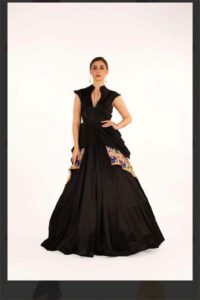
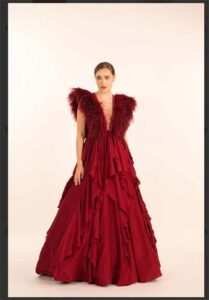
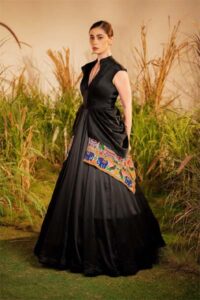
Featuring around 25 designer garments, the presentation combined Rabari embroidery, hand embroidery, Jeko beadwork, hand painting, wool, leather and digital prints. The objective was not simply to reproduce traditional attire, but to reinterpret its craftsmanship through modern silhouettes and a contemporary luxury aesthetic.
For Sonal, the occasion represented the fulfilment of a childhood ambition—and an achievement she sees as belonging to the community whose artistic inheritance inspired her journey.
“It is a matter of immense pride for me, our entire community, and our country to present our Maldhari community’s embroidery art and receive global recognition at London Fashion Week, one of the five most prestigious fashion shows held worldwide. I dedicate this international achievement to my community. Rabari embroidery is not just work on fabric; it is our rich cultural heritage and identity,” she said.
When every stitch tells a community’s story
Rabari embroidery is far more than surface decoration. The Indira Gandhi National Centre for the Arts describes it as an expressive art through which women communicate cultural values, community traditions and their understanding of the world. Its motifs, stitches and colours reflect a living heritage that continues to evolve with changing times.
The craft is recognised for its bold patterns, distinctive stitches and mirror work. Traditionally used on garments and household textiles, it reflects the artistic imagination and skilled handwork of Rabari women. The Gujarat government’s handicraft documentation also identifies mirror embellishment and patterned stitching as defining elements of the tradition.
It is this artistic vocabulary that FLAPPER6 seeks to carry into a different design environment.
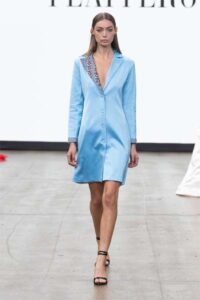
By incorporating traditional handwork into contemporary garments, the label is exploring how indigenous craftsmanship can remain relevant to modern wardrobes without losing its cultural character. The result is a meeting of two worlds: the inherited skills of community artisans and the evolving language of international fashion.
For a tradition often associated with community clothing and heritage textiles, the runway offers a different platform—one that can introduce its techniques to designers, fashion professionals and potential customers unfamiliar with their origins.
‘BECOMING’: tradition finds a contemporary silhouette
The Summer 2027 collection, BECOMING, showcased around 25 garments designed around the interplay of heritage craftsmanship and contemporary fashion.
Rabari embroidery and Jeko beadwork were combined with hand painting, wool, leather and digital prints, creating opportunities to interpret traditional materials and techniques through modern design. The collection sought to demonstrate that indigenous handwork need not remain confined to conventional ethnic attire; it can also inform contemporary luxury and occasion wear.

FLAPPER6’s published account of its London presentation describes its approach as placing Indian craftsmanship at the beginning of the design process, rather than treating embroidery as a finishing embellishment. The emphasis is on integrating craft into the garment’s construction, silhouette and visual identity.
This distinction matters. When traditional craftsmanship shapes the design itself, artisans are not merely supplying decorative details. Their skills become part of the creative language through which the garment is conceived and presented.
The collection thus raises a larger question for the fashion industry: can global luxury become a stronger vehicle for indigenous craft when the people and techniques behind the work receive recognition alongside the finished product?
More than 80 women behind the international moment
Sonal credits more than 80 women associated with the venture with helping turn her vision into reality.
“My childhood dream of taking the traditional art of Rabari embroidery to the international level has been fulfilled today due to the presence of our brand FLAPPER6 at London Fashion Week. More than 80 women associated with us have played a vital role in making this dream a reality. Through their hard work, our community’s identity has reached the global stage,” she said.
Their contribution brings the human dimension of the collection into focus. Every intricate stitch represents time, technique and accumulated experience—skills that cannot simply be replicated by the speed of mass production.
For artisan communities, however, international visibility is only one part of the opportunity. Sustained benefits depend on whether such exposure leads to continuing work, fair remuneration, recognition of individual craftsmanship and viable livelihoods.
The London presentation provides a platform for that conversation. Its longer-term significance will rest on how effectively interest in the collection translates into meaningful opportunities for the women whose skills underpin the work.
‘Make in India’ with a distinctly Gujarati identity
FLAPPER6 co-founder Shailesh Desai said the 25 designer garments presented in London were developed around the Make in India theme, with an emphasis on bringing Indian handicraft traditions together with contemporary design.
The intention, he said, was to establish a distinctive identity for Indian craftsmanship in international fashion while meeting global quality expectations.
The partnership between traditional artisanship and modern design also reflects a wider opportunity for India’s craft sector. Heritage techniques can find new applications in designer clothing, accessories and lifestyle products, provided their cultural origins and the contribution of artisans remain integral to the process.
For Gujarat, whose textile traditions encompass a rich variety of community-specific embroidery styles, such initiatives offer another way to present its cultural wealth beyond museums, craft exhibitions and traditional marketplaces. Government documentation of the state’s handicrafts highlights the diversity of embroidery traditions and their continuing evolution.
The challenge is to ensure that commercial expansion strengthens, rather than dilutes, the knowledge and craftsmanship that make these traditions distinctive.

A global runway, a responsibility to the roots
Sonal Desai’s London presentation is a meeting point between personal ambition and collective heritage. Her journey from Randheja to the international fashion circuit shows how a designer can draw inspiration from a community’s artistic traditions and seek to reinterpret them for a new audience.
But the deeper measure of success goes beyond the applause at a fashion show. It lies in whether the women who preserve these skills gain wider recognition, stronger economic opportunities and a reason for the next generation to continue learning the craft.
Rabari embroidery has endured because it has never been merely about fabric. It has carried memory, identity and creative expression from one generation to another. By bringing that heritage into contemporary fashion, FLAPPER6 is attempting to give those traditions another platform—and a new chapter.
The runway may be in London, but the story begins in Gujarat, in the hands of the women whose stitches make the journey possible.