NE HEALTH BUREAU
CHENNAI, SEPT 19
What if a simple eye examination today could prevent the loss of sight tomorrow? Tamil Nadu is stepping up its focus on early detection of eye diseases with the pre-launch of Vizhithirai Kaappom, an initiative aimed at identifying vision-threatening conditions early and ensuring timely treatment through the State’s public healthcare network.
மாண்புமிகு முதலமைச்சர் அவர்களின் அறிவுறுத்தலின் பேரில்… கண் மருத்துவத்தில் இந்தியாவிலேயே முதன்முறையாக தமிழ்நாடு அரசு கொண்டுவரும், 'விழித்திரை காப்போம்' என்ற முன்னோடி திட்டத்தின் முன் வெளியீட்டு நிகழ்வினை இன்றைய தினம் சென்னை எழும்பூர் அரசு கண் மருத்துவமனையில் துவக்கி… pic.twitter.com/DmVpnyZo5Y
— Arunraaj TVK (@arunraajkg) September 18, 2026
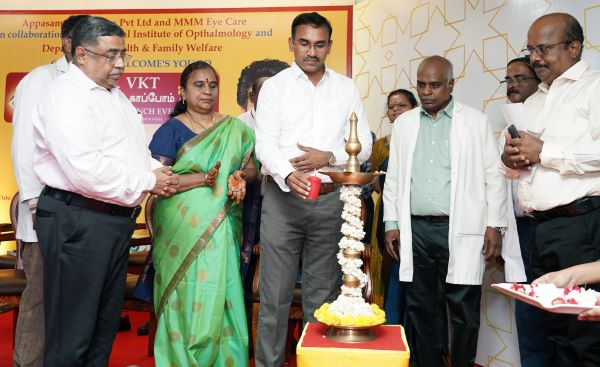
Health Minister Dr G.K. Arunraj inaugurated the pre-launch programme at the Regional Institute of Ophthalmology and Government Ophthalmic Hospital, Egmore, on Friday, September 18, lighting the traditional lamp to mark the occasion.
- Health Minister Dr G.K. Arunraj inaugurates pre-launch of Vizhithirai Kaappom at the Regional Institute of Ophthalmology and Government Ophthalmic Hospital, Egmore
- Initiative focuses on early detection and treatment of retinal disorders, particularly among people aged above 30
- Diabetes and hypertension patients to receive targeted eye screening to identify vision-threatening complications
- Statewide network of government hospitals and primary health centres to support screening, referrals and treatment
- Dedicated protocols, trained personnel and medical equipment planned to improve access to eye care
- Government emphasises early intervention and public cooperation to prevent avoidable vision loss
The initiative seeks to strengthen eye screening, particularly for people aged above 30 and those vulnerable to vision loss due to diabetes, hypertension and other conditions.
₹45.53-crore initiative targets early detection
The scheme is to be implemented through Tamil Nadu’s public healthcare network, covering 385 block-level Primary Health Centres, 37 government district hospitals, 150 urban Primary Health Centres and medical college hospitals.
The Regional Institute of Ophthalmology and Government Ophthalmic Hospital, Egmore, will serve as the nodal institution, providing technical support, training and equipment to facilitate implementation.
The programme is aimed at people aged above 30, with particular attention to those living with diabetes and hypertension. Regular screening is envisaged for early identification of retinal complications.
Early detection key to preventing vision loss
Highlighting the challenge posed by advanced, uncontrolled diabetes, Arunraj said an estimated 17–20% of the State’s diabetic population falls into this category. Such patients could face varying degrees of visual impairment over the next five to ten years, he said.
The Minister emphasised that better control of diabetes and hypertension, regular monitoring and timely retinal screening must go hand in hand.
He said screening was essential to identify complications before they progressed to stages where treatment might not fully restore vision.
Digital technology to strengthen screening
The Minister called for the integration of digital technology into the screening process, highlighting the potential of analytical software to interpret fundus photographs, maintain detailed records and generate individual risk assessments.
He said such technology could help create a comprehensive health database and support early identification of patients requiring further assessment and treatment.
Arunraj expressed confidence that addressing gaps in screening and treatment could substantially reduce diabetes- and hypertension-related blindness or vision loss over the next five to seven years. This was presented as the government’s anticipated outcome.
AI-enabled cameras and regional centres expand reach
Dr S.V. Chandrakumar, Project Director of the Tamil Nadu District Vision Loss Prevention Association, said more than 400 eye doctors were working in the State, over 200 of whom had specialised training. He also said 180 AI-equipped fundus cameras were already operational at the field level.
Regional Eye Care Centres have been established in Salem, Thanjavur, Madurai and Tirunelveli, with further centres planned in Chengalpattu, Vellore and Dharmapuri, he said.
Referring to the scale of the screening effort, Chandrakumar said, “19 per cent of the people are diabetic. We already have a list of 1 million people,” adding that a pilot screening programme had identified several patients with severe complications.
Nine zonal centres to strengthen advanced treatment
The initiative also envisages strengthening advanced retinal surgical facilities at nine zonal centres based in medical college hospitals in Chennai, Vellore, Villupuram, Tiruchirappalli, Salem, Coimbatore, Thanjavur, Madurai and Tirunelveli.
The Regional Institute of Ophthalmology and Government Ophthalmic Hospital, Egmore, will function as the reference centre for cases requiring advanced treatment and as an apex training and mentorship centre.
The plan includes infrastructure development, advanced training and postgraduate training for ophthalmologists and nurses.
From screening to sight protection
The pre-launch of Vizhithirai Kaappom signals a shift towards a more systematic approach to retinal care—linking community-level screening with specialist assessment, referral and treatment.
Its intended impact will depend on effective implementation, regular screening uptake, trained personnel and timely access to treatment. For people at risk of diabetes-related retinal damage, the message from the programme is clear: protecting eyesight begins before vision problems become apparent.