- Seven-day residential programme introduces Caltech, USA students to India’s scientific, intellectual and cultural legacy
- Inaugural lecture traces India’s contributions to science and mathematics from ancient to modern times
- IITGN campus rituals and scholarly discourse set the tone for experiential, interdisciplinary learning
- India Ki Khoj blends heritage, art, philosophy and innovation to connect ancient wisdom with contemporary practice
NE EDUCATION BUREAU
GANDHINAGAR, DEC 17
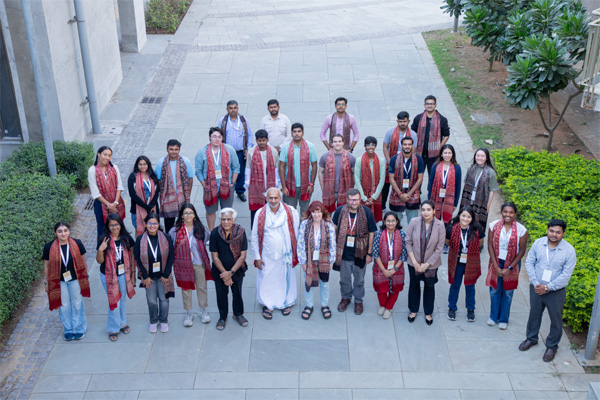
The Indian Institute of Technology Gandhinagar (IITGN) on December 15 inaugurated India Ki Khoj, a seven-day residential immersion programme for students from the California Institute of Technology (Caltech), USA, offering a deep engagement with India’s intellectual, scientific and cultural heritage.
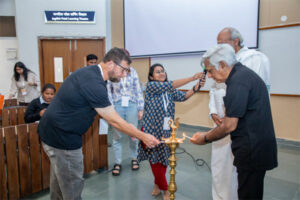
The inauguration began with a Welcome and Introduction to India Ki Khoj by Prof Mana Shah, followed by Deep Prajvalan (lighting of the lamps) and Shlok recitation, symbolising an auspicious and reflective start to the programme.
Introducing The Caltech Y initiatives, Liz Jackman, Associate Director of Student Programs, The Caltech Y, shared her reflections on returning to IIT Gandhinagar. “This is my second visit to the programme, having first attended in 2014, and it is truly impressive to see how the campus has grown and transformed since then. What remains most memorable, however, is the warmth of the people—the students and professors who generously answered our questions, shared their culture, and extended remarkable kindness and hospitality. On behalf of the Caltech delegation, I am grateful for this opportunity and for the efforts that have made this a positive and enriching experience. We are excited to be here again and to continue learning more about India,” she said.
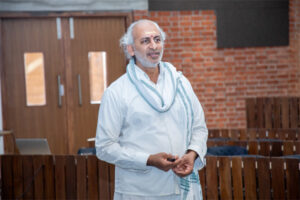
The highlight of the inaugural session was the lecture “India’s Contribution to Science and Mathematics: From Ancient to Modern Times”, delivered by Prof K. Ramasubramanian, Institute Chair Professor at the Cell for Indian Science and Technology in Sanskrit (CISTS), IIT Bombay. His address underscored India’s knowledge systems as a systematic, experience-based inquiry into nature, numbers and human understanding.
Speaking at the event, Prof Ramasubramanian said, “In the Indian intellectual tradition, science is a disciplined inquiry rooted in experience, numbers, and observation, yet guided by humility. Shastra is knowledge crystallized over centuries, seeking not merely to control nature but to understand its functioning and our place within it. Practices such as prayer or prasāda are not appeals for supernatural intervention, but ways of cultivating clarity in thought and right decision-making, acknowledging that many forces shaping life lie beyond human control. This harmony between science, spirituality, and reverence for nature is a legacy that remains deeply relevant today.”
He further elaborated, “India’s contribution to science and mathematics is a long, systematic, and experience-based inquiry into nature, numbers, life, mind, and consciousness. Science was pursued not merely as discoveries, but as a disciplined process of understanding, or śāstra, integrating theory, practice, observation, and reasoning. From ancient mathematics and astronomy to medicine, logic, and technology, Indian thinkers asked ‘why’ and sought precise methods and verification. Spirituality, religion, and science coexisted, each addressing different aspects of human inquiry, while nature was respected rather than dominated. This holistic approach, visible from ancient times to modern contributions, offers valuable lessons today, emphasizing clarity of thought, ethical responsibility, and reverence for nature.”
Prof Ramasubramanian also discussed the historical and scientific significance of calendars, timekeeping systems and astronomy, explaining how ancient Indian traditions developed systematic methods to understand celestial patterns, seasons and life cycles, and how science, mathematics and spirituality were deeply integrated.
Over the seven days, participants will engage in lectures, workshops, field visits and experiential learning, including a heritage walk through Ahmedabad’s Old City, visits to the Sun Temple at Modhera and Rani ki Vav in Patan, lectures on Indian history, linguistics, archaeology, architecture and the philosophy of yoga, a Madhubani painting workshop, an Indian classical music lecture-demonstration, nature walks, yoga and pranayama sessions, museum visits and cultural engagements. The programme also includes exposure to contemporary India through the Bharat Innovates Expo at the IIT Gandhinagar Research Park.
India Ki Khoj reflects IIT Gandhinagar’s commitment to interdisciplinary education and global engagement, fostering a nuanced understanding of India by connecting ancient insights with modern scientific thought and innovation.