NE SCIENCE & TECH BUREAU
NEW DELHI, SEPT 16
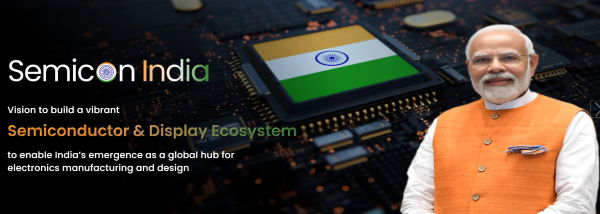
The semiconductor race is no longer just about making a chip—it is about building everything around the chip. On the eve of SEMICON India 2026, Prime Minister Narendra Modi has brought the world’s leading semiconductor CEOs to the policy table, challenging industry to join India’s next phase of growth as the country seeks to move from foundational capacity towards a wider ecosystem spanning design, manufacturing, R&D, advanced technologies, packaging and systems.
During this evening’s Semiconductor Roundtable with CEOs, I emphasised:
Unequivocal support to the semiconductor industry from the Centre.
Predictable and responsive policy environment.
Continued focus on skilling, innovation and infrastructure upgradation.
Furthering…
— Narendra Modi (@narendramodi) September 16, 2026
Modi chaired a Semiconductor Roundtable with leading CEOs at Seva Teerth on Wednesday, emphasising closer government-industry collaboration in shaping India’s technology future.
- PM urges global chip leaders to help take India’s semiconductor journey from foundational capacity to scale, innovation and full value-chain capabilities
- CEOs from Micron, Intel, AMD, ASML, Applied Materials, Tata Electronics and other global majors back India’s expanding semiconductor opportunity
- Modi calls for deeper industry participation in skilling, innovation, AI and quantum computing as India targets a larger technology workforce
- Government promises a predictable, responsive policy environment and invites industry suggestions to fine-tune policy and administration
- SEMICON India 2026 opens at Yashobhoomi on September 17 with ‘Silicon to Systems: Building the Ecosystem’ as its defining theme
- More than 600 companies and representatives from 52 countries set to participate as India showcases capabilities from materials and equipment to chips, packaging and systems
The timing gives the interaction added significance: SEMICON India 2026, the fifth edition of the semiconductor and electronics conference and exhibition, begins at Yashobhoomi, New Delhi, on September 17 and runs through September 19. The official theme is “Silicon to Systems: Building the Ecosystem.”
Modi: India must aim for the early-leader league
During the roundtable, Modi highlighted India’s foundation of talent, technology adoption and infrastructure, while calling for stronger participation by industry in skilling, innovation and emerging technologies, including Artificial Intelligence and Quantum Computing.
Referring to the target of training one crore people in AI, he said India’s talent pool, combined with the experience and capabilities of global industry leaders, could create significant opportunities.
The Prime Minister said India should aspire to be among the early leaders in emerging technologies, while noting that the semiconductor ecosystem has made significant progress and is now moving from foundational efforts to a phase of greater scale and opportunity.
His message to industry was direct: participate actively in the next phase of India’s semiconductor growth.
Policy predictability meets industry feedback
Modi reiterated the Government’s commitment to a predictable and responsive policy environment, while emphasising that policies must evolve with technological developments and industry requirements.
He invited semiconductor leaders to share suggestions on policy and administrative measures, assuring them that their inputs would receive due consideration in further strengthening the sector.
The approach places policy, investment, technology and talent in the same conversation at a moment when semiconductor supply chains are becoming increasingly important to electronics, automobiles, telecommunications, AI and other technology-intensive sectors.
Global chip majors see value-chain opportunity
CEOs and representatives from organisations including SEMI, Micron, Infineon, Applied Materials, ASML, Merck, Tokyo Electron, Fujifilm, AMD, Intel, Tata Electronics, Lam Research, Rapidus, NXP, Foxconn, Semiconductor Devices, Advantest, Celesta Capital, CG Power and IBM Research, among others, participated in the interaction.
The CEOs appreciated the Government’s sustained efforts to strengthen India’s semiconductor capabilities, citing progress in manufacturing, design, infrastructure and talent development.
They expressed confidence in opportunities emerging under ISM 2.0 and in India’s potential to develop capabilities across the semiconductor value chain, including manufacturing, R&D, advanced technologies and supporting industries.
They also expressed their commitment to contributing to India’s emergence as a globally competitive semiconductor and technology hub.
SEMICON India 2026: silicon meets the wider ecosystem
The CEO roundtable leads directly into a three-day global showcase of India’s semiconductor ambitions.
SEMICON India 2026, to be inaugurated by Modi at Yashobhoomi on September 17, will bring together global and Indian companies, policymakers, investors, researchers, start-ups, academia and students from across the semiconductor and electronics value chain.
The official programme places emphasis on next-generation manufacturing, advanced packaging, equipment R&D and manufacturing, AI, supply chains, product and system development, international collaboration, R&D, workforce development and start-ups.
The exhibition will follow a comprehensive value-chain approach, covering the journey from semiconductor materials and equipment to chip design, fabrication, advanced packaging, electronics and systems.
A new ‘Sand to Silicon to Systems’ Value Chain Experience will present this journey in an integrated format.
600+ companies, global participation and a talent push
More than 600 participating companies and representatives from 52 countries are expected, with the event projected to attract around 50,000 visitors, alongside more than 400 executives and 150 speakers, according to the government’s latest announcement.
The exhibition will feature country pavilions representing Japan, South Korea, Malaysia, the Netherlands, Singapore and Sweden, besides state booths, a Startup Pavilion, Innovation Showcase, Student Hackathon and Workforce Development Pavilion.
The workforce component is particularly significant. The official SEMICON programme includes a dedicated Workforce Development Pavilion, designed to connect students and faculty with industry leaders, internships, research collaborations, projects and career opportunities.
The event will also feature a Women Empowerment Track, country roundtables and international collaboration platforms focused on investment, supply chains, research, innovation and talent development.
India’s semiconductor moment enters its next phase
The significance of SEMICON India 2026 lies in the breadth of the ecosystem now being placed under one roof.
India’s semiconductor proposition is increasingly being framed not merely around fabrication, but around the entire chain—from materials and equipment to design, manufacturing, packaging, electronics and intelligent systems.
The message emerging from the Prime Minister’s roundtable and the SEMICON platform is therefore complementary: government can provide policy direction and an enabling environment, but the next stage requires sustained participation from global and Indian industry, universities, researchers, start-ups and skilled talent.
As the global semiconductor industry converges at Yashobhoomi, India’s challenge is moving from announcing ambition to executing across the value chain—from silicon to systems.