
- Fifth edition, from November 28 to December 12, places the timeless Tamil classic at the heart of a nationwide educational and cultural outreach
- Around 1,400 delegates from Tamil Nadu to explore the civilisational links between Kashi, Prayagraj and Ayodhya
- Nationwide Students’ Engagement Programme to connect 1,000 higher education institutions with the ethical teachings of the Thirukkural
- Fifty Tamil Nadu teachers to introduce the classical text in Uttar Pradesh schools and colleges through interactive learning
- Multilingual study resources, research projects and a ₹10,000 stipend for eligible selected students to encourage deeper academic engagement
- Digital outreach, animated films, audiobooks and railway and airport displays to take 1,330 couplets to audiences across India
NE FEATURES BUREAU
AHMEDABAD, NOV 25
Can a 2,000-year-old Tamil classic become a living classroom for India’s next generation, transcending language, geography and academic disciplines? Kashi Tamil Sangamam 5.0 is setting out to make precisely that happen. With the timeless wisdom of the Thirukkural as its central theme, the fifth edition of this civilisational and cultural initiative seeks to take the teachings of Thiruvalluvar from Tamil Nadu to 1,000 higher education institutions, schools and digital platforms across the country, turning an ancient literary treasure into a contemporary learning experience.
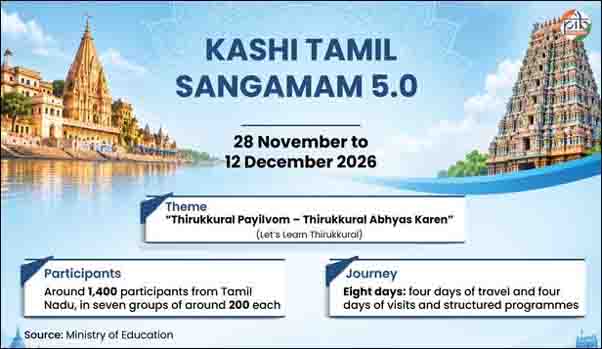
Scheduled from November 28 to December 12, 2026, the fifth edition of Kashi Tamil Sangamam will be organised around the theme ‘Thirukkural Payilvom – Thirukkural Abhyas Karen’ (Let’s Learn the Thirukkural). The initiative seeks to strengthen the longstanding cultural, linguistic and civilisational connections between Tamil Nadu and Kashi (Varanasi), while making India’s classical knowledge traditions accessible to younger generations.
Around 1,400 delegates from Tamil Nadu will travel in seven groups to Varanasi, Prayagraj and Ayodhya, participating in academic interactions, cultural programmes, spiritual engagements and heritage visits.
But the defining feature of this edition will be its nationwide educational outreach, particularly the Students’ Engagement Programme involving 1,000 higher education institutions. The initiative will encourage students from different academic disciplines and linguistic backgrounds to read, understand, research and apply the ethical principles of the Thirukkural.
A classical text for contemporary India
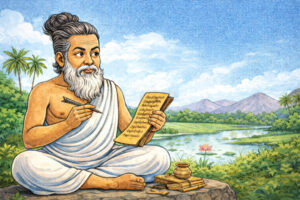
Authored by the celebrated Tamil poet and philosopher Thiruvalluvar, the Thirukkural is one of India’s most enduring literary and ethical works. Its 1,330 couplets are organised into three broad divisions: Aram (virtue), Porul (wealth) and Inbam (love), addressing individual conduct, social responsibility, governance, relationships and human values.
Its universal appeal lies in its ability to communicate profound principles of ethical living through remarkably concise couplets.
The Central Institute of Classical Tamil (CICT), Chennai, has translated the Thirukkural into 25 Indian languages, including all 22 languages listed in the Eighth Schedule to the Constitution, besides several foreign languages and Braille.
Kashi Tamil Sangamam 5.0 seeks to build on this multilingual reach by encouraging students to engage with the text beyond the boundaries of language and traditional literary studies.
Its objectives include promoting the moral and ethical wisdom of the Thirukkural among young learners, encouraging its application in everyday life and creating opportunities for academic engagement through multilingual learning resources and public outreach.
1,000 campuses, one shared literary heritage
A major component of the fifth edition will be a nationwide Students’ Engagement Programme across 1,000 higher education institutions.
The programme will bring the Thirukkural into campus life through structured study, research and academic activities, encouraging students from diverse disciplines to explore its relevance to contemporary society.
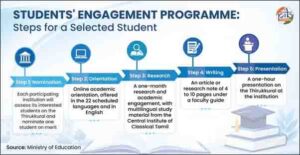
Each participating institution will assess interested students on their knowledge of the Thirukkural and nominate one candidate on merit.
The selected students will subsequently attend an online academic orientation conducted in all 22 scheduled languages and English.
This will be followed by a one-month research and academic engagement, supported by multilingual study material developed by CICT. Each eligible selected student will be entitled to a stipend of ₹10,000, subject to the programme guidelines and completion of the prescribed requirements.
The academic component will require every selected student to prepare an article or research note of four to ten pages under the guidance of a faculty member and deliver a one-hour presentation on the Thirukkural at the respective institution.
The initiative is designed to move beyond introductory exposure to classical literature, encouraging students to examine its teachings, undertake research and communicate their understanding to fellow learners.
Tamil teachers to take Thirukkural into Uttar Pradesh classrooms
The educational outreach will extend to schools and colleges in Uttar Pradesh.
Fifty teachers from Tamil Nadu will visit the State during the Sangamam to introduce the Thirukkural to students. Experts on the classical text from Tamil Nadu will also visit educational institutions in Varanasi.
Through orientation modules, interactive sessions and quizzes, students will be introduced to the central values and teachings of the text.
The National Book Trust, in association with the Rashtriya e-Pustakalaya, will conduct interactive sessions in schools in Varanasi, focusing on reading habits, storytelling and creative activities.
Together, these initiatives seek to create opportunities for young learners in Uttar Pradesh to discover Tamil literary heritage and appreciate its wider Indian and universal significance.
From classical couplets to digital platforms
Technology and multilingual communication will play an important role in expanding the reach of Kashi Tamil Sangamam 5.0.
CICT’s Thirukkural Multilingual App carries all 1,330 couplets with translations into the 22 scheduled languages. The institute’s initiatives for this edition will also include short animated videos and films on selected couplets, besides Thirukkural audiobooks.
In an innovative public-outreach initiative, couplets accompanied by translations are planned for passenger information systems and signboards at railway stations, airports and highway toll plazas.
The initiative will be undertaken in coordination with Indian Railways, the Airports Authority of India and the National Highways Authority of India.
By taking classical wisdom into everyday public spaces, the programme aims to introduce the Thirukkural to people who may not otherwise encounter the text through formal academic or literary platforms.
Academic deliberations and cultural celebrations
Kashi Tamil Sangamam 5.0 will be inaugurated on November 28, with the valedictory function scheduled for December 12. Students selected under the nationwide engagement programme will participate in both functions online.
Banaras Hindu University will co-host a National Conference on the Thirukkural, with the Bharatiya Bhasha Samiti as a partner.
The Ministry of Culture will facilitate cultural troupes, screenings of short films on the Thirukkural and cultural showcases at the venues. Handicraft and handloom outlets representing Tamil Nadu and Uttar Pradesh will also be established at the main venue for delegates.
These activities will complement the academic programme by showcasing the living traditions, artistic expressions and cultural practices of the two regions.
1,400 delegates to retrace centuries-old civilisational connections
Approximately 1,400 participants from Tamil Nadu, divided into seven groups of around 200 each, will undertake an eight-day journey comprising four days of travel and four days of visits and structured programmes.
The participants will represent seven broad categories: students, teachers, writers and media professionals, agriculture and allied sectors, professionals and artisans, women, and spiritual leaders.
In Varanasi, their itinerary will include visits to Kashi Vishwanath Temple, Sarnath or Banaras Hindu University, Ramnagar Fort and Bharat Mata Temple. Ganga Aarti, Ganga Snan, academic interactions and cultural programmes will also form part of the engagements.
The delegates will subsequently visit the Triveni Sangam in Prayagraj and the Shri Ram Temple in Ayodhya.
A special Tamil heritage circuit will provide an opportunity to explore the historical links between Tamil Nadu and Kashi. It will include Mahakavi Subramania Bharati’s ancestral house, Kedar Ghat and Kashi Madam in the locality popularly known as Little Tamil Nadu, besides an academic interaction at the Tamil Department of Banaras Hindu University.
A cultural bridge built across centuries
Kashi Tamil Sangamam was conceived to celebrate the historical and civilisational connections between Tamil Nadu and Kashi, two ancient centres of knowledge, spirituality and learning.
The movement of pilgrims, scholars and spiritual leaders between the two regions over generations reflects the enduring cultural links between India’s northern and southern regions.
Many Tamil families have lived around Hanuman Ghat and Kedar Ghat in Varanasi for generations. Swami Kumaragurupara of Dharmapuram Adheenam travelled from Tamil Nadu to Kashi and established the Kedareshwar Temple at Kedar Ghat. The approximately 200-year-old Kumaraswamy Mutt and Markandeya Ashram are also located in the same area.
Tenkasi in Tamil Nadu is known as the Kashi of the South, while Banaras Hindu University has a dedicated chair for Mahakavi Subramania Bharati, further reflecting the intellectual and cultural connections between the two regions.
Announced in 2022, the initiative seeks to bring the knowledge and cultural traditions of Tamil Nadu and Kashi closer, promote an understanding of their shared heritage and deepen people-to-people connections.
The first edition was held in 2022 as part of Azadi Ka Amrit Mahotsav. Across its first four editions, the programme has facilitated exchanges involving students, teachers, artisans, scholars, spiritual leaders and cultural practitioners. Participants have visited temples, historical sites and places associated with Tamil heritage, besides engaging with their counterparts through seminars, discussions, cultural programmes, sporting events and exhibitions.
Prime Minister Narendra Modi has described the initiative as a “vibrant programme which deepens the spirit of ‘Ek Bharat, Shreshtha Bharat’.”
A collective effort to preserve and share India’s knowledge traditions
The Department of Higher Education, Ministry of Education, is organising Kashi Tamil Sangamam in collaboration with IIT Madras, Banaras Hindu University, the Central Institute of Classical Tamil, Chennai, and the Government of Uttar Pradesh.
Several Central Ministries and Departments, including Culture, Railways, Tourism and Textiles, are also partners in the initiative.
As Kashi Tamil Sangamam enters its fifth edition, the emphasis on the Thirukkural gives the programme an educational dimension that reaches well beyond ceremonial cultural exchanges.
Its larger ambition is to make India’s classical literature accessible to contemporary learners, encourage dialogue between languages and academic traditions, and demonstrate how an ancient text can continue to inform modern life.
From university research projects and school-level teaching to multilingual digital platforms and public information displays, the message is unmistakable: India’s linguistic diversity need not divide its knowledge traditions; it can become the bridge that brings them closer.