R ARIVANANTHAM
CHENNAI, JAN 20
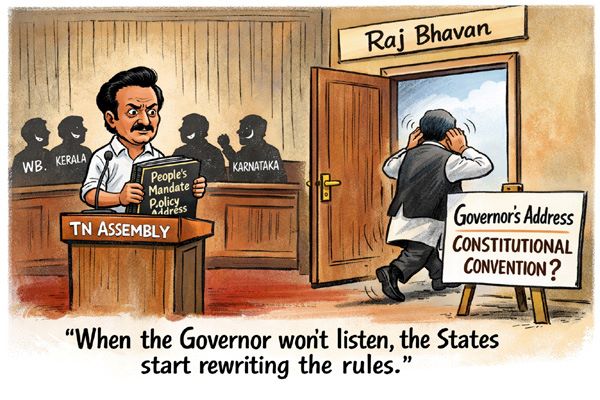
What began as a confrontation in the Tamil Nadu Assembly has now escalated into a nationwide political and constitutional debate, with Chief Minister and DMK President M.K. Stalin proposing a Constitutional amendment to abolish the mandatory Governor’s Address, drawing strong backing from Opposition parties and non-BJP ruled state Chief Ministers, while the BJP and Raj Bhavan defended the Governor’s actions as constitutionally justified.
இந்தியாவில் எதிர்க்கட்சிகள் ஆளும் அனைத்து மாநிலங்களுக்காக, 'ஆளுநர் உரை தேவையில்லை' என #ConstitutionalAmendment கோருவோம்!
அரசு தயாரித்தளித்த அறிக்கையை ஆளுநர் படிக்காமல் வெளியேறுவதால், #DravidianModel அரசின் நான்காண்டு சாதனைகளைப் பயன்பெறும் மக்களிடம் மறைத்துவிட முடியாது.… pic.twitter.com/X8FJ3Gx7sE
— M.K.Stalin – தமிழ்நாட்டை தலைகுனிய விடமாட்டேன் (@mkstalin) January 20, 2026
The flashpoint was Governor R.N. Ravi’s refusal to read the government-prepared address and his subsequent walkout from the Assembly, the fourth such incident since he assumed office in 2021. Raj Bhavan later claimed the text contained “inaccuracies” and cited procedural and constitutional objections.
- Non-BJP CMs, Opposition Leaders Rally Behind DMK After Ravi’s Fourth Walkout
- BJP, Raj Bhavan Defend Governor’s Conduct, Cite ‘Constitutional Duty’
- Debate Widens on Federal Balance, Role of Governors in Opposition-Ruled States
Speaking in the Assembly, Stalin said the repeated refusals raise fundamental questions about the very relevance of the practice.
“It is not good that the Governor refuses every year to read out the government prepared speech. Governors posing trouble happens in several states and it does not happen only in Tamil Nadu,” Stalin said.
Recalling established conventions, he added: “When a governor repeatedly violates such a practice, a question naturally arises as to why such a rule or practice should exist.”
ஒரு அரசை மக்கள் விமர்சனம் செய்யலாம், தேர்ந்தெடுக்கப்பட்ட பிரதிநிதிகள் நிறைக்குறைகளை சொல்லுவார்கள். ஆளுநர் அவர்கள் நிறைக்குறைகளை சொல்ல என்ன இருக்கிறது. அவர் அரசியல்வாதி அல்ல. நாடாளுமன்றத்தில் ஜனாதிபதி உரையில் இப்படி செய்தால் ஒன்றிய அரசு ஏற்குமா?
– மாண்புமிகு தமிழ்நாடு… pic.twitter.com/nNTrGlcz1F
— DMK (@arivalayam) January 20, 2026
DMK to Take Battle to Parliament
Framing the issue as a federal concern rather than a state-specific dispute, Stalin announced that the DMK would seek support from like-minded parties in Parliament.
“Hence, the DMK would make efforts in the Parliament with the support of like-minded parties to drop from the Constitution, by way of an amendment, provisions mandating the governor’s address at the start of the year,” he said.
Later, in a social media post, Stalin broadened the appeal: “Let us demand a Constitutional amendment that Governor’s Address is unnecessary,” he said, adding that it was “for the sake of all the states ruled by the opposition parties in the country.”
Opposition Leaders, Non-BJP CMs Back Stalin
The DMK’s stand found resonance across Opposition ranks. Congress MP Manickam Tagore said the Governor’s repeated walkouts amounted to an “insult to a democratically elected legislature”, while Karti P. Chidambaram reiterated demands for Ravi’s recall, calling his continuation in office “untenable”.
Left parties, including the CPI(M), accused the Governor of violating constitutional conventions and cited Supreme Court observations that Governors cannot indefinitely obstruct or delay the functioning of elected governments.
Chief Ministers and leaders from West Bengal, Kerala and Karnataka, where similar tensions with Governors have played out, viewed Stalin’s move as part of a larger struggle to protect state autonomy. Senior leaders pointed to recent Supreme Court rulings that reaffirmed limits on gubernatorial discretion, especially concerning assent to Bills, as reinforcing the states’ position.
BJP, Raj Bhavan Defend Governor’s Actions
Reasons why Governor declined reading the Govt speech in the Assembly:
1- Governor’s Mike was repeatedly switched off and he was not allowed to speak;
2- The speech contains numerous unsubstantiated claims and misleading statements. Several crucial issues troubling the people… pic.twitter.com/EebC7wDJHg
— LOK BHAVAN, TAMIL NADU (@lokbhavan_tn) January 20, 2026
The BJP and Raj Bhavan, however, rejected allegations of overreach. Raj Bhavan sources said the Governor acted strictly in accordance with his constitutional oath, claiming that certain portions of the address required correction and that procedural norms, including respect for constitutional values, were at stake.
BJP leaders argued that the Governor has a duty to uphold the Constitution, and maintained that questioning the Governor’s role should not become a political tool to undermine constitutional offices. They accused the DMK of attempting to shift blame for political disagreements onto the Raj Bhavan.
‘Dravidian Model Cannot Be Silenced’: Stalin
Dismissing the Governor’s walkout as symbolic obstruction, Stalin asserted that governance outcomes mattered more than ceremonial disruptions.
“The four-year achievements of the Dravidian model government cannot be hidden from the people who have benefited from them just because the Governor leaves the House without reading the government-prepared address,” he said.
He also cited national media criticism of the Governor’s conduct.
Referring to an editorial in an English daily, Stalin said the Tamil Nadu Governor had been described as “recalcitrant” for “disrespecting the Constitution and the democratically elected government,” adding that “Ravi’s actions today have proven that.”
From Chennai to New Delhi: A Constitutional Flashpoint
Political observers say the standoff has transformed into a defining federalism issue, with Opposition-ruled states increasingly questioning the role of Governors appointed by the Centre. With Stalin signalling a coordinated parliamentary push, the debate over the Governor’s Address is now poised to shape future Centre–State relations and constitutional discourse.