
NE ECONOMIC BUREAU
NEW DELHI, OCT 9
Can India’s indirect tax system become less intimidating for honest businesses without compromising its ability to tackle fraud and evasion? The 57th meeting of the GST Council has put that question at the heart of a sweeping package of proposed changes, recommending the withdrawal of arrest powers under the GST law, a fivefold increase in the prosecution threshold, lower general penalties and greater automation of refunds and compliance.
- 57th GST Council meeting recommends complete withdrawal of arrest powers under the CGST Act
- Prosecution threshold proposed to rise fivefold, from ₹1 crore to ₹5 crore, with focus on a trust-based tax regime
- Maximum general penalty recommended to be cut from ₹25,000 to ₹10,000
- Automated refunds, simplified registration and wider input tax credit aim to ease business cash-flow pressures
- Goods in transit to face intelligence-based interception, with no interception in transit states under the proposed framework
- Optional quarterly tax-payment scheme proposed for eligible small businesses with turnover up to ₹5 crore
The recommendations signal a push towards a more predictable, technology-driven and trust-based tax administration, with particular implications for small businesses, exporters, e-commerce sellers, manufacturers and service providers. However, these are Council recommendations that require the relevant legal and procedural changes to take effect; they should not be mistaken for provisions already implemented.
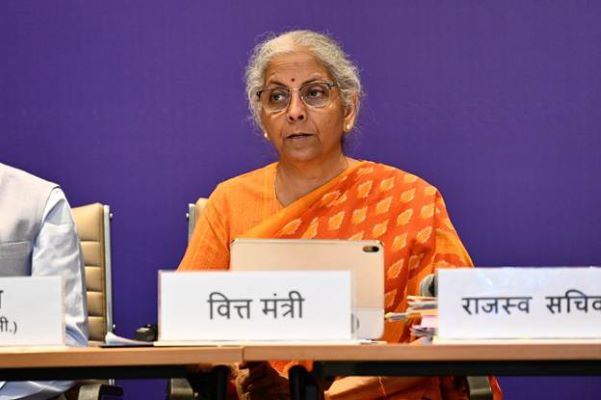
The meeting was held in New Delhi under the chairpersonship of Union Finance and Corporate Affairs Minister Nirmala Sitharaman. Participants included Chief Ministers of Delhi, Goa, Haryana, Jammu and Kashmir, Karnataka, Kerala, Maharashtra and Meghalaya; Deputy Chief Ministers of Manipur and Telangana; state and Union Territory finance ministers and senior officials, along with the Secretary, Department of Revenue, and the Chairman and Members of the Central Board of Indirect Taxes and Customs.
A shift from rate rationalisation to process reform
While the 56th meeting had focused on next-generation reforms through rate rationalisation and rate reductions, the 57th meeting concentrated on registration, returns, refunds, adjudication, trade facilitation and clarifications concerning the applicability of GST to goods and services.
The Council also recommended measures to reduce compliance friction, improve the movement of goods across state borders and clarify disputed interpretations. Frequently asked questions and circulars are intended to address doubts arising from the changes.
Less punitive, more proportionate enforcement
Among the most consequential proposals is the complete withdrawal of arrest powers under GST, through the recommended omission of Section 69 of the Central Goods and Services Tax Act, 2017.
The Council also recommended raising the monetary threshold for prosecution from ₹1 crore to ₹5 crore, alongside amendments to the offences and punishment provisions under Section 132. The proposed changes would narrow certain offence provisions, including those relating to fraudulent availment of input tax credit.
The maximum general penalty under Section 125 is proposed to be reduced from ₹25,000 to ₹10,000. The Council further recommended a minimum ₹10,000 threshold for issuing show-cause notices involving tax, with provisions to address qualifying pending cases.
For non-fraud cases, a reduced penalty of 5% has been recommended where tax and interest are paid within the prescribed 30-day period under Section 73 or 60-day period under Section 74A after the adjudication order. The Council also proposed an upper limit of ₹40 crore on pre-deposits for appeals before the Appellate Authority or Appellate Tribunal in cases involving only penalties and no tax demand.
The larger objective is to reduce avoidable litigation and make enforcement more proportionate while retaining deterrence against deliberate evasion.
Faster refunds to unlock working capital
For businesses struggling with blocked funds, the proposed automation of refund processing could prove particularly significant.
In the first phase, full refunds of excess balances in electronic cash ledgers would be sanctioned automatically, without officer intervention. The time limit for issuing an acknowledgement or deficiency memo would be reduced from 15 days to 10 days, with system-generated deemed acknowledgement where the prescribed action is not taken within that period.
For eligible refund claims involving zero-rated supplies and inverted duty structures, the Council recommended automatic provisional sanction of 90% of the claimed amount, subject to system-based risk identification and evaluation.
A second phase envisages automated acknowledgement and full refund sanction for eligible zero-rated supply claims after adjustment of pending dues, based on system verification and risk assessment.
The Council also recommended changes to refund applications to make information system-readable and dispense with scanned-document uploads in specified cases. These measures are intended to improve transparency, reduce manual intervention and release working capital more quickly.
Registration and compliance: fewer roadblocks
The proposed registration reforms seek to reduce rejections and repeated queries through comprehensive guidance, standardised document requirements, improved online forms and a more user-friendly GST portal.
Amendments to registration particulars would generally be accepted automatically, except for specified principal-place-of-business changes. Taxpayers covered by the automatic registration route under Rule 14A would receive broader automatic acceptance of amendments.
The Council also recommended phased automatic cancellation of registrations once pending returns are filed and outstanding dues paid, subject to the prescribed conditions.
Small suppliers selling goods through e-commerce platforms could benefit from a simplified registration mechanism, allowing eligible sellers to expand into states where they have no physical presence without establishing a separate place of business in each state.
An optional Annual Return Quarterly Payment (ARQP) scheme was also approved in principle for eligible taxpayers with aggregate turnover of up to ₹5 crore in the preceding financial year who exclusively make supplies to unregistered consumers.
Wider input tax credit and export opportunities
The Council recommended removing specified restrictions on input tax credit relating to outdoor catering, health and life insurance, telecommunication towers, pipelines outside factory premises, free samples and goods destroyed or written off on expiry of shelf life where required by law.
It also recommended extending refunds of accumulated input tax credit in specified cases involving capital goods and input services, with prescribed eligibility dates and a 60-month spread for refunds relating to capital-goods credit.
For service exporters, proposed changes to the definition of exports of services are intended to facilitate refunds for Indian providers supplying services to or through foreign offices and branches. Further clarifications would address permissible receipt of export payments in foreign exchange or Indian rupees.
The Council also recommended changes to facilitate export-related benefits in specified service transactions and provide greater certainty for manufacturers supplying goods to overseas buyers through special economic zones or free-trade warehousing zones.
Smoother movement of goods, clearer rules
To reduce disruption in interstate logistics, the Council recommended that vehicles carrying goods be intercepted only on specific intelligence and with authorisation from an officer not below the rank of Joint Commissioner.
Under the proposed framework, inspection and further action for detention or seizure would generally be linked to whether the supplier or recipient is located or registered in the state where interception takes place. Transit states would not undertake interception under the specified circumstances. Exceptions would apply where no e-way bill has been generated or the conveyance carries no document establishing the origin or destination of the goods.
The Council also recommended an opportunity for taxpayers to file objections and seek a personal hearing before a decision is taken on blocking amounts in an electronic credit ledger.
Eligible small taxpayers with annual turnover of up to ₹5 crore in the preceding financial year could receive a waiver of late fees for delayed returns under Section 39(1), provided the return is filed by the end of the month in which it was due.
Sector-specific clarifications and relief
The recommendations also cover GST treatment of goods and services across multiple sectors, including electric-vehicle passenger transport and rentals, delivery services through e-commerce operators, storage of seeds for sowing, coffee-curing services, research and development services, highway concession arrangements and specified shipping-related transactions.
Clarifications have also been recommended on the classification or treatment of sublimation paper, toys, seaweed-based bio-stimulants, second-hand vehicles, isabgol seeds, retreaded tractor tyres and specified waste and scrap transactions.
The Council approved, in principle, an optional scheme for small consumer-facing businesses with turnover of up to ₹5 crore, while also recommending changes to streamline compliance and align GST provisions with the applicable statutory framework.
The test lies in implementation
The proposed package seeks to address a persistent concern among businesses: that tax compliance should be firm against fraud but predictable and proportionate for those attempting to meet their obligations.
If implemented effectively, the recommendations could reduce procedural friction, improve cash flows, simplify interstate commerce and make the GST system more accessible to smaller enterprises. The real test, however, will be how quickly the necessary amendments, rules and circulars are issued—and whether the promised reduction in manual intervention translates into a more consistent experience for taxpayers across the country.