NE DEFENCE BUREAU
CHENNAI, MAR 1
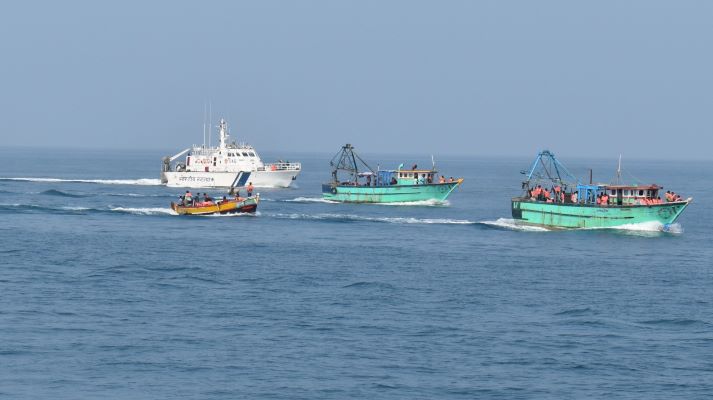
In a powerful demonstration of maritime vigilance and humanitarian commitment, the Indian Coast Guard successfully escorted 3,741 pilgrims on their sacred journey to Katchatheevu Island for the revered annual festival at St. Antony’s Church, ensuring their safe passage across international waters and secure return to Indian shores.
#ICG Station #Mandapam coordinated escort of over 100 mechanised/traditional boats to #IMBL by #ICG Ships & Aircraft for safe pilgrimage of 3741 devotees in coordn with #SrilankaNavy
The SAR & security cover reaffirms #ICG's commitment to
maritime safety & humanitarian
support. pic.twitter.com/mZORiGjmz2— Defence PRO Chennai (@Def_PRO_Chennai) March 1, 2026
The two-day religious festival, held between February 27 and 28, 2026, carries deep spiritual significance for fisherfolk communities from both India and Sri Lanka. Pilgrims from Tamil Nadu and other states embarked on the journey aboard a large convoy of mechanized and non-mechanized boats, beginning their voyage from Rameshwaram on February 27.
- 3,741 devotees escorted safely across international waters for revered St. Antony’s Church festival
- Coast Guard’s surface and air units ensure seamless maritime security from Rameshwaram to IMBL and back
- Mission reinforces India’s commitment to safeguarding pilgrims, fisherfolk and maritime traditions
To guarantee the safety and security of every pilgrim, the Indian Coast Guard deployed its surface vessels and aerial surveillance units to escort the flotilla up to the International Maritime Boundary Line (IMBL), where the convoy was formally handed over to the Sri Lankan Navy for onward passage to Katchatheevu Island.
Following the overnight stay and participation in the sacred festivities, the pilgrims were escorted safely back to Indian waters, completing the mission without incident.
Highlighting the scale and sensitivity of the operation, officials noted that the convoy remained under continuous escort and surveillance throughout the journey.
“The convoy of fishing boats were under escort and surveillance of the surface and air units of the Indian Coast Guard.”
This coordinated maritime security operation underscored the Coast Guard’s dual role as both a strategic maritime force and a humanitarian protector, ensuring that religious traditions rooted in centuries-old maritime culture continue uninterrupted and secure.
Beyond security, the mission also symbolised India’s commitment to safeguarding the lives, faith and livelihoods of coastal communities, reinforcing trust between maritime agencies and citizens.
The successful escort once again showcased the Indian Coast Guard’s operational readiness, precision coordination and unwavering dedication to protecting lives at sea—whether defending maritime boundaries or enabling journeys of faith.