- Ahead of World Wetlands Day, Chhari-Dhand and Patna Bird Sanctuary receive global recognition
- Prime Minister and Union Environment Minister laud conservation milestones
- Gujarat’s fifth Ramsar wetland underscores state’s environmental leadership
- Wetlands seen as critical for biodiversity protection and eco-tourism boost
NE ENVIRONMENT BUREAU
GANDHINAGAR / NEW DELHI, JAN 31
In a major win for wetland conservation, the Chhari-Dhand Bird Sanctuary in Kutch, Gujarat, and the Patna Bird Sanctuary in Etah, Uttar Pradesh, have been designated as Wetlands of International Importance under the Ramsar Convention—bringing India’s total to 98 Ramsar sites ahead of World Wetlands Day on Monday-February 2, 2026.
The announcements were made by Union Environment Minister Bhupender Yadav, who highlighted India’s expanding commitment to environmental protection and wetland management.
“Congratulations Team Uttar Pradesh and Gujarat and the Wetland community! With World Wetlands Day close by, I am delighted to announce that there are two new additions to India’s Ramsar growing network. Patna Bird Sanctuary in Etah, Uttar Pradesh, and Chhari-Dhand in Kutch, Gujarat are the latest additions to the coveted Ramsar Sites list,” Bhupender Yadav said in a post on social media platform X.
Prime Minister Narendra Modi warmly welcomed the designations, congratulating local communities and conservationists.
“Delighted that the Patna Bird Sanctuary in Etah (Uttar Pradesh) and Chhari-Dhand in Kutch (Gujarat) are Ramsar sites. Congratulations to the local population there as well as all those passionate about wetland conservation. These recognitions reaffirm our commitment to preserving biodiversity and protecting vital ecosystems. May these wetlands continue to thrive as safe habitats for countless migratory and native species,” the Prime Minister posted on X.
Gujarat’s Environmental Leadership Shines
The inclusion of Chhari-Dhand—a seasonal saline wetland located between the Banni grasslands and the Kutch salt flats—marks Gujarat’s fifth Ramsar site and the first in Kutch district to receive international recognition.
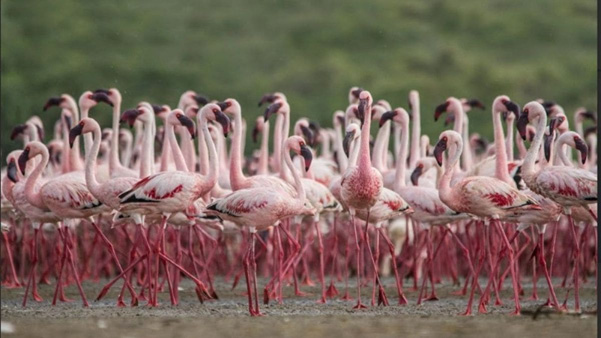
State leaders welcomed the honour as both an ecological milestone and a boost for local conservation efforts and eco-tourism. According to state officials, Chhari-Dhand supports over 250 bird species and attracts tens of thousands of migratory birds each winter, including Common Cranes, Greater and Lesser Flamingos, Siberian Teals, Dalmatian Pelicans, and Black-necked Storks, along with mammals such as chinkara, wolves, caracals, desert cats, and desert foxes.
Gujarat Chief Minister Shri Bhupendra Patel said: “This is excellent news for Gujarat’s biodiversity. The inclusion of Chhari-Dhand Bird Sanctuary as a Ramsar Site reflects our state’s commitment to wetland conservation. Following the path shown by Prime Minister Narendra Modi, we are ensuring that development and nature go hand-in-hand, creating a world-class ecosystem for our winged visitors.”
State forest and environment ministers also noted that Gujarat’s wetlands cover approximately 3.5 million hectares—over 21% of the country’s total wetland area—and play a vital role in sustaining biodiversity across ecosystems.
How Chhari-Dhand Is Rewriting Gujarat’s Eco-Tourism and Biodiversity Story
The international recognition of Chhari-Dhand Bird Sanctuary in Kutch as a Ramsar Site has quietly unlocked a transformative moment for Gujarat’s biodiversity conservation and eco-tourism potential. Long known to birders and conservationists but largely absent from mainstream tourism maps, the seasonal saline wetland is now poised to emerge as one of western India’s most significant nature destinations.
Located between the Banni grasslands and the Great Rann of Kutch, Chhari-Dhand is a rare ecological transition zone—where desert, grassland, and wetland ecosystems converge. This unique geography makes it a vital refuge for migratory and resident bird species, particularly during winter months.
A Sanctuary for Birds—and Beyond
Chhari-Dhand supports hundreds of migratory and native bird species, including Greater and Lesser Flamingos, pelicans, cranes, ducks, storks, and raptors, transforming the landscape into a vibrant avian corridor every year. Beyond birds, the wetland and its surrounding habitats are home to chinkara, wolves, caracal, desert cats, and desert foxes, making it one of Gujarat’s richest yet understated biodiversity pockets.
Environmental experts note that Ramsar recognition strengthens long-term conservation safeguards, ensuring that water regimes, habitat integrity, and species diversity are preserved through science-based management rather than ad-hoc interventions.
Eco-Tourism: A New Growth Engine for Kutch
With global recognition now in place, Chhari-Dhand presents a major opportunity for low-impact, community-led eco-tourism in Kutch. Birdwatching trails, seasonal nature interpretation centres, guided photography tours, and wetland education programmes are expected to gain momentum—especially as tourists increasingly seek experiential, nature-centric travel.
Unlike mass tourism, eco-tourism around wetlands creates distributed economic benefits, generating livelihoods for local guides, homestay operators, artisans, and conservation volunteers, while reinforcing the importance of protecting fragile ecosystems.
Officials believe Chhari-Dhand could complement established attractions like the Great Rann of Kutch, extending tourist stays and diversifying the region’s tourism calendar beyond the Rann Utsav season.
Climate Resilience and Water Security
Wetlands like Chhari-Dhand are increasingly recognised as natural climate buffers. They absorb floodwaters, recharge groundwater, trap carbon, and moderate extreme weather—functions that are especially critical in arid and semi-arid regions such as Kutch.
By conserving Chhari-Dhand, Gujarat strengthens its climate adaptation strategy, protecting both wildlife and local communities from the growing impacts of climate variability.
National Conservation Momentum
The Patna Bird Sanctuary in Uttar Pradesh, now an important stop for waterbirds and an Important Bird and Biodiversity Area (IBA), was also welcomed by environmental leaders as part of the expanding national commitment to wetland protection and biodiversity preservation.
Experts say that Ramsar recognition helps drive sustainable wetland management practices, strengthens biodiversity conservation frameworks, and increases awareness about the ecological and socio-economic value of these habitats for local communities.
The designations come at a time when India’s environmental efforts are increasingly being recognised on global platforms, reinforcing the country’s leadership in safeguarding critical ecosystems.