- Hare Krishna Mandir celebrates Janmashtami with grand fervour as lakhs of devotees converge for Maha Abhishekam, Sankirtan and midnight Maha Arati
- 1,008 varieties of bhog offered to Sri Krishna; 151-kg pure vegetarian cake adds festive flavour
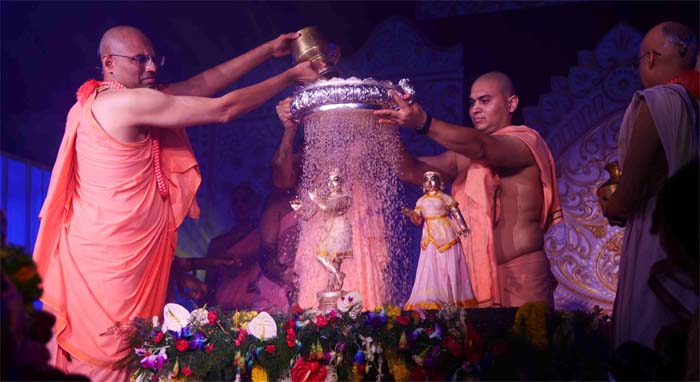
- 108 kalashas of sacred water from seven holy rivers used for elaborate Maha Abhishekam
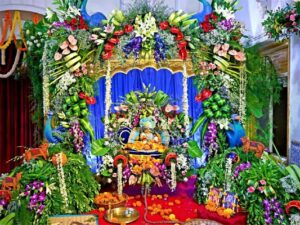
- Fragrant floral décor, Vishesha Janmashtami Alankara, Jhulan Seva and Krishna bhajans transform temple into a spiritual spectacle
- 21 lakh names of Sri Krishna to be chanted as devotees dedicate Japa-Yagna to peace and prosperity
NE SPIRITUAL BUREAU
AHMEDABAD, SEPT 5
At the stroke of midnight, when the conch shells echoed, lamps illuminated the sanctum and the holy name of Krishna rose in Sankirtan, Bhadaj seemed to pause between the earthly and the divine. The Hare Krishna Mandir came alive in a spectacular confluence of devotion, music, flowers, sacred rituals and community participation as thousands of devotees gathered to celebrate Sri Krishna Janmashtami 2026 with extraordinary fervour.
The festival, celebrated on Friday, September 4, turned the Hare Krishna Mandir into a vibrant spiritual centre, with devotees participating in Maha Abhishekam, Jhulan Seva, Krishna bhajans, Sankirtan and the eagerly awaited midnight Maha Arati.
The temple’s official Janmashtami programme describes the festival as the celebration of the divine appearance of Lord Sri Krishna and says the festivities culminate at midnight with prayers, Kirtan, Abhishekam and festive offerings.
A feast fit for the Lord
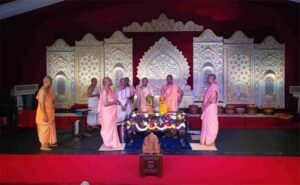
One of the spectacular highlights was the offering of more than 1,008 varieties of food preparations, ranging from sweets and milk preparations to farsan and other vegetarian delicacies.
Adding a distinctive touch to the grand offering was a 151-kg special pure vegetarian cake, which was offered to Lord Krishna before being distributed among devotees.
The massive offering was not merely a culinary spectacle but an expression of bhakti through seva—the devotional tradition of offering one’s best to the Lord before sharing it with the community.
Radha Madhav in resplendent Janmashtami Alankara
The presiding deities, Sri Sri Radha Madhav, appeared in a specially designed Vishesha Janmashtami Alankara, with fragrant flowers, exquisite garments and jewellery adding to the splendour of the sanctum.
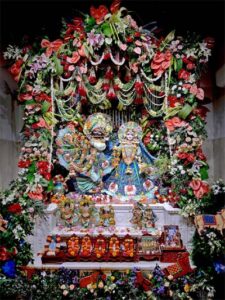
The special outfit was created in pure silk, complemented by precious and valuable stones. A new jewellery set was specially prepared in Vrindavan to harmonise with the colours and design of the festive attire.
The elaborate decoration was the result of nearly two months of planning, with devotees carefully working on the colours, design and materials.
The entire temple complex was transformed with fragrant and colourful flowers sourced from different parts of India, creating an atmosphere of beauty and devotion.
When 108 kalashas became a river of devotion
The Maha Abhishekam emerged as one of the most spiritually evocative moments of the celebrations.
Following the devotional tradition associated with the bathing of baby Krishna by Nanda Maharaja and Yashoda, devotees performed an elaborate ceremonial bathing of Sri Sri Radha Madhav.
The Deities were bathed with a wide range of auspicious substances, including panchgavya, medicinal herbs, fruit juices and flowers.
The special highlight was the ceremonial bathing with 108 kalashas of water collected from seven holy rivers, turning the Abhishekam into a deeply symbolic offering of sacredness and devotion.
The official temple programme also lists multiple Abhishekams for Sri Sri Radha Madhav and Laddu Gopal as a central feature of the Janmashtami celebrations.
Bhajans, Sankirtan and the midnight awakening
The temple reverberated with Krishna bhajans from morning till midnight, with artistes leading devotees into an atmosphere of collective devotion.
A special Sri Krishna Sankirtan Concert by Nandlal Chhanga and team began at 10 pm, building the spiritual momentum towards the most awaited moment of the festival.
Then came midnight.
As the clock struck 12, devotees joined the grand Maha Arati, accompanied by Sankirtan, marking the divine appearance of Lord Krishna.
The midnight culmination is integral to the Vaishnava celebration of Janmashtami, with ISKCON describing the festival as one of its biggest annual events, where chanting, music and devotional programmes lead up to the midnight appearance of Krishna.
A vow of 21 lakh Krishna names
The celebrations went beyond ritual and spectacle with devotees undertaking a collective spiritual offering to chant 21 lakh names of Sri Krishna, praying for peace and prosperity in the world.
Visitors too enthusiastically joined the Japa-Yagna, making the chanting of the holy name a shared expression of devotion.
The temple also witnessed Jhulan (Hindola) Seva throughout the day, giving devotees an opportunity to participate personally in the loving service of Lord Krishna.
The celebrations drew lakhs of devotees, with visitors receiving farali Krishna prasadam and participating in the various spiritual and cultural programmes.
Nandotsav and Vyasa Puja follow Janmashtami
The spiritual celebrations continued on Saturday, September 5, with Nandotsav and Vyasa Puja.
Nandotsav marks the celebrations following Krishna’s appearance, while Vyasa Puja commemorates the appearance day of a Vaishnava spiritual master.
At the Hare Krishna Mandir, Vyasa Puja is particularly significant as Srila Prabhupada, founder-acharya of ISKCON, was born on the day of Nandotsav, the day following Janmashtami.
The temple’s 2026 festival information similarly lists September 5 for Nandotsav and Vyasa Puja following Janmashtami.
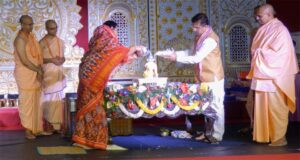
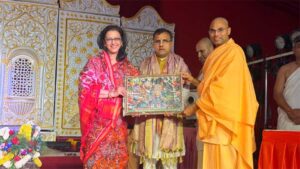
Among those who visited the temple with their families and participated in the celebrations were Dr Pradyuman Vaja, Education Minister, Gujarat, and Anupam Singh Gehlot, Commissioner of Police, Ahmedabad, along with several other prominent personalities.
Jaganmohan Krishna Dasa, President, Hare Krishna Mandir, Bhadaj, said the Janmashtami celebrations were an opportunity for devotees and visitors to come together in remembrance of Sri Krishna through devotional service, chanting, music and prasadam.
As the final echoes of Sankirtan faded after the midnight Maha Arati, the message of Janmashtami remained simple yet profound: celebrate the birth of Krishna not merely as a festival, but by allowing His teachings, compassion and consciousness to find a place in everyday life.