- In the university category, both IISc and JNU, retain their first and second positions, respectively
- In the NIRF 2025 rankings of the top 50 state public universities, southern states dominate with 22 institutions, led by Tamil Nadu with 10
- CEPT University ranks 6th in Architecture and Planning category
NE EDUCATION BUREAU
AHMEDABAD, SEPT 5
Union Education Minister Dharmendra Pradhan and Minister of State For Education Sukanta Majumdar on Thursday announced the overall rankings and rankings across 17 categories for higher education institutions (HEIs). The categories include engineering, management, medicine, university, law, research, and agriculture. There is also a category just for colleges. A total of 14,163 higher education institutions participated in the 10th edition of NIRF Rankings.
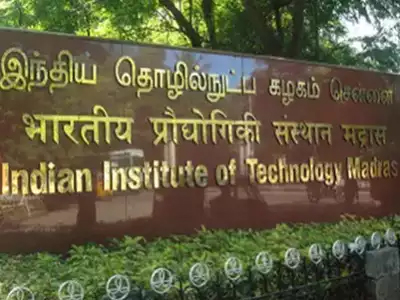
The Indian Institute of Technology (IIT) Madras has topped the National Institutional Ranking Framework (NIRF) 2025 for the seventh consecutive year, and also emerged the top engineering college in India for the 10th year since the rankings were introduced in 2016. Like last year, the Indian Institute of Science (IISc) Bengaluru is ranked second in the overall ranking, and IIT Bombay third.
IIT Madras also secured the top spot in the new Sustainable Development Goals (SDGs) category added in the 10th edition of the ranking. Under this new category, HEIs were examined in terms of green initiatives and environmentally friendly practices. SDGs are a set of 17 global objectives adopted by the United Nations in 2015 to address pressing challenges such as poverty, inequality, climate change, and environmental sustainability by 2030.
Commenting on this, IIT Madras director V Kamakoti said , “Our success comes from working in a cohesive, coordinated, and focused manner on goals set under a five-year strategic plan. We strictly adhered to this roadmap, with faculty, staff, students, alumni, industry partners, government funding agencies, and the education ministry all contributing in a highly coordinated way. This collective effort has helped us.”
In the university category, both IISc and JNU, retained their first and second positions, respectively. The Manipal Academy of Higher Education rose to third place, up from fourth last year. The Birla Institute of Technology and Science (BITS) Pilani jumped from 19th position in 2024 to 10th in 2025 in the university category, driven largely by an improvement in its perception score — from 19.68 out of 100 in 2024 to 49.19 this year.
AIIMS New Delhi retained the top position in the medical category, while the National Law School of India University (NLSIU), Bengaluru, led the law category. Jamia Hamdard, New Delhi, secured the first rank in pharmacy for the second year in a row. Among colleges, Hindu College of Delhi University emerged as the top institution, with Delhi colleges continuing their dominance—claiming six of the top 10 spots nationwide.
Tamil Nadu dominates Southern States with 10
In the NIRF 2025 rankings of the top 50 state public universities, southern states dominate with 22 institutions, led by Tamil Nadu with 10. Northern states account for 18, while Maharashtra, West Bengal, Assam, Odisha, Madhya Pradesh, and Gujarat together contribute 10. States such as Bihar, Rajasthan, Himachal Pradesh, Jharkhand, Chhattisgarh, most northeastern states (except Assam), and several Union Territories (UTs) including Ladakh, Andaman & Nicobar Islands, and Puducherry, find no place, highlighting a regional imbalance in India’s higher education landscape.
Gujarat
The Indian Institute of Management (IIM) Ahmedabad topped the list in management category retaining its first position for the sixth consecutive year. “This achievement reflects the unwavering commitment of our faculty, students, and alumni towards academic excellence, impactful research, and meaningful contributions to society. Our strong focus on research and innovation continues to shape new ideas and solutions that influence both academia and industry, while reinforcing IIMA’s role as a thought leader in management education,” said Prof. Bharat Bhasker, Director, IIMA.
CEPT University ranks 6th in Architecture and Planning category

Prof. Barjor Mehta, President, CEPT University, said, “CEPT University is proud to rank 6th, the only private university and the only university from Gujarat, in the top 10 institutes in NIRF 2025 in the Architecture and Planning category. This recognition underscores our steadfast commitment to excellence in education, research, and practice. CEPT continues to nurture talent, push boundaries of knowledge, and create meaningful impact in partnership with industry and society. We are grateful for the recognition as the Center of Excellence, Government of Gujarat, which enables us to continually push for higher quality of education. We congratulate our peer institutions featured in this year’s rankings for their valuable contributions to higher education.”
NIRF evaluates institutions based on 19 parameters organized under five heads: Teaching, Learning, and Resources (TLR) carries a weightage of 30%, as does Research and Professional Practice (RP), Graduation Outcomes (GO) account for 20%, Outreach and Inclusivity (OI) 10%, and Perception (PR) 10%. These weightages may vary slightly depending on the ranking category.
The National Board of Accreditation (NBA), which oversees the NIRF rankings, has for the first time introduced a negative marking system linked to the number of retracted research publications. On tackling unethical practices in research, NBA chairperson Anil Sahasrabudhe said, “This year we introduced negative marking for retracted papers and their citations — a double whammy. Institutions are warned to be truthful and honest in their publications. If unethical practices persist, the penalty weightage will rise, and repeat offenders may even face debarment from the rankings.”