NE HEALTH BUREAU
CHENNAI, NOV 6
In a major step toward transforming diabetes management, researchers at the Indian Institute of Technology Madras (IIT Madras) have developed and patented a low-cost, user-friendly, and minimally invasive glucose monitoring device designed to make diabetes care more comfortable and accessible for millions of patients.
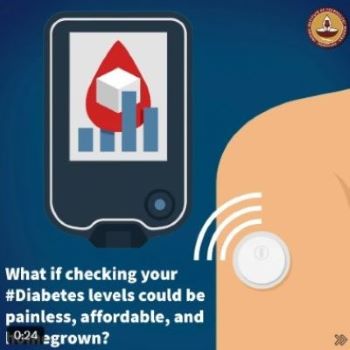
What if your #Diabetes monitoring device could be affordable, accurate, and completely painless? That is exactly what @iitmadras researchers have done. They have developed and patented an affordable, minimally invasive glucose monitoring device that promises to make diabetes… pic.twitter.com/LuvRSIp4CI
— IIT Madras (@iitmadras) November 6, 2025
The innovation, from the Electronic Materials and Thin Films Lab led by Prof. Parasuraman Swaminathan, reimagines continuous glucose monitoring (CGM) technology to offer a pain-free experience without the prohibitive costs associated with existing imported systems.
- Patented device offers pain-free, cost-effective alternative to finger-prick tests and costly imported CGMs
- Innovative modular system combines reusable electronics with disposable microneedle sensor patch
- “Success is when research truly improves lives,” says lead scientist Prof. Parasuraman Swaminathan
According to the Indian Council of Medical Research – India Diabetes (ICMR-INDIAB) study (2023), over 10.1 crore Indians live with diabetes, making affordable monitoring solutions a critical healthcare priority.
Unlike traditional Self-Monitoring of Blood Glucose (SMBG), which requires frequent finger-prick tests, CGMs provide real-time glucose readings. However, current CGM models remain expensive and reliant on smartphones or dedicated display units.
To overcome these limitations, the IIT Madras team developed a modular device that integrates reusable electronics and a low-power display with a disposable microneedle sensor patch, providing both affordability and accuracy.
“From a researcher’s perspective, the real measure of success is when an idea steps out of the lab and makes a tangible difference in people’s lives,” said Prof. Swaminathan. “In diabetes management, that difference could mean sparing someone the discomfort of multiple finger pricks a day and preventing long-term complications.”
The IIT Madras innovation—now protected by multiple patents—represents a vital leap in making continuous glucose monitoring accessible to the common man, bridging the gap between advanced medical technology and everyday healthcare needs.