


• About Us
  • Our Team
  • Advertising
  • Careers
  • Contact
Friday, March 6, 2026
  • Login
No Result
View All Result
Navjeevan Express
Advertisement
  • Gujarat
    • Ahmedabad
    • Vadodara
    • Surat
    • Rajkot
    • Saurashtra
    • Kutch
    • Central Gujarat
    • South Gujarat
  • National
    • Andhra Pradesh
    • Rajasthan
    • Maharashtra
    • Pondicherry
    • Tamil Nadu
    • OTHER STATES
  • Politics
  • Business
    • Companies
    • Personal Finance
  • Sports
    • Cricket
    • Hockey
    • Football
    • Badminton
    • Other Sports
  • Entertainment
    • Arts and Culture
    • Theatre
    • Cinema
    • Photos
    • Videos
  • Lifestyle
    • Fashion
    • Health & Environment
    • Food and Beverages
    • Spirituality
    • Tourism and Travel
  • World
  • More
    • Science and Technology
    • Legal
    • Opinion
    • Student’s Corner
    • Youth
Navjeevan Express
  • Gujarat
    • Ahmedabad
    • Vadodara
    • Surat
    • Rajkot
    • Saurashtra
    • Kutch
    • Central Gujarat
    • South Gujarat
  • National
    • Andhra Pradesh
    • Rajasthan
    • Maharashtra
    • Pondicherry
    • Tamil Nadu
    • OTHER STATES
  • Politics
  • Business
    • Companies
    • Personal Finance
  • Sports
    • Cricket
    • Hockey
    • Football
    • Badminton
    • Other Sports
  • Entertainment
    • Arts and Culture
    • Theatre
    • Cinema
    • Photos
    • Videos
  • Lifestyle
    • Fashion
    • Health & Environment
    • Food and Beverages
    • Spirituality
    • Tourism and Travel
  • World
  • More
    • Science and Technology
    • Legal
    • Opinion
    • Student’s Corner
    • Youth
No Result
View All Result
Navjeevan Express
No Result
View All Result
ADVERTISEMENT
Home Lifestyle Food and Beverages Agriculture

IITGN–Northeastern University study warns of severe threat to tropical pollination networks

Climate change does not hit all ecosystems equally

by Nav Jeevan
3 months ago
in Agriculture, Ahmedabad, America, Animal Husbandry & Dairy, Arunachal Pradesh, Breaking News, Education, Food and Beverages, Gandhinagar, Gujarat, Health & Environment, IITs, National, Student's Corner, Universities
Reading Time: 3 mins read
0
0
IITGN–Northeastern University study warns of severe threat to tropical pollination networks

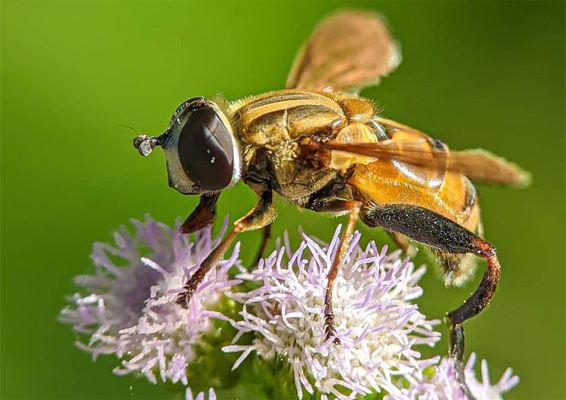
Published in Communications Earth & Environment, the research reveals that pollination networks in tropical regions are the most vulnerable to rising temperatures, while Mediterranean systems also face significant threats.-NE photo

ADVERTISEMENT
  • Findings show mediterranean systems also at risk; temperate zones only relatively stable
  • Researchers urge region-responsive conservation, reject one-size-fits-all frameworks
  • Targeted strategies needed to protect bees, butterflies, biodiversity hotspots and global food security

NE ENVIRONMENT BUREAU
GANDHINAGAR, DEC 4

A landmark collaborative study by the Indian Institute of Technology Gandhinagar (IITGN) and Northeastern University, USA, has delivered a decisive message: universal conservation frameworks are inadequate in the face of climate change. Published in Communications Earth & Environment, the research reveals that pollination networks in tropical regions are the most vulnerable to rising temperatures, while Mediterranean systems also face significant threats.

Pollinators—bees, butterflies, beetles and more—form the backbone of global food production and natural ecosystems. Conservation programmes have long relied on broad international guidelines, but this study shows that such generalised strategies may fall short and, in some regions, may have “imperceptible benefit.”

Explaining the study’s approach, Dr Udit Bhatia, Associate Professor at IITGN’s Department of Civil Engineering and the study’s principal investigator, said, “Unlike most research that examines how climate change affects individual species, we have attempted to map entire ecological networks from diverse regions.”
The team examined eleven real ecological networks representing tropical, temperate and Mediterranean systems. By integrating these networks with climate projections from multiple Earth System Models, the researchers assessed future shifts in species growth, mortality, competition and mutualistic relationships over the next 75 years.

Their findings indicate that tropical plant-pollinator networks are the most at risk.
“Our results indicated that tropical networks, home to some of the world’s most biodiverse ecosystems, showed the greatest vulnerability,” said Ms Adrija Datta, first author and PhD scholar in IITGN’s Department of Earth Sciences. Simulations showed sharp reductions in pollinator populations, with many networks becoming unstable even under moderate warming. Because several tropical species already operate near their upper thermal limits, even small temperature increases can push them beyond survival thresholds.

Mediterranean ecosystems also revealed steep declines due to intense summer heat and extreme seasonal variability. Temperate ecosystems—common across Europe and North America—showed slower declines, thanks to broader temperature ranges and wider thermal safety margins. But the relative stability of temperate zones does not guarantee long-term protection.

As Mr Sarth Dubey, co-author and PhD scholar in IITGN’s Department of Computer Science and Engineering, warned, “Despite the ecosystem being relatively balanced, the inclusion of other pollinator threats, such as habitat loss, pesticide exposure, and timing mismatches between plants and pollinators, could accelerate decline.”

To assess whether focused conservation can help, the researchers evaluated strategies such as safeguarding one influential species versus supporting multiple highly connected species. In tropical networks, restoring multiple keystone species significantly improved stability and pollinator abundance—but these interventions made minimal difference in Mediterranean and temperate systems.
“Management works in the tropics because there are species whose presence and abundance hold the network together,” explained Ms Datta. “That kind of leverage does not exist everywhere.”

The study reinforces that conservation models must reflect regional ecological realities. As Mr Dubey emphasized,
“Climate adaptation policies are being negotiated worldwide, but ecological responses are not universal.”
The findings offer a scientific foundation to determine where immediate action is needed and where ecosystems may possess inherent resilience.

Looking ahead, the researchers plan to incorporate additional stressors—such as land-use change, chemical exposure and habitat fragmentation—to create integrated, high-accuracy risk models. According to Dr Bhatia, understanding how these combined pressures interact, especially in regions currently considered stable, will be crucial for long-term, evidence-based conservation planning.


Tags: climate adaptation biodiversity IndiaCommunications Earth & Environment pollination research biodiversity and climate warmingecological networks climate changeIITGN climate change researchIITGN Northeastern University studyMediterranean pollination declineplant-pollinator climate impactpollinator decline climate zonesregion-specific conservation strategiestemperate ecosystem resiliencetropical pollinator vulnerability
ADVERTISEMENT
Previous Post

Snapchat ups its South India Game With Chennai Creator Connect

Next Post

Nation First: Samundrarakshan 2.0 reaffirms India’s coastal security mission with renewed vigour

Nav Jeevan

Nav Jeevan

Next Post
Nation First: Samundrarakshan 2.0 reaffirms India’s coastal security mission with renewed vigour

Nation First: Samundrarakshan 2.0 reaffirms India’s coastal security mission with renewed vigour

Delhi HC pivotal ruling amplifies press rights debate – calls to restore WJA gain momentum

Delhi HC pivotal ruling amplifies press rights debate - calls to restore WJA gain momentum

ADVERTISEMENT

Recommended

Zee Hindustan honours Gagan Goswami of Heritage Infraspace at ‘UDAAN – Dare to Dream Conclave’

Zee Hindustan honours Gagan Goswami of Heritage Infraspace at ‘UDAAN – Dare to Dream Conclave’

4 years ago
New Vande Bharat Exp will be grey-saffron, ‘inspiration from the Tricolor’

New Vande Bharat Exp will be grey-saffron, ‘inspiration from the Tricolor’

3 years ago
ADVERTISEMENT

Recent Posts

  • Stamping Tribal Pride: Gujarat’s Kawant Ger Mela finds a place on India’s philatelic map
  • Silicon synergy: IIT Gandhinagar–Cyient alliance to power India’s Semiconductor future
  • When ink meets immortality: A & Co. Pens scripts Chennai debut with a Thiruvalluvar tribute

Category

Contact Us

Email:
ne.gowri1964@gmail.com

Phone:
9643255068

Editorial and Administrative Office:
Block No 1 Flat No 4C
Wipro Street, Sholinganallur
Off Old Mabalipuram Road
Chennai 600119, Tamil nadu

Registered Office :

96, First Floor, Srinathnagar Society,
(Landmark: Near Panchdev Mandir,
Karmacharinagar Vibhag-I),
Ghatlodia, Ahmedabad-380 061

  • About Us
  • Our Team
  • Advertising
  • Careers
  • Contact

© 2021 all right reserved by Navjeevanexpress.com. Consulted by MediaHives.com

No Result
View All Result
  • Gujarat
    • Ahmedabad
    • Vadodara
    • Surat
    • Rajkot
    • Saurashtra
    • Kutch
    • Central Gujarat
    • South Gujarat
  • National
    • Andhra Pradesh
    • Rajasthan
    • Maharashtra
    • Pondicherry
    • Tamil Nadu
    • OTHER STATES
  • Politics
  • Business
    • Companies
    • Personal Finance
  • Sports
    • Cricket
    • Hockey
    • Football
    • Badminton
    • Other Sports
  • Entertainment
    • Arts and Culture
    • Theatre
    • Cinema
    • Photos
    • Videos
  • Lifestyle
    • Fashion
    • Health & Environment
    • Food and Beverages
    • Spirituality
    • Tourism and Travel
  • World
  • More
    • Science and Technology
    • Legal
    • Opinion
    • Student’s Corner
    • Youth

© 2021 all right reserved by Navjeevanexpress.com. Consulted by MediaHives.com

Welcome Back!

Login to your account below

Forgotten Password?

Retrieve your password

Please enter your username or email address to reset your password.

Log In