NE DEFENCE BUREAU
NEW DELHI, JAN 9
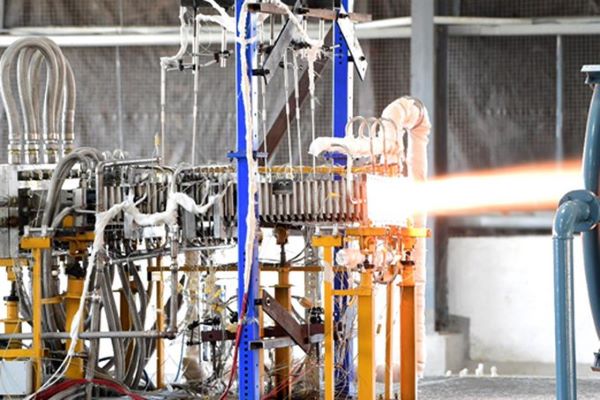
In a major stride towards strengthening India’s next-generation strategic capabilities, the Defence Research & Development Laboratory (DRDL)—the Hyderabad-based laboratory of the Defence Research and Development Organisation (DRDO)—has successfully conducted a long-duration ground test of a full-scale, actively cooled scramjet engine combustor, a critical component of the nation’s Hypersonic Missile Programme.
Defence Research & Development Laboratory (DRDL), the Hyderabad based laboratory of the @DRDO_India has achieved a path-breaking milestone in the development of Hypersonic Missiles.
DRDL successfully conducted an extensive long-duration ground test of its Actively Cooled… pic.twitter.com/PTmEX85mmp
— रक्षा मंत्री कार्यालय/ RMO India (@DefenceMinIndia) January 9, 2026
The landmark test was carried out on Friday, at DRDL’s state-of-the-art Scramjet Connect Pipe Test (SCPT) Facility, where the engine demonstrated a sustained run time of over 12 minutes, validating both design robustness and thermal endurance under extreme operating conditions.
- Sustained Supersonic Combustion: Full-scale actively cooled scramjet runs over 12 minutes in ground test
- Engineered for the Future: Indigenous design, industry collaboration and world-class test facilities converge
- Strategic Momentum: Test lays a strong foundation for India’s Hypersonic Cruise Missile programme
Building on Proven Progress
This achievement builds upon the earlier subscale long-duration scramjet test conducted on April 25, 2025, marking a decisive progression from experimental validation to full-scale demonstration. The combustor and the advanced test facility were indigenously designed and developed by DRDL, with realisation supported by Indian industry partners—underscoring the growing strength of the country’s defence R&D ecosystem.
The successful test places India among a select group of nations possessing advanced hypersonic air-breathing propulsion capabilities, reinforcing its position at the cutting edge of aerospace and missile technologies.
Powering Hypersonic Cruise Missiles
A Hypersonic Cruise Missile is capable of travelling at speeds exceeding five times the speed of sound (over 6,100 kmph) for extended durations. This extraordinary performance is enabled by a scramjet (supersonic combustion ramjet) engine, which uses atmospheric oxygen for combustion, eliminating the need to carry an onboard oxidiser and allowing sustained hypersonic flight.
The SCPT ground tests have successfully validated the advanced scramjet combustor design, along with the operational capabilities of the sophisticated test facility, paving the way for future flight-ready propulsion systems.
National Leadership Applauds the Milestone
Defence Minister Rajnath Singh complimented DRDO, industry partners and academia on the successful ground test of the Full Scale Actively Cooled Long Duration Scramjet Engine. He stated that “the achievement is a solid foundation for the nation’s Hypersonic Cruise Missile Development Program.”
Echoing this sentiment, Secretary, Department of Defence R&D and Chairman DRDO, Dr Samir V Kamat, congratulated the teams associated with the test for the commendable achievement, recognising their sustained scientific and engineering excellence.
A Strategic Leap Forward
With this breakthrough, DRDO has significantly advanced India’s quest for high-speed, long-range and precision strike capabilities, critical to future warfare scenarios. The success of the long-duration scramjet test not only strengthens national security but also signals India’s arrival as a serious global player in hypersonic propulsion and missile technology.