
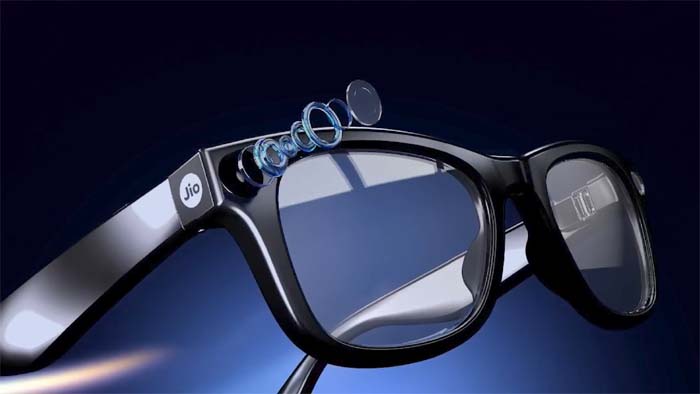
- Look, speak and pay: Jio showcases voice-led UPI payments, live translation and AI assistance
- Jio’s launch price remains undisclosed as smart-glasses options range from ₹8,999 to over ₹44,000
- Ray-Ban Meta, B by Lenskart and Pebble offer consumers different combinations of camera, audio and AI
- Live cricket commentary and Indian-language support could give Jio a distinct local proposition
- Before buying, consumers must weigh price, battery life, privacy, software support and real-world usefulness
NE SCIENCE & TECHNOLOGY BUREAU
NEW DELHI, OCT 10
What if paying at a shop, translating a conversation or catching up on a cricket match required no more than a spoken command? Jio’s latest AI-glasses showcase at India Mobile Congress 2026 puts that possibility in the spotlight. But with smart eyewear already on sale in India at sharply different prices, the bigger question for consumers is whether Jio can make its proposed combination of AI, digital payments and Indian-language support both practical and affordable.
Jio showcased camera-equipped glasses, audio glasses and earphones with features including Scan & Pay, a voice assistant, live translation, AI note-taking and live cricket commentary. The idea is to reduce dependence on smartphone screens by allowing users to interact with digital services through voice commands and wearable devices.
The headline feature is Scan & Pay. The glasses are designed to scan a merchant’s UPI QR code and initiate a payment through a voice command, subject to the required confirmation and authentication process. If implemented reliably, the feature could simplify routine transactions. However, questions about payment authorisation, protection against accidental transactions and financial-data security remain important. The full technical details and consumer availability of the payment feature have not yet been confirmed.
Jio is also targeting India’s linguistic diversity with live translation and voice interaction in Indian languages. AI note-taking is intended to help users capture key points during meetings, while live cricket commentary could allow fans to follow matches when they cannot keep looking at a phone.
The proposition is compelling, but Jio has not yet disclosed the final retail price. A Business Standard report published on October 9 said the company was preparing for a launch around November–December 2026 and intended to make the devices affordable. Until pricing, specifications and availability are officially confirmed, consumers should treat the showcased features as a preview rather than a fully available product.
What consumers can buy in India today
Smart glasses are not a single product category. Some primarily capture photos and videos; others add open-ear audio and voice assistants, while display-oriented glasses serve different needs. The following options illustrate the price choices facing Indian consumers as of October 10, 2026.
| Smart glasses | Reported price in India | What buyers should know |
| Pebble SeeQ | ₹8,999 listed price | Camera, Bluetooth audio, video recording and AI live translation advertised by the brand. Check supported AI functions and compatibility before purchase. |
| Ray-Ban Meta Gen 1 | Around ₹15,425 in a reported sale | Camera, microphones, speakers and Meta AI features. The reported festive-sale price is promotional and may change with seller and bank offers. |
| B by Lenskart | ₹22,000 early access; ₹27,000 stated later price | Indian-developed camera glasses with a 12MP camera and Gemini AI integration, as reported in May 2026. Confirm current availability and the applicable price. |
| Ray-Ban Meta Gen 2 | Around ₹42,100 for a listed configuration | Premium styling, camera, open-ear speakers, microphones and Meta AI; prices vary by frame and lens selection. |
| Ray-Ban Meta Gen 3 | Starting at ₹44,300 | Newer-generation camera glasses with a 12MP camera, 3K Ultra HD video and Meta AI features. |
| Jio AI glasses | Not announced | Promising demonstrated features include voice-led payment initiation, live translation, AI note-taking and cricket commentary. Final specifications, price and retail availability remain to be confirmed. |
Prices are indicative reported or listed prices, not guaranteed offers. Promotional discounts, frame styles, lenses, seller terms and availability can change. These products are not directly equivalent: their AI capabilities, cameras, software ecosystems and supported services differ.
Which option makes sense for which buyer?
For consumers who mainly want hands-free photos, video and audio, an existing camera-equipped model may already meet their needs. Buyers interested in experimenting with AI at a relatively lower entry price can examine options such as Pebble SeeQ, while those seeking a more established eyewear brand and integrated camera-and-AI experience may compare the Ray-Ban Meta range. B by Lenskart offers another option for buyers interested in Indian-developed smart eyewear.
Jio’s potential point of differentiation is not simply having a camera on a pair of glasses. Its proposed mix of voice-led UPI payments, Indian-language interaction, translation, note-taking and cricket commentary is oriented towards everyday Indian use. Whether this combination justifies waiting for the product will depend on its eventual price, how many features work reliably at launch and whether any functions require a particular phone, application, subscription or internet connection.
The hidden cost of hands-free convenience
The sticker price is only one part of the buying decision. Consumers should check battery life during camera and AI use, charging arrangements, comfort over extended periods, prescription-lens support, warranty, repair options and software-update commitments.
Privacy also deserves serious attention. Camera-equipped glasses can record people and surroundings in ways that may be less obvious than a smartphone. Buyers should examine recording indicators, permissions, data-storage policies and the ability to disable capture or AI features. Payment-enabled wearables require additional clarity on authentication, transaction confirmation and account protection.
For Jio, the challenge will be to convert a striking demonstration into a dependable consumer product. For buyers, the sensible approach is to compare verified specifications and actual retail prices rather than pay a premium for a futuristic promise.
The consumer verdict
If you need smart glasses now, compare products already available against your main use—camera, audio or AI. If Jio’s voice-led payments and Indian-language tools are the attraction, wait for its official price, full specifications and launch confirmation before deciding.