NE ENVIRONMENT BUREAU
NEW DELHI, JAN 18
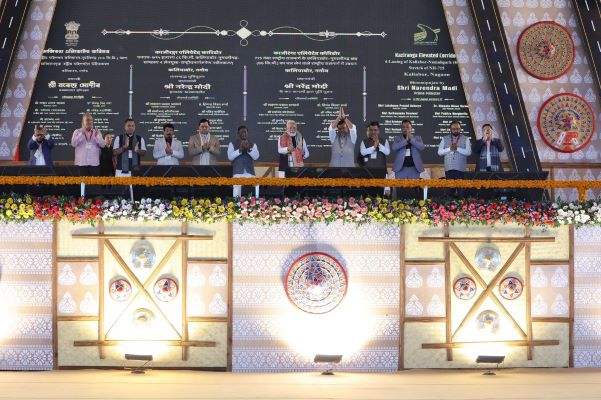
India’s evolving environmental vision took a decisive step forward with the Bhoomi Pujan of the Kaziranga Elevated Corridor Project, an ambitious, ecology-sensitive infrastructure initiative worth over ₹6,950 crore, at Kaliabor in Assam. The project underscores a development approach that places biodiversity conservation at the heart of economic progress, especially in one of the world’s most fragile and iconic ecosystems.
Speaking at the launch of development works in Kaliabor aimed at improving Assam’s connectivity and protecting the region’s biodiversity.
https://t.co/lZcydC0SLn— Narendra Modi (@narendramodi) January 18, 2026
Addressing the gathering, Narendra Modi described Kaziranga as “more than a National Park—it is the soul of Assam, a priceless jewel of India’s biodiversity, honored by UNESCO as a World Heritage Site.” He stressed that protecting Kaziranga is not only an environmental imperative but a responsibility towards future generations.
- ₹6,950-crore green highway blends wildlife protection with connectivity
- Elevated corridor to secure rhino, elephant and tiger movement
- Nature conservation fuels livelihoods through tourism and local enterprise
- Assam emerges as the gateway of sustainable growth in the North East
- Economy and ecology can and must advance together, says Modi
Elevated Corridor: Engineering for Wildlife and People
The 86-km Kaziranga Elevated Corridor, part of the four-laning of the Kaliabor–Numaligarh section of NH-715, has been designed to ensure uninterrupted wildlife movement while improving regional connectivity. The project includes a 35-km elevated wildlife corridor, allowing vehicles to pass overhead while animals move freely below along their traditional routes.
Laying the foundation stone for the Kaziranga Elevated Corridor is a matter of immense pride and privilege. It will ensure the safety of wildlife and also strengthen efforts towards environmental conservation. pic.twitter.com/X7Za1Ct9GL
— Narendra Modi (@narendramodi) January 18, 2026
Explaining the need for the project, Modi said Kaziranga’s wildlife faces serious risks during floods when animals cross highways in search of higher ground. “The government’s effort is to ensure smooth traffic while keeping the forest safe,” he said, adding that the corridor’s design accounts for the natural movement of rhinos, elephants and tigers.
When Nature Is Protected, Opportunities Follow
Highlighting the link between conservation and livelihoods, Modi observed, “When nature is preserved, opportunities flourish alongside it.” He noted that Kaziranga has seen a steady rise in tourism in recent years, generating employment through homestays, guide services, transport, handicrafts and small enterprises, particularly for local youth.
He also recalled the transformation in wildlife protection efforts, stating that while rhino poaching was once a grave concern, strengthened security, modern surveillance and community participation—especially through initiatives like Van Durga—have yielded results. “In 2025, not a single incident of rhino poaching was reported,” he said.
Economy and Ecology Can Move Together
Rejecting the long-held belief that development and conservation are at odds, Modi said, “For long, it was believed that nature and progress stood in opposition. Today, India is demonstrating to the world that both can advance together side by side.”
He pointed to gains in forest and tree cover over the past decade, large-scale public participation in conservation campaigns, the expansion of tiger and elephant reserves, and India’s emergence as Asia’s largest Ramsar network. Referring to the reintroduction of cheetahs, he said conservation efforts are also reshaping India’s environmental identity.
Assam and the North East Move Closer to the Nation’s Heart
Modi said the biggest challenge the North East faced for decades was distance—physical and emotional. “The North East is no longer on the margins of development; it is now closer to the nation’s heart and to Delhi itself,” he remarked.
He highlighted the expansion of road, rail, air and water connectivity in Assam, noting that enhanced infrastructure is strengthening trade, education and mobility. As part of the programme, two new Amrit Bharat Express trains were flagged off, further integrating the region with northern India.
Background: A Green Highway Model
The Kaziranga Elevated Corridor will pass through Nagaon, Karbi Anglong and Golaghat districts, significantly improving access to Upper Assam, including Dibrugarh and Tinsukia. In addition to the elevated wildlife corridor, the project includes 21 km of bypasses and 30 km of highway widening, aimed at reducing congestion, improving safety and lowering travel time.
Designed as an environmentally conscious national highway, the project seeks to reduce human–wildlife conflict, protect biodiversity, and support sustainable regional growth—positioning Kaziranga as a global example of infrastructure that respects nature.