NE BUSINESS BUREAU
NEW DELHI, MAR 7
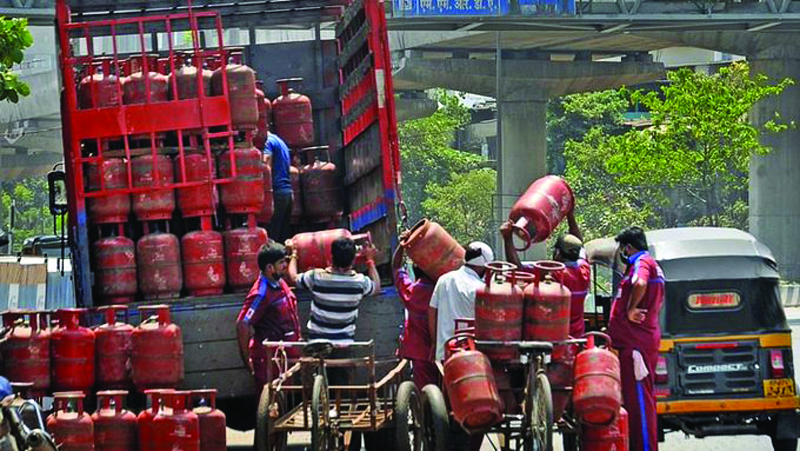
India’s cooking gas prices climbed again on Saturday, triggering fresh political debate and concern among households, after state-run oil marketing companies (OMCs) raised the prices of domestic LPG cylinders by ₹60 and commercial cylinders by ₹114.5.
According to Indian Oil Corporation, the price of the widely used 14.2-kg non-subsidised domestic LPG cylinder in New Delhi has been revised to ₹913, up from ₹853 earlier, marking the second increase in less than a year.
- Household cooking gas up ₹60, commercial cylinders rise ₹114.5 amid Middle East tensions
- Oil companies assure ample fuel stocks as rumours of petrol and diesel shortages swirl
- Opposition attacks government over inflation burden; ruling camp cites global energy volatility
- Hotels, restaurants and households brace for impact as energy markets remain uncertain
Commercial cylinders used by hotels, restaurants and businesses have also become costlier by ₹114.5 per unit, adding to cost pressures in the hospitality sector.
Industry officials attribute the hike primarily to rising global energy prices following escalating tensions in West Asia, a region critical to global oil and gas supply routes.
The surge in crude prices has heightened concerns over supply disruptions in major shipping corridors, pushing fuel-linked commodities upward worldwide.
Political Tempest Over Kitchen Fuel
The price increase has quickly sparked sharp political reactions.
Opposition parties criticised the move, arguing that the decision places additional strain on households already grappling with inflation.
Leaders from the Indian National Congress accused the government of burdening ordinary citizens, with party spokespersons branding the development another blow to consumers facing rising living costs. Some opposition leaders even labelled Prime Minister Narendra Modi as “Inflation Man” over repeated fuel price increases.
Other opposition voices said the hike amounted to “cracking the whip of inflation on the public,” arguing that cooking gas prices directly affect household budgets, particularly for middle-class and lower-income families.
Government supporters, however, pointed out that the price revision reflects global energy market realities, emphasising that India remains heavily dependent on imports for crude oil and LPG.
Officials also noted that domestic LPG prices in India remain lower than in several neighbouring countries, even after the latest adjustment.
Oil Companies Dismiss Fuel Shortage Rumours
Amid the price hike, state-run fuel retailers moved quickly to calm fears over supply disruptions.
Both Bharat Petroleum Corporation Limited and Indian Oil Corporation dismissed rumours circulating on social media about petrol and diesel shortages.
In a post on its official X handle, BPCL said: “There have been some rumours about shortages of petrol and diesel in certain areas, which are completely unfounded.”
“BPCL is fully operational and steadfast in ensuring a smooth fuel supply for all customers,” the company added.
IndianOil also urged citizens to remain calm.
“India has sufficient fuel stocks, and supply and distribution networks are functioning normally.”
“IndianOil is committed to maintaining uninterrupted fuel supply across the country. Citizens are requested not to panic or crowd fuel stations and to rely only on official sources for accurate information.”
Energy Markets Under Pressure
The LPG price revision reflects broader turbulence in global energy markets.
Crude oil prices have climbed sharply in recent weeks as geopolitical tensions intensified in West Asia, sending ripple effects across global fuel markets.
India, which imports a large share of its energy needs, is particularly vulnerable to such disruptions.
Market sentiment also affected the stock market, where shares of major oil marketing companies closed lower on Friday.
On the National Stock Exchange of India, shares of Bharat Petroleum Corporation Limited fell nearly 2% to ₹352.95, while Indian Oil Corporation declined about 2% to ₹168.10.
Impact on Households and Businesses
For millions of households, LPG remains the primary cooking fuel, making price changes particularly sensitive.
India currently has more than 33 crore LPG consumers, many of whom rely on cooking gas for daily household needs.
The latest increase could also ripple into the hospitality sector, as restaurants and hotels depend heavily on commercial cylinders for kitchen operations.
With energy prices tied closely to global geopolitical developments, analysts warn that fuel costs could remain volatile in the months ahead.