NE NEWS SERVICE
CHENNAI, SEPT 16
A political confrontation that began inside the Tamil Nadu Assembly has now moved onto the streets and into police stations, with cases registered against senior DMK leaders A Raja, P K Sekar Babu and Vasantham K Karthikeyan over alleged derogatory remarks made during the party’s statewide protests against Chief Minister C Joseph Vijay. At the same time, the DMK has sought privilege action against Vijay and Law Minister C T R Nirmal Kumar, alleging that their Assembly statements concerning M K Stalin, M Karunanidhi and the Sarkaria Commission were factually incorrect.
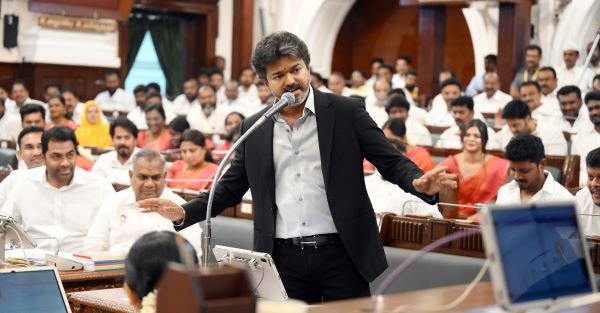
The immediate trigger was Vijay’s recent Assembly intervention in which he questioned the DMK’s repeated reference to Stalin’s detention under the Maintenance of Internal Security Act (MISA) during the 1975–77 Emergency and also made a hand gesture near his jaw. DMK members interpreted the gesture as a reference to the injuries Stalin has said he suffered while in custody.
- Raja, Sekar Babu, Karthikeyan booked over alleged remarks against CM Vijay and Law Minister Nirmal Kumar
- Statewide DMK protests on September 12 followed Vijay’s Assembly remarks on Stalin’s Emergency-era detention
- Police invoke multiple BNS provisions in separate cases registered in Chennai and Kallakurichi
- DMK defends Opposition’s right to question government; party also seeks privilege action against Vijay, Nirmal Kumar
- At heart of confrontation: competing claims over M K Stalin’s MISA detention and the limits of political rhetoric
The DMK subsequently announced statewide demonstrations on September 12 to protest Vijay’s remarks. Speeches at some of those demonstrations have now resulted in criminal cases, adding a new layer to an already sharp political confrontation.
Three leaders, separate police cases
Chennai and Kallakurichi police have registered separate cases against the three DMK leaders.
The Saidapet police booked A Raja, based on a complaint by a TVK functionary, over alleged remarks made during the protest concerning Vijay and Law Minister Nirmal Kumar. The case includes several provisions of the Bharatiya Nyaya Sanhita, including those relating to unlawful assembly, intentional insult, public mischief, obscene acts and alleged provocation.
Raja had strongly challenged the government’s position on Stalin’s MISA detention and dared the ruling side to register a case against him. He also invoked the recognition of Stalin’s Emergency-era role by leaders of other political parties.
Raja subsequently expressed regret for one of his personal remarks concerning Nirmal Kumar. His comments had also attracted criticism from within the broader political spectrum, including DMK MP Kanimozhi Karunanidhi.
A separate case was registered at B1 North Beach Police Station against P K Sekar Babu, the DMK’s Harbour MLA and Chennai East district secretary, over alleged derogatory remarks against Vijay and Nirmal Kumar during the protest. Police invoked provisions including those relating to obscene expressions, intentional insult, promotion of enmity, public mischief and criminal intimidation.
In Kallakurichi, police booked Rishivandhiyam MLA Vasantham K Karthikeyan under four BNS provisions following a complaint alleging derogatory remarks against Vijay during the September 12 demonstration.
At least another set of cases has also been reported in connection with the protests, including action against people allegedly participating in an unauthorised demonstration in Chennai.
How the MISA controversy began
The dispute traces back to Vijay’s Assembly speech in which he attacked the previous DMK regime over alleged corruption and questioned the repeated invocation of Stalin’s Emergency-era detention.
During the speech, Vijay referred to MISA and made a gesture involving his jaw. The DMK interpreted this as an attempt to mock Stalin’s account of the injuries he says he suffered following his arrest during the Emergency.
Stalin responded by recalling his detention and the assault he says resulted in a jaw injury. According to reports, he said he was arrested after returning from campaigning and alleged that his jawbone was broken during the subsequent assault in custody.
The controversy intensified when Nirmal Kumar challenged the historical claim itself.
“No detention copy, no MISA arrest,” the minister said, questioning whether an official detention order exists to establish Stalin’s detention under MISA.
“The fundamental question is whether he was detained under MISA or not,” Nirmal Kumar said, arguing that a formal detention order should exist in such a case.
The DMK has rejected the government’s characterisation and has sought action through the Assembly’s privilege mechanism against both Vijay and Nirmal Kumar over what it calls false and factually incorrect statements.
Government stresses line between criticism and personal attacks
The ruling side has sought to draw a distinction between legitimate political criticism and personal abuse.
Vijay had said in the Assembly that political issues could be debated, but personal attacks and defamatory remarks should not become part of political discourse. His warning came amid a wider controversy over alleged abusive language directed at women and political opponents.
The police action against the DMK leaders has therefore been presented by the ruling side as a response to alleged violations of law rather than an attempt to prevent political criticism.
The opposition, however, has questioned the government’s approach and defended its right to scrutinise and attack the ruling administration.
Senior DMK leader T K Elangovan said the Opposition had the right to criticise the government and alleged that the TVK government was selectively targeting the DMK.
VCK leader Thirumavalavan, meanwhile, criticised the language used by some DMK leaders, arguing that political opposition should not cross the limits of decency. He pointed to the tradition associated with Periyar, Annadurai and Karunanidhi of engaging ideological opponents without resorting to such language.
A political dispute now raises a larger institutional question
The latest developments have transformed what began as a historical and political disagreement into a wider debate over the permissible limits of political speech, Assembly privilege, police intervention and the use of personal rhetoric in public life.
For the DMK, the issue remains inseparable from its account of Stalin’s experience during the Emergency. For the TVK government, the central question is whether that account can be substantiated through official records and whether political criticism should be allowed to descend into personal attacks.
With police cases now pending against senior opposition leaders and the DMK simultaneously pursuing privilege proceedings against the Chief Minister and Law Minister, the next phase of the controversy is likely to play out through both legal and legislative channels.
The immediate political contest may be over words spoken inside and outside the Assembly; the larger institutional test is whether Tamil Nadu’s competing political narratives can be contested through evidence, procedure and debate without allowing the language of politics to overtake the substance of governance.