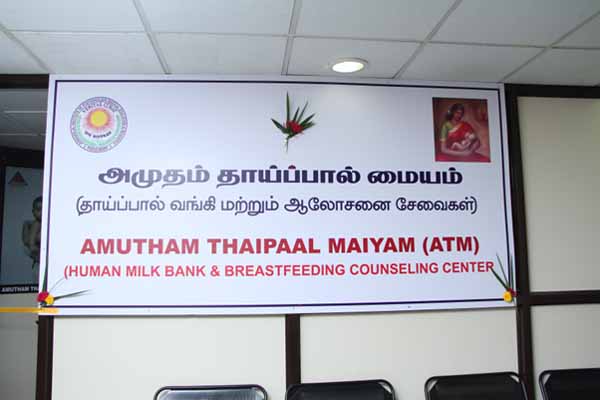
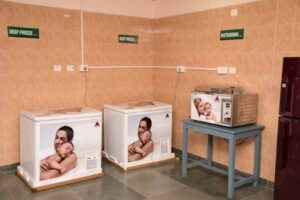
- Apart from human milk banking, the centre located adjacent to the Neonatal Intensive care Unit has been providing breastfeeding counselling and lactation support for the postnatal mothers
- The utility of the Human Milk Bank was much realized during the Covid pandemic when we could feed the babies of sick mothers using pasteurized donor human milk
- According to World Health Organization, exclusive breastfeeding should be practised for the first six months after birth
NE HEALTH BUREAU
PUDUCHERRY, JULY 14
Amudham Thaipaal Maiyam (ATM), the Human Milk Bank of JIPMER was inaugurated 9 years ago on 13th July 2016 and since then it has been adding great value to the newborn care services of the hospital.
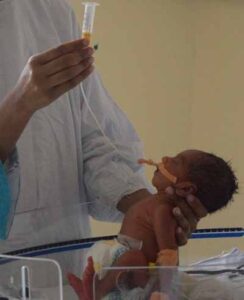
“Apart from human milk banking, the centre located adjacent to the Neonatal Intensive care Unit has been providing breastfeeding counselling and lactation support for the postnatal mothers. The human milk bank’s services are indispensable to support exclusive human milk feeding in a high-volume neonatal unit. The utility of the Human Milk Bank was much realized during the Covid pandemic when we could feed the babies of sick mothers using pasteurized donor human milk. The milk bank has a long way from the initial days when the average voluntary donation was an average of 400ml/day to the present-day collection averaging 1000 ml/day. Daily, at least 20 babies especially preterm benefit from our ATM. The whole credit goes to the donor mothers, lactation counsellors and the NICU team,” says a hospital statement.
According to World Health Organization, exclusive breastfeeding should be practised for the first six months after birth. Due to some reason, if a mother cannot feed her infant directly, mother’s own milk can be expressed manually or using a pump and administered to the baby. If mother’s own milk is unavailable, the next better alternative would be to use pasteurized donor human milk. A human milk bank is a valuable service for recruiting breast milk donors, collecting donated milk, and then processing, screening, storing, and distributing the milk to meet the specific needs of the baby.
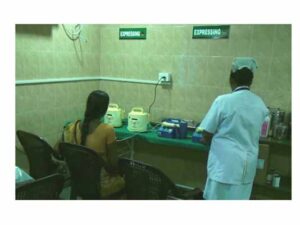
“The aim of a human milk bank is to promote and support breastfeeding by providing safe and quality donor milk to fill a gap for those infants who need mother’s milk but are unable to receive it. Despite the fact that the first HMB in India was initiated in 1989 (Mumbai), the growth of human milk banks has not been proportional to the huge increase in NICUs and preterm deliveries. However, there is renewed interest in this area over the past few years and nearly 100 HMBs are operational now in India. However, public awareness should improve and initiatives to improve voluntary human milk donation should be strengthened,” the statement adds.
Frequently asked questions
Who can donate milk?
All healthy lactating mothers with healthy babies, who are voluntarily willing to give their extra breast milk for other babies without compromising the nutritional needs of their own baby can donate milk. The donors can include mothers attending well baby clinics, mothers whose babies are in neonatal intensive care units, those who have lost their babies but are willing to donate their milk, or lactating working staff in the hospital, and motivated mothers from the community.
When will be a mother not eligible to donate milk?
A donor with one or more of the following will not be eligible to donate milk: use of illegal drugs, tobacco products or alcohol, positive blood test for HIV, Hepatitis B or C or syphilis, use of radioactive drugs, acute illness in the mother, mastitis or fungal infection of the nipple or areola.
Who are the beneficiaries of the human milk bank?
Pasteurized donor human milk (PDHM) will be prescribed on priority for preterm and sick babies, babies of mothers with postpartum illnesses, and whose mothers have lactation failure, till their mothers’ milk output improves. Abandoned neonates, temporary interruption of breastfeeding and babies whose mother died in the immediate postpartum period will also receive PDHM.
What is pasteurization?
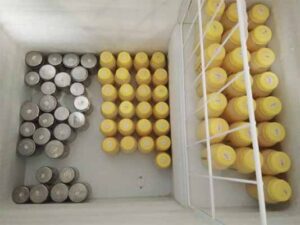
Donor milk after collection will be heated to 62.5ºC for a period of 30 minutes and then cooled. This process is called pasteurization and makes the milk germ free but retaining the biochemical and immunological components.
How safe is Pasteurized donor human milk (PDHM)?
All mothers will be screened for common infections like HIV and Hepatitis B before they donate milk. Pasteurization also makes the milk germ free. Moreover bacteriological testing of the pasteurized milk will be done before administering to the baby. Hence Pasteurized donor human milk is safe.
Is there any risk for the donating mother?
There is absolutely no risk for the donating mother. By donating to the human milk bank the milk secretion in the mother also increases.
What are the benefits of the human milk bank?
We can save small preterm babies who are sick. We can protect them from gut sepsis and other infections. Abandoned neonates, temporary interruption of breastfeeding and babies whose mother died in the immediate postpartum period will also be benefitted. The formula use and its complications will reduce and exclusive breastfeeding rates in the community will improve.
Are there any financial commitment for the donor and recipient?
Donation of human milk and willing to accept Pasteurized donor human milk are purely voluntary and there is no financial commitment for the donor or recipients.
How can you contribute?
Kindly motivate as many mothers as possible in your work area. Convey them that milk donation is a method to increase their own secretion without compromising the needs of their babies. In case of still birth or baby kept nil oral for medical or surgical reasons, those mothers can express their milk in the ATM to prevent breast engorgement.
- Every drop of breastmilk counts!
- Donate breastmilk and save the small citizens!
- Giving is not just about making a donation. It is about making a difference!
- ATM is NICU lifeline and your contribution will be awesome!
- Milk donation is the best expression of humanity!