
NE BUSINESS BUREAU
NEYVELI, OCT 24
NLC India Ltd on Thursday announced it has entered into joint venture agreements for formation of two significant Joint Ventures (JVs) with Rajasthan Rajya Vidyut Utpadan Nigam Limited (RRVUNL).
𝐍𝐋𝐂 𝐈𝐍𝐃𝐈𝐀 𝐄𝐍𝐓𝐄𝐑𝐒 𝐈𝐍𝐓𝐎 𝐉𝐎𝐈𝐍𝐓 𝐕𝐄𝐍𝐓𝐔𝐑𝐄 𝐀𝐆𝐑𝐄𝐄𝐌𝐄𝐍𝐓 𝐖𝐈𝐓𝐇 𝐑𝐀𝐉𝐀𝐒𝐓𝐇𝐀𝐍 𝐅𝐎𝐑 𝐅𝐎𝐑𝐌𝐀𝐓𝐈𝐎𝐍 𝐎𝐅 𝐓𝐖𝐎 𝐉𝐎𝐈𝐍𝐓 𝐕𝐄𝐍𝐓𝐔𝐑𝐄𝐒 𝐅𝐎𝐑 𝐏𝐎𝐖𝐄𝐑 𝐂𝐀𝐏𝐀𝐂𝐈𝐓𝐘 𝐀𝐃𝐃𝐈𝐓𝐈𝐎𝐍: pic.twitter.com/lFMUjxWXWI
— NLC India Limited (Official) (@nlcindialimited) October 24, 2024
In both the Joint Ventures (JVs), NLCIL will hold a 74% equity stake, while RRVUNL will hold 26%. These JVs mark a significant step towards advancing sustainable energy and power generation.
— NLC India Limited (Official) (@nlcindialimited) October 24, 2024
First JV between NLC India Renewables Limited (NIRL) and RRVUNL to establish Renewable Energy projects in the state of Rajasthan and Second JV between NLCIL and RRVUNL for the development of a Lignite-Based Thermal Power Station.
“With the vision of Prime Minister Narendra Modi, for energy security with sustainable energy generation, under the guidance of Union Minister of Coal and Mines Kishan Reddy and Minister of State for Coal and Mines Satish Chandra Dubey, and in line with corporate plan for aggressive capacity addition, NLC India Ltd has entered into joint venture agreements for formation of two significant Joint Ventures (JVs) with Rajasthan Rajya Vidyut Utpadan Nigam Limited (RRVUNL),” the statement added.
“These JVs mark a significant step towards advancing sustainable energy and power generation,” a company release said.
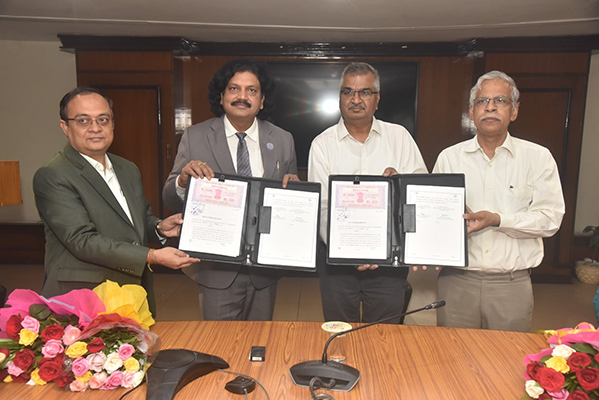
In the presence of Alok, IAS, Additional Chief Secretary (ACS), Energy, Govt. of Rajasthan and Prasanna Kumar Motupalli, CMD, NLCIL, the JV agreements were signed by Dr. Prasanna Kumar Acharya, Director (Finance), NLCIL and Devendra Shringi, CMD, RRVUNL. In both the Joint Ventures (JVs), NLCIL will hold a 74% equity stake, while RRVUNL will hold 26%.
Lignite-to-power producer NLC India Ltd (NLCIL) is planning to raise funds through an initial public offering (IPO) of its wholly owned subsidiary NLC India Renewables Ltd by the first quarter of the next financial year, company’s Chairman and Managing Director (CMD) Prasanna Kumar Motupalli had said.
NLC India is a 6 GW company consisting of 1.4 GW renewable capacity and 4.6 GW thermal capacity. NLC India — the first company in the country to add 1 GW renewable capacity — has plans to scale up its power capacity to 17 GW by 2030.