- GLS alumna and Olympian Maana Patel returns to campus to decode success, resilience, identity and life beyond the swimming pool
- “Olympics is a moment; it is not a destination”: swimmer urges students to treat achievement as a launchpad, not a finish line
- From a seven-year-old summer swimmer to Tokyo Olympian: a journey powered by discipline, family support and relentless self-belief
- Maana challenges conventional ideas of femininity, urging young women to embrace strength rather than apologise for it
- As Ahmedabad looks towards the 2030 Commonwealth Games and India’s Olympic ambitions, Olympian calls for a stronger grassroots sporting culture
NE EDUTAINMENT BUREAU
AHMEDABAD, SEPT 30
What does it really take to become an Olympian—and what happens after the Olympic dream comes true?
For GLS University students, the answer came straight from someone who has lived both sides of that question.
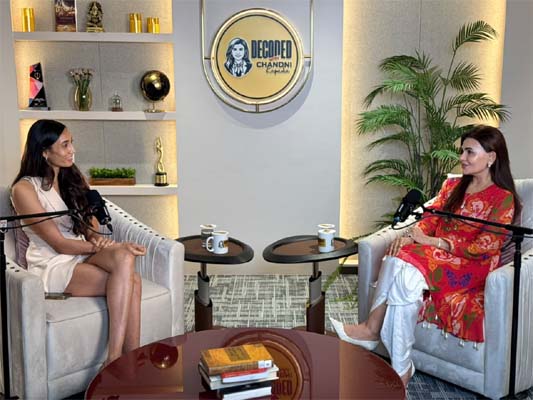
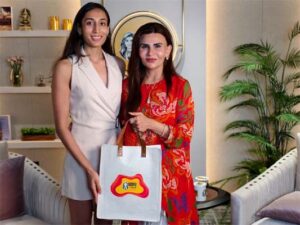
Indian swimmer and Olympian Maana Patel returned to her alma mater for an engaging conversation with Chandni Kapadia, Executive Director, GLS University, on “Decoded with Chandni Kapadia”, taking students behind the medals, records and Olympic spotlight into the less visible world of discipline, self-belief, setbacks, fitness and identity.
For Maana, the journey began almost casually. At seven, she entered a summer swimming batch after her mother hoped swimming might improve her appetite. What began as a childhood activity gradually became a passion—and then a pursuit that would take her to the Tokyo Olympics.
“Olympics is a moment, not a destination”
The most powerful takeaway from the conversation came when Maana challenged the conventional notion that simply reaching the Olympics represents the ultimate destination for an athlete.
“Olympics is a moment; it is not a destination. You have to use that platform of fame and opportunities to go ahead in your career, sport or otherwise. It’s a means to an end.”
For students accustomed to viewing achievement through final outcomes—ranks, medals, placements or titles—the observation offered a different perspective: an achievement can be a beginning rather than an ending.
Maana’s own journey reflects that philosophy. Competitive swimming demanded years of balancing academics, training, competitions and personal life, with the support of her parents playing a crucial role in sustaining the journey.
The 5 a.m. test
The Olympian also took students beyond the glamour associated with elite sport and into the reality of maintaining discipline when nobody is watching.
Recounting her first corporate job in Switzerland, Maana recalled waking up at 5 a.m. to train before going to work.
The lesson was simple but demanding: fitness is not necessarily about dramatic transformations; it is about starting, building consistency and making healthy choices part of everyday life.
That message resonated beyond sport, particularly with young people navigating academic pressure, careers, social media and increasingly sedentary lifestyles.
When muscle became a superpower
The conversation took an especially candid turn when Maana spoke about body image and the comments she encountered while growing up as a competitive swimmer.
Her muscular physique, a natural consequence of years of intensive training, did not always fit conventional notions of how a young woman “should” look.
Instead of allowing those perceptions to define her, Maana learnt to see strength differently.
Her experience offered students—particularly young women—a reminder that physical strength need not be hidden to conform to conventional ideas of femininity.
In an age when social media can amplify unrealistic expectations about appearance, the Olympian’s message carried significance beyond the sporting arena.
Can India love sports beyond cricket?
The discussion also moved from Maana’s personal journey to a larger question: Does India have enough sporting culture beyond cricket?
Maana pointed out that India possesses enormous sporting talent, but audiences often do not follow other disciplines because they are unfamiliar with their rules, formats and histories.
The transformation, she suggested, has to begin much earlier—with families and schools exposing children to multiple sports, allowing youngsters to understand and enjoy disciplines beyond the country’s dominant sporting obsession.
For Maana, building a sporting nation therefore cannot depend solely on producing elite athletes. It requires creating knowledgeable spectators, accessible sporting opportunities and a culture in which children are encouraged to experiment with different disciplines.
Ahmedabad’s next sporting chapter
The conversation assumed added relevance as Ahmedabad prepares for the 2030 Commonwealth Games, while India continues its longer-term ambition of hosting the Olympics.
For Maana, infrastructure is important—but so is how citizens use and respect public sporting spaces.
A world-class sporting ecosystem, the discussion suggested, requires more than stadiums and facilities. It requires discipline, participation, civic responsibility and sustained grassroots engagement.
Decoding the person behind the Olympian
The interaction also offered glimpses of Maana away from the stopwatch and swimming lane.
Students discovered her love for dogs, her competitive streak even during a game of UNO, and her thoughts on sleep, fitness and healthy living.
The session culminated in the Decoded Signature Segment, where Maana reflected on three defining ideas—Success, Resilience and Identity.
For her, success is not about measuring oneself against someone else but pursuing one’s own goals.
Resilience means continuing to show up—even when nobody is watching.
And identity, she believes, is not static; it evolves as people move through different stages of life.
Perhaps the most appropriate summary of Maana’s journey came in her own words:
“Pushing limits and racing challenges.”
For the GLS students who listened to her story, the message was unmistakable: the Olympic pool may have a finish line, but the journey of an achiever does not.