- Five Indian armed forces personnel also lost their lives in the military offensives between the two sides
- We have downed a few Pakistani planes, says Air Marshal AK Bharti
- Navy remains alert and ready to respond decisively to any inimical action by Pakistan or Pakistan-based terrorists: Vice Admiral A.N. Pramod, DGNO
- PM Modi chairs high-level meeting
NE NEWS SERVICE
NEW DELHI, MAY 11
Prime Minister Narendra Modi on Sunday chaired a high-level meeting of senior officials and the three service chiefs to take stock of the situation on the ground on Sunday, a day after Pakistan reneged on the ceasefire agreement.
Watch LIVE:
Media Briefing on #OpSINDOOR by DGMO & senior officers from the Indian Navy and Indian Air Force at National Media Centre. https://t.co/iK4Smpx2A5— Ministry of Defence, Government of India (@SpokespersonMoD) May 11, 2025
The meeting had defence minister Rajanth Singh, national security advisor (NSA) Ajit Doval, external affairs minister S Jaishankar, and chief of defence staff, General Anil Chauhan, in attendance.
People familiar with the matter in the government said PM Modi is learnt to have told the service chiefs to strongly retaliate to Pakistan’s aggression and respond with proportionate force.
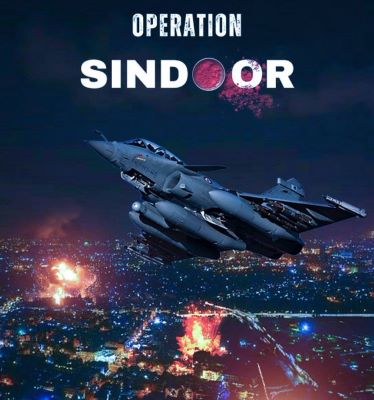
Over 100 terrorists, including high-value targets such as Yusuf Azhar, Abdul Malik Rauf and Mudasir Ahmed, were killed in the Operation Sindoor launched by Indian armed forces in response to the Pahalgam attack.
Director General of Military Operations Lt Gen Rajiv Ghai said at a media briefing that nine terror targets were identified after careful deliberations, and they were hit using precision weapons.
“It set into motion a very diligent and microscopic scarring of the terror landscape across the borders and the identification of terror camps and training sites. The locations that emerged were numerous, but as we deliberated more, we realised that some of these terror hubs were now bereft of presence and had preemptively been vacated, fearing retribution from us,” he said.
General Ghai said nine terrorist camps were confirmed by various intelligence agencies to be inhabited. Some of these were in Pakistan-occupied Kashmir, while others were located in the Punjab Province in Pakistan.
“Nefarious places such as Muridke, the hub centre of the Lashkar-e-Taiba, have over the years bred infamous characters such as Ajmal Kasab and the likes of David Headley,” he added.
The DGMO claimed that around 35 to 40 Pakistani army personnel were killed between May 7 and 10 in the military offensives between the two sides. Five Indian armed forces personnel also lost their lives.
General Ghai said the Indian Air Force played a major part in these strikes by engaging some of the terror camps, while the Indian Navy provided the wherewithal in terms of precision munitions.
Elaborating upon the chain of events, the DGMO said that soon after India struck the terrorist camps, Pakistan violated the Line of Control.
“The erratic and rattled response of our enemy was apparent from the number of civilians, inhabited villages and religious sites such as Gurudwaras that were unfortunately hit by them, leading to a sad loss of lives,” he said.
We have downed a few Pakistani planes, says Air Marshal AK Bharti
Air Marshal AK Bharti said that they have downed a few Pakistani planes.
“Their planes were prevented from entering inside our border…Definitely, we have downed a few planes…Definitely, there are losses on their side which we have inflicted,” Air Marshal Bharti said.
Importantly, all Indian pilots have safely returned, and no Indian fighter jets were lost during the operation.
On Sunday, the IAF said its X post, “The Indian Air Force (IAF) has successfully executed its assigned tasks in Operation Sindoor, with precision and professionalism. Operations were conducted in a deliberate and discreet manner, aligned with National Objectives. Since the Operations are still ongoing, a detailed briefing will be conducted in due course. The IAF urges all to refrain from speculation and dissemination of unverified information.”
Navy remains alert, ready to respond decisively to any inimical action
Vice Admiral A.N. Pramod, Director General of Naval Operations, said that the Indian Navy deployed with the capacity to strike at sea and land, including Karachi, at a time and place of their choosing. “This forced the Pakistan Navy to remain mostly in harbour or near port.”
Detailing the Navy’s role, Vice Admiral Pramod said that the Navy’s carrier battle groups, surface forces, submarines and aviation assets were deployed at sea with full combat readiness after the Pahalgam terror attack.
Within 96 hours of the terror attack, refined tactics and procedures were tested at sea during multiple weapon firings in the Arabian Sea. “The aim was to revalidate our crew, armaments, equipment and platform readiness to deliver on selected targets precisely,” he said.
He also added that “our response has been measured, proportionate, non-escalatory and responsible from the Day 1…The calibrated approach considered all options, including the ability of the Indian Navy for offensive action from and at sea.”