NE SPIRITUAL BUREAU
AYODHYA, NOV 25
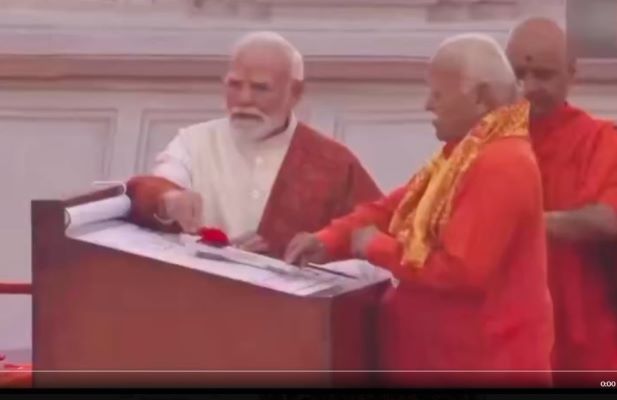
In a moment steeped in devotion and civilisational pride, Prime Minister Narendra Modi and RSS Sarsanghchalak Mohan Bhagwat on Tuesday led the sacred ‘Dhwajarohan Utsav’ at the Ram Janmabhoomi Temple, hoisting a specially designed saffron flag atop the divine structure. Uttar Pradesh Chief Minister Yogi Adityanath joined the sacred ritual, witnessed by thousands of devotees across Ayodhya and millions watching nationwide.
To witness the Dharma Dhwajarohan Utsav at Shri Ram Janmabhoomi Mandir is a moment crores of people in India and the world have waited for. History has been made in Ayodhya and this inspires us even more to walk the path shown by Prabhu Shri Ram. pic.twitter.com/3K9j6CQS68
— Narendra Modi (@narendramodi) November 25, 2025
- Specially crafted saffron flag hoisted atop the sanctum, symbolising Lord Ram’s Suryavanshi lineage
- Ayodhya witnesses powerful spiritual scenes as PM invokes collective strength for ‘Viksit Bharat’
- Devotees hail ceremony as a milestone in India’s civilisational renaissance and completion of the Ram Temple
A Flag of Faith: Crafted in Gujarat, Symbol of the Suryavanshi Legacy
The ceremonial flag—22 ft long and 11 ft wide, weighing around 2–3 kg—was designed by a parachute specialist from Ahmedabad, Gujarat, to withstand high altitudes and strong winds.
Today, before the Dharma Dhwajarohan Utsav at the Shri Ram Janmabhoomi Mandir in Ayodhya, I was blessed with the opportunity to pray and seek blessings at the Sapt Mandir complex within the temple premises. pic.twitter.com/9lZ1cdXlgw
— Narendra Modi (@narendramodi) November 25, 2025
It bears the Sun symbol, honouring Lord Ram’s Suryavanshi heritage, alongside sacred imagery of the Kovidara tree, Om, and radiant motifs symbolic of purity, sacrifice and spiritual energy.
Leaders emphasised that the flag represents not merely a religious emblem, but the enduring civilisational spirit of Bharat. The ceremony also marks the completion of the Ram Temple’s construction, a historic moment awaited for centuries.
A Day of Deep Devotion: Prayers at Garbh Grah, Sapt Mandir and Sacred Shrines
Earlier, PM Modi and Bhagwat offered prayers at the Shri Ram Darbar Garbh Grah and Shri Ram Lalla, amid powerful Vedic chants. The Ram Darbar houses the majestic idol of Lord Ram in royal splendour, alongside idols of Sita, Lakshman, Bharat, Shatrughan and Hanuman.
Upon arrival at Saket College helipad, PM Modi received a vibrant welcome from devotees before leading a grand roadshow to the temple complex.
He later visited the Sapt Mandir, honouring seven revered figures who shaped Lord Ram’s life—
• Maharishi Vashistha
• Maharishi Vishwamitra
• Maharishi Agastya
• Maharishi Valmiki
• Goddess Ahalya
• Nishadraj Guha
• Mata Shabari
He also offered prayers at the Sheshavtar Mandir and Mata Annapurna Mandir, completing a profound spiritual circuit.
“Ayodhya is Where Ideals Become Conduct”: PM Modi’s Message to the Nation
आज अयोध्या नगरी भारत की सांस्कृतिक चेतना के एक और उत्कर्ष-बिंदु की साक्षी बन रही है। श्री राम जन्मभूमि मंदिर के शिखर ध्वजारोहण उत्सव का यह क्षण अद्वितीय और अलौकिक है। सियावर रामचंद्र की जय! https://t.co/4PPt0rEnZy
— Narendra Modi (@narendramodi) November 25, 2025
Addressing devotees at the Ram Temple premises, PM Modi said Ayodhya represents the sacred land “where ideals transform into conduct,” and where Lord Ram’s life journey teaches the world the true meaning of ‘Maryada Purushottam’.
“When Shri Ram left Ayodhya, He was Prince Ram; when He returned, He had become Maryada Purushottam,” he said, emphasising the transformative role played by sages and devotees such as Vashistha, Vishwamitra, Agastya, Ahalya, Nishadraj Guha and Shabari.
He urged every visitor to Ayodhya to visit the Sapt Mandir, noting that these temples celebrate friendship, duty, devotion, social harmony and gratitude.
From Ayodhya to 2047: PM’s Call for Collective Strength to Build ‘Viksit Bharat’
Drawing a parallel between Ram Rajya and national development, PM Modi said:
“To build a Viksit Bharat, we need the same collective strength of society that guided Lord Ram.”
He highlighted that the last eleven years of governance have placed at the centre:
• women
• Dalits
• backward and extremely backward classes
• tribal communities
• farmers
• labourers
• youth
“With collective resolve, by 2047, when India marks 100 years of independence, we must build a truly Viksit Bharat,” he said.
The Prime Minister described the Ram Temple’s divine premises as “a centre of awakening for India’s collective capability.”