- Cost Comparisons with Europe Reveal a Competitive, Capability-Rich Package
- Beyond 30% Indigenous Content: Building a Long-Term Aerospace Ecosystem in India
- Source Code vs Integration Rights: Separating Myth from Operational Reality
- Why 4.5-Generation Fighters Still Dominate Modern Battlefields
- A Balanced Fleet Strategy Anchoring India’s Air Superiority Vision
NE DEFENCE BUREAU
AHMEDABAD, FEB 12
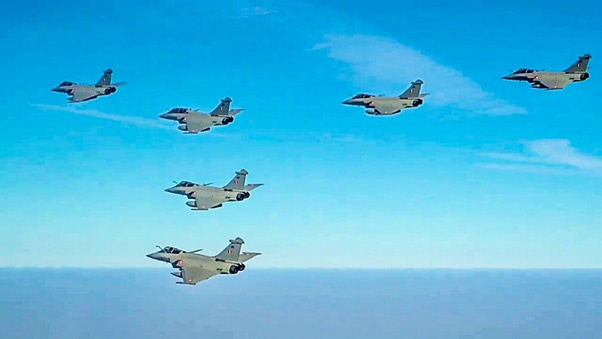
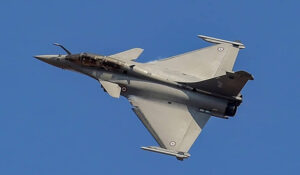
Few defence procurements in recent years have generated as much public debate as India’s proposed acquisition of additional Rafale fighter jets. Questions over cost, indigenous content, source code access and the relevance of 4.5-generation aircraft in an era of stealth platforms have dominated discourse.
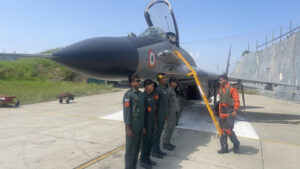
Yet, a deeper strategic reading suggests that much of the criticism stems from fragmented comparisons and technical misunderstandings. Far from being an extravagant outlay, the Rafale expansion represents a calibrated investment in operational readiness, technological capability, and long-term aerospace industrial growth. In a volatile geopolitical climate, air superiority is not secured by sentiment—but by structured capability building.
The Cost Question: Context Matters
The most persistent criticism revolves around cost. However, recent European fighter procurements offer important perspective.
Turkey’s agreement for 20 Eurofighter jets, inclusive of equipment and weapons, is projected at approximately €7 billion—placing the fully equipped per-unit cost above €350 million. Germany’s procurement of 20 latest-generation Eurofighters (aircraft only) stands at €3.75 billion, or roughly €187.5 million per aircraft. Italy’s deal for 24 upgraded Eurofighters is valued at €7.5 billion, pushing the per-unit figure to over €312 million when fully configured.
Across Europe, stripped-down aircraft prices typically range between €120–150 million per unit; once weapons, training, support packages and infrastructure are included, the cost rises to €200 million or more.
India’s Rafale negotiations aim to incorporate not only advanced aircraft—with upgraded avionics, enhanced survivability features and improved weapon integration—but also the establishment of domestic production and maintenance ecosystems. These elements are largely absent in comparable European contracts.
This broader package translates into technology transfer, local supply chain integration and long-term savings through indigenous sustainment. In effect, India is negotiating not just for platforms, but for enduring capability and cost efficiencies over the lifecycle of the fleet.
Indigenous Content: Beyond a Percentage Debate
Much commentary has centred on the reported 30% indigenous content (IC) figure. However, reducing indigenisation to a numerical percentage risks oversimplifying the larger structural shift underway.
The focus extends beyond component assembly. The proposed framework seeks to establish manufacturing and maintenance hubs within India, integrate domestic firms into the global Rafale supply chain, and develop advanced aerospace competencies.
Indian companies participating in production, maintenance and component manufacturing stand to gain high-technology exposure and long-term industrial contracts. Over time, this localisation reduces dependence on foreign vendors for spares and overhaul, lowering lifecycle costs.
Additionally, “Made in India” Rafale production capacity could unlock export opportunities, strengthening India’s aerospace footprint globally. Viewed through this lens, the deal aligns with the broader vision of Atmanirbhar Bharat—building sovereign capability rather than transactional procurement.
Source Code Access: Clarifying the Technical Reality
The issue of source code access has often been portrayed as a litmus test of strategic autonomy. In defence aviation, however, the term “source code” refers to the proprietary core software governing aircraft systems.
Global industry practice does not mandate full source code transfer for weapons integration. What operational flexibility requires are integration interfaces—secure technical pathways enabling the incorporation of indigenous weapons and upgrades without exposing the original manufacturer’s intellectual property.
Aircraft manufacturers worldwide guard source codes to prevent reverse engineering and proliferation risks. Forcing disclosure can complicate partnerships and escalate costs. Instead, integration rights and modular architecture provide practical sovereignty—allowing the Indian Air Force to deploy indigenous weapons systems without compromising proprietary protections.
The emphasis, therefore, is on operational independence rather than software ownership.
The Generational Debate: 4.5 vs Fifth-Generation Fighters
A recurring question is why India should invest in additional 4.5-generation aircraft when fifth-generation stealth fighters dominate strategic headlines.
The answer lies in operational doctrine. Only a handful of nations field fifth-generation fighters, and even they rely extensively on 4.5-generation platforms for the majority of missions.
Fifth-generation aircraft are optimised for specialised roles—deep penetration, high-threat airspace operations and strategic deterrence. However, routine air superiority patrols, ground support missions and maritime strike roles are effectively handled by advanced 4.5-generation fighters.
Contemporary conflicts demonstrate that a balanced fleet composition remains essential. Advanced 4.5-generation fighters deliver reliability, versatility and cost-effective sortie generation, while fifth-generation platforms provide strategic edge in contested scenarios.
India’s parallel pursuit of indigenous fifth-generation capability through the Advanced Medium Combat Aircraft (AMCA) project, alongside Rafale induction, reflects a layered air power doctrine—volume plus stealth, resilience plus technological edge.
A Strategic Investment in Air Dominance
The Rafale acquisition debate ultimately transcends procurement figures. It encompasses industrial growth, operational preparedness, technological integration and strategic deterrence.
By combining advanced aircraft capability with domestic ecosystem development, integration flexibility and fleet balance, India positions itself for sustained air superiority in an increasingly contested region.
Air power in the 21st century is not defined merely by generational labels—it is defined by readiness, adaptability and sovereign sustainment capacity. In that context, the Rafale expansion emerges not as a legacy decision, but as a forward-looking strategic imperative designed to secure India’s skies for decades to come.