NE DEFENCE BUREAU
NEW DELHI, AUG 23
What happens when India’s frontline Rafales are thrust into the heart of multinational air warfare—and then immediately redeployed for another high-intensity combat engagement? The answer came roaring across the skies of Australia and Malaysia as the Indian Air Force (IAF) completed a demanding dual-nation deployment that put its combat capability, tactical agility and interoperability to the test.
From the sprawling multinational battlespace of Exercise Pitch Black 2026 in Australia to the close-quarters tactical environment of Exercise Udara Shakti 2026 in Malaysia, the IAF demonstrated its ability to operate seamlessly with partner air forces while absorbing operational lessons and sharpening combat preparedness.
- Frontline Rafales join air forces from more than 20 nations in Australia’s demanding Exercise Pitch Black 2026
- Large Force Employment missions sharpen IAF’s combat readiness in a high-threat, multi-domain environment
- Indian contingent moves directly from Australia to Malaysia for intense bilateral Exercise Udara Shakti 2026
- IAF aircrew fly alongside and against Malaysian Su-30MKM and F/A-18 Hornet fighter aircraft
- Combat sorties, tactical manoeuvres and subject matter expert exchanges deepen air-combat interoperability
- Maintenance, mission planning and cultural exchanges broaden cooperation beyond the cockpit and strengthen professional camaraderie
The twin engagements provided a powerful demonstration of India’s expanding defence cooperation across the Indo-Pacific, combining high-end flying operations with mission planning, maintenance interaction and professional exchanges.
The Press Information Bureau (PIB) said the IAF had successfully concluded its participation in the two pivotal international flight engagements, describing the dual-nation deployment as a demonstration of its “operational reach, advanced tactical coordination, and commitment to strengthening strategic defence partnerships across the Indo-Pacific region.”
Rafales enter the multinational combat arena
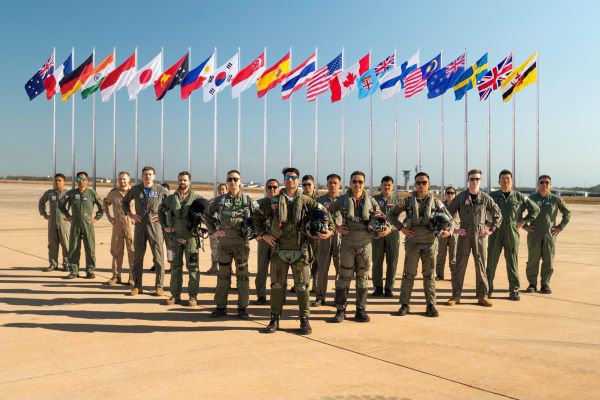
At Exercise Pitch Black 2026, hosted by the Royal Australian Air Force (RAAF), IAF Rafale fighter aircraft operated alongside air forces from more than 20 participating nations in one of the region’s major multinational air exercises.
The exercise subjected participating aircrews to complex Large Force Employment (LFE) missions in a high-threat, multi-domain operational environment.
For the IAF, the demanding setting offered an opportunity to integrate its frontline combat aircraft with diverse partner forces, practise complex tactical manoeuvres and develop common operating procedures in an environment designed to replicate the challenges of modern air warfare.
The exercise also facilitated cross-learning among participating air forces, allowing aircrew to gain exposure to different operational doctrines, tactics and mission execution practices.
From Australian skies straight into Malaysian combat drills
The IAF’s high-tempo deployment did not end with Pitch Black.
Following the Australian engagement, the contingent moved directly to Subang, Malaysia, for Exercise Udara Shakti 2026, a bilateral engagement with the Royal Malaysian Air Force (RMAF).
IAF aircrew undertook high-intensity combat sorties and joint tactical manoeuvres alongside—and against—Malaysian Su-30MKM and F/A-18 Hornet fighter aircraft.
The bilateral exercise focused on refining air-combat tactics, enhancing tactical coordination and providing opportunities for Subject Matter Expert Exchanges (SMEE).
The interaction also sought to improve combined operational flexibility, enabling the two air forces to understand each other’s procedures and enhance their ability to operate together in complex air scenarios.
Beyond the cockpit, another battle-tested bond
While fighter aircraft and combat sorties provided the visual spectacle, the deeper value of the two deployments extended far beyond the flight line.
Personnel from participating air forces exchanged knowledge on aircraft maintenance practices, mission planning and operational procedures, creating opportunities for ground crews and support personnel to learn from one another.
The Ministry of Defence underlined the wider character of the engagement:
“Throughout both deployments, joint operations extended beyond the cockpit to include maintenance practices, mission planning exchanges, and cultural interactions.”
Such interactions helped strengthen professional camaraderie across ranks while building familiarity between the personnel who make high-end air operations possible both in the air and on the ground.
Interoperability forged in the crucible of joint operations
Modern air combat increasingly demands more than individual platform superiority. The ability to communicate, coordinate and execute missions alongside partner forces can prove equally decisive.
Multinational exercises such as Pitch Black therefore provide participating air forces with opportunities to test operational readiness, develop common procedures and improve coordination during complex missions.
For the IAF, participation alongside more than 20 nations in Australia, followed by a focused bilateral engagement with Malaysia, created two distinct but complementary training environments.
The first tested multinational integration on a large scale; the second enabled concentrated tactical interaction with a key regional partner.
Together, they strengthened the IAF’s exposure to varied operational doctrines while enhancing its ability to adapt rapidly to complex mission requirements.
Two exercises. One strategic message.
The dual deployment also carries significance beyond the tactical lessons gathered by individual squadrons.
India’s growing participation in high-end international air exercises reflects its wider effort to deepen defence partnerships and contribute to security and stability across the Indo-Pacific.
The Ministry of Defence said the engagements reinforced the importance of continuous joint training in maintaining combat preparedness and developing interoperability among partner air forces.
The IAF, it said, remains committed to enhancing regional stability, fostering interoperability and advancing collaborative security initiatives through sustained joint training with air forces across the global defence community.
In the end, the message from Australia to Malaysia was unmistakable: India’s air power is not merely preparing to fight alone—it is learning to fly, fight and integrate with partners across an increasingly complex strategic sky.