- Gujarat’s roads reveal a hidden truth: the heat beneath the asphalt may be as damaging as the rain above it
- IIT Gandhinagar researchers deploy climate data, thermal modelling and machine learning to redesign the way concrete roads are planned
- Study identifies five distinct thermal microzones across Gujarat, exposing the flaws of one-size-fits-all pavement design
- Temperature differentials ranging from 16.3°C to 17.2°C can trigger invisible stresses that progressively weaken rigid pavements
- Framework could pave the way for region-specific, climate-resilient road design across India and the world
NE INFRASTRUCTURE BUREAU
GANDHINAGAR, JULY 21
The next time a concrete road cracks during the monsoon, the rain may not be the only culprit. The real damage could have begun months earlier—under the relentless Gujarat sun, through daily heating and cooling cycles that silently bend, stress and fatigue the road long before the first raindrop hits it.
In a potentially transformative breakthrough for India’s road infrastructure, researchers at the Indian Institute of Technology Gandhinagar (IITGN) have developed a data-driven framework that could help engineers build smarter, longer-lasting and climate-resilient concrete roads by accounting for the thermal behaviour of individual regions.
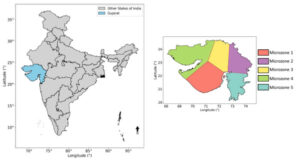
Using a combination of climate data, thermal modelling and machine learning, the researchers have identified five distinct thermal microzones in Gujarat, showing that concrete pavements across the State do not experience heat-related stress in the same way.
The finding challenges the conventional one-size-fits-all approach to rigid pavement design and could ultimately help road engineers tailor designs to local climate conditions—potentially reducing premature deterioration, maintenance costs and disruption to road users.
The study has been published in the American Society of Civil Engineers (ASCE) Journal of Transportation Engineering, Part B: Pavements.
The hidden enemy beneath the road
Concrete or rigid pavements are designed to distribute traffic loads across a wide area and are widely used for highways, airports and increasingly urban roads.
But roads do not merely bear traffic. They continuously interact with their environment.
Sunlight heats the pavement during the day. Temperatures fall at night. Seasonal changes bring further cycles of heating and cooling. These repeated changes create internal stresses within the concrete slabs.
The process can be compared to a chocolate bar repeatedly moved between extreme temperatures. Constant heating, cooling and reheating can alter its structure. In a similar manner, repeated thermal stress gradually affects concrete pavements, contributing to fatigue damage and ultimately reducing their service life.
In other words, by the time monsoon water enters the conversation, the road may already be carrying the scars of months of thermal stress.
Gujarat exposes the flaw in the ‘one climate zone’ approach
Gujarat provided an ideal natural laboratory for the study.
The State combines humid coastal conditions with intense inland summer heat. Its extensive coastline also brings variations in temperature, wind patterns and atmospheric conditions.
Yet, under the current practice, Gujarat and Rajasthan are grouped together as a single climatic zone for certain pavement design considerations.
The researchers argue that such broad classifications can fail to capture localised thermal behaviour. A zone spanning hundreds of square kilometres may contain significantly different climatic conditions, potentially affecting the accuracy of pavement performance predictions and the reliability of design recommendations.
“We started by thinking that if rigid pavements in different parts of the state experience different levels of thermal stress, it would really not be a good idea to build these roads using the same design recommendations,”
said Dr Sumit Nandi, former postdoctoral fellow in the Department of Civil Engineering at IITGN, first author of the study and currently a Scientist at the CSIR-Central Road Research Institute and Assistant Professor at the Academy of Scientific and Innovative Research (AcSIR).
126 grid points, decades of climate data and a machine-learning breakthrough
The researchers first mapped Gujarat’s spatial variability and created a dataset covering 126 land-based grid points.
“We began by capturing the spatial variability across the state, which led to a final dataset of 126 land-based grid points. Next, we obtained hourly weather data for these grid points using the ERA5 database developed by the Copernicus Climate Change Service,”
Dr Nandi explained.
The team analysed data from two distinct climatic periods—1961-1991 and 1992-2022—before feeding the information into thermal models of rigid pavements at all 126 locations.
The simulations examined three slab thicknesses—200 mm, 250 mm and 300 mm—based on IRC:58, the Indian Roads Congress guidelines for designing jointed rigid pavements for highways.
The study also assessed two surface albedo values:
- 0.30 — representing a conventional pavement surface
- 0.50 — representing a relatively “cooler” pavement capable of reflecting more sunlight
After simplifying the massive dataset without losing its essential information, the researchers deployed machine-learning algorithms to group locations with similar thermal behaviour.
The approach was similar to the way streaming platforms group songs or recommend films based on shared characteristics—except that here, the algorithms were grouping road locations according to patterns of heating, cooling and resulting pavement stress.
Five microzones emerge—and every road has a different thermal story
The study ultimately identified five distinct thermal clusters or microzones across Gujarat.
The bottom-up linear temperature differentials across these microzones ranged from approximately 16.3°C to 17.2°C.
A bottom-up temperature differential refers to the gradual change in temperature from the bottom of a rigid pavement to its top. Such temperature variations generate stresses within the slab and, over time, can contribute to cracking and progressive deterioration.
The differences may appear modest on paper, but over years of repeated thermal cycles, they can influence how a road performs.
“These findings are interesting and confirm that Gujarat does not exhibit a one-size-fits-all rigid pavement thermal behaviour. Our study shows that the design that performs well in one part of the state may not be robust enough to withstand local climate conditions in another part of the same state,”
said Dr Sushobhan Sen, Assistant Professor in the Department of Civil Engineering at IITGN and head of the Built Environment Lab, IITGN.
The road ahead: from Gujarat’s five zones to India’s climate map
The researchers believe the framework can be expanded beyond Gujarat.
“Extending the proposed framework to a pan-India scale represents a promising avenue for future research, facilitating the development of zone-specific thermal design charts for rigid pavements that can inform better-informed decisions that balance durability, safety and material use.”
Dr Sen, however, stressed that the present study does not account for the construction materials used in rigid pavements.
“It should be noted that the present study does not take into account the construction materials associated with building the rigid pavements. The quality of such materials may also adversely affect the life span of these roads. Future studies can also explore this crucial parameter,”
he added.
The monsoon lesson: build roads for the climate, not just the rain
The research offers a powerful rethink of how road durability should be approached.
While water infiltration, drainage failures and heavy rainfall can undoubtedly damage roads, the climate assault begins much earlier. Scorching summers, cool nights and seasonal temperature swings can create invisible stresses that progressively weaken concrete pavements.
The IITGN framework could help move India towards road designs that are:
- Climate-specific
- Region-specific
- Data-driven
- More durable
- More cost-efficient
- Better aligned with future climate variability
The approach is particularly relevant as India expands its infrastructure networks under major initiatives such as PM Gati Shakti and the Ministry of Road Transport and Highways’ Bharatmala Pariyojana, where road durability and lifecycle costs are becoming increasingly important.
The researchers acknowledged IITGN’s support through a Post-Doctoral Fellowship to Dr Nandi.
The ultimate message is simple but powerful: India’s future roads cannot be designed only for the traffic they carry or the rain they receive. They must also be designed for the climate they endure.