NE NEWS SERVICE
NEW DELHI/LUCKNOW, DEC 25
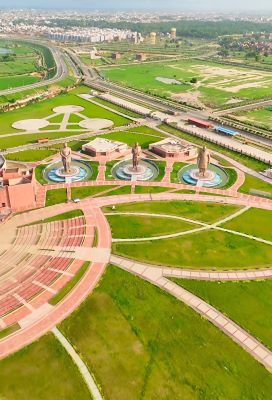
The Rashtra Prerna Sthal was inaugurated in Lucknow, Uttar Pradesh, as a national monument dedicated to the life, ideals and enduring legacy of former Prime Minister Atal Bihari Vajpayee. The inauguration coincided with Vajpayee’s 101st birth anniversary and marked the unveiling of a modern inspiration site celebrating India’s journey of unity, self-respect and service.
Addressing the gathering, the Prime Minister described the Rashtra Prerna Sthal as “a symbol of the vision that showed India the path of self-respect, unity and service,” adding that “every step and every effort must be dedicated to nation-building.” Emphasising collective responsibility, he said, “Sabka Prayas will realise the resolve of a Viksit Bharat.”
- National Inspiration Hub Opens: New landmark celebrates ideals of self-respect, service and nation-building
- Viksit Bharat Through Collective Effort: ‘Sabka Prayas’ key to achieving a developed India
- Antyodaya with Saturation: Welfare delivery redefined to ensure fulfilment for every beneficiary
- From Vision to Infrastructure: Connectivity, manufacturing and self-reliance shape modern India
- Nation Pays Tribute to Atal Vajpayee: Leaders recall his enduring impact on governance and politics
The Prime Minister noted that December 25 also marks the birth anniversaries of Madan Mohan Malaviya and Maharaja Bijli Pasi, recalling their contributions to India’s identity, inclusiveness and good governance. Extending Christmas greetings, he underlined India’s pluralistic ethos and the spirit of shared celebration.
Highlighting the transformation behind the project, he pointed out that the site was built on over 30 acres of land that had accumulated garbage for decades and has now been reclaimed as a space of national pride. He congratulated the workers, planners and the Uttar Pradesh administration for delivering the project.
Reflecting on national integration, the Prime Minister recalled the decisive role played by Syama Prasad Mookerjee in opposing “two constitutions, two emblems and two prime ministers,” and said the full implementation of the Constitution in Jammu and Kashmir marked a milestone in India’s unity.
On economic self-reliance, he traced the roots to India’s first industrial policy and said the mantra of self-reliance is now being taken to new heights, with Made in India products reaching global markets. He highlighted initiatives such as One District One Product, defence manufacturing corridors and the production of the BrahMos missile in Lucknow.
Underscoring social justice, the Prime Minister said, “We have given Antyodaya a new dimension of saturation, that is, fulfilment.” He explained that saturation ensures every eligible citizen is covered by welfare schemes without discrimination, calling it true good governance and true secularism. He noted that millions now have access to housing, sanitation, tap water, electricity, gas connections, free ration and free medical treatment for the first time.
He added that in the past decade, crores of Indians have moved out of poverty due to focused governance, with social security coverage expanding from about 25 crore people before 2014 to nearly 95 crore today. Insurance schemes for life and accident protection, he said, have already delivered claims worth nearly ₹25,000 crore to beneficiaries.
Recalling Vajpayee’s governance legacy, the Prime Minister credited him with laying the foundations for digital identity, telecom expansion, road connectivity, metro rail systems and the Golden Quadrilateral highways, which continue to shape 21st-century India.
He also stressed the importance of recognising contributions beyond a single family or ideology, noting that memorials and institutions across the country now honour a wide spectrum of national heroes, from Netaji Subhas Chandra Bose and Babasaheb Ambedkar to Sardar Patel and tribal leaders.
Separately, the Union Home and Cooperation Minister paid tribute to Atal Bihari Vajpayee on his birth anniversary, describing him as “a powerful and unforgettable figure in Indian politics.” In a message, he said that through the founding of the BJP, Vajpayee offered Indian politics a principled alternative rooted in national interest and cultural nationalism, adding that under his leadership, governance advanced “heritage and science simultaneously.”
The Rashtra Prerna Sthal, with its statues and narratives of national icons, now stands as a permanent reminder of India’s democratic values, inclusive development and the enduring call for collective effort in building a developed nation.