- Shree Swaminarayan Temple, Jetalpur Dham sets a green benchmark during bicentenary festival
- Around 4 lakh litres of wastewater treated daily through advanced recycling system
- Nearly 2.8 million litres reused in seven days for gardening, cooling and sanitation
- Eco-friendly initiative earns recognition from Global Excellence Book of Records – India
- Recycled water also supports farmers, promoting sustainable agriculture
NE SPIRITUAL BUREAU
JETALPUR, AHMEDABAD, MAR 9
In a remarkable blend of spiritual devotion and environmental responsibility, the Shree Swaminarayan Temple, Jetalpur Dham near Ahmedabad has emerged as a shining example of water conservation and sustainable resource management.
During the Bicentenary Festival held from March 5 to March 11, 2026, the temple implemented a large-scale wastewater recycling system to manage the heavy water consumption caused by the influx of devotees.
With thousands of visitors attending the celebrations daily, water usage naturally surged. To address this challenge responsibly, the temple introduced a modern wastewater treatment system designed to recycle water in an environmentally sustainable manner.
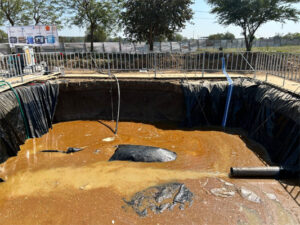
The initiative was implemented under the guidance of Shri Lalji Maharaj, ensuring that wastewater generated during the event was treated and reused efficiently.
Recycling Devotion into Conservation
The treated water was reused for multiple purposes including flushing, gardening and cooling, significantly reducing freshwater consumption and preventing environmental pollution.
The sewage treatment plant (STP) installed at the site operates in compliance with the regulations of the Gujarat Pollution Control Board (GPCB) and the Central Pollution Control Board (CPCB).
The plant was installed with technical support from Reciclar Technologies Pvt. Ltd. and Memtrix Technologies LLP.
How the Water Was Recycled
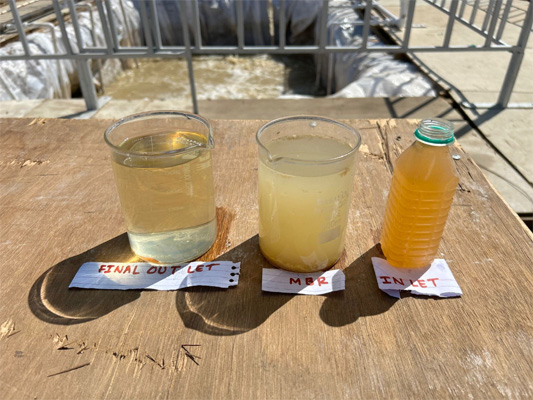
During the festival, wastewater was treated through a specialised multi-stage purification process.
In the first stage, an Inlet Chamber and Bar Screens removed large solid waste such as plastic, cloth and other debris to protect the downstream machinery.
The water was then transferred to an Equalization Tank, where the flow and quality of wastewater were stabilised. Continuous mixing through air blowers prevented odour formation and stopped solids from settling.
In the next phase, Biological Treatment (Aeration Tank – MBR) was carried out. Here, microorganisms were used to break down BOD, COD and other organic substances, with air blowers supplying the oxygen needed for the process.
The treated water then flowed into a Secondary Settling Tank (Clarifier) where biological sludge settled at the bottom, leaving clear water on top ready for reuse.
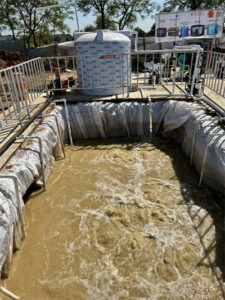
Millions of Litres Saved
During the seven-day festival, around 400,000 litres of wastewater were treated every day, resulting in approximately 2.8 million litres of recycled water.
Apart from being reused within the temple premises, a portion of the treated water was also provided to farmers, supporting water conservation and sustainable agricultural practices in nearby areas.
Recognition for Environmental Leadership
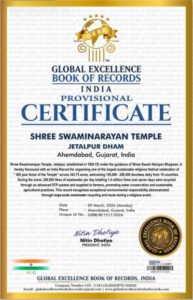
In recognition of this innovative and eco-conscious initiative, the festival was honoured by the Global Excellence Book of Records – India.
The recognition acknowledges the exceptional environmental responsibility demonstrated through large-scale wastewater recycling during a religious gathering.
Beyond the success of the festival, the initiative sends a powerful message: faith and environmental stewardship can go hand in hand.
By transforming wastewater into a valuable resource, Shree Swaminarayan Temple, Jetalpur Dham has set a compelling example of how religious institutions can play a meaningful role in promoting sustainability and responsible water management.