NE LEGAL BUREAU
NEW DELHI/CHENNAI, NOV 11
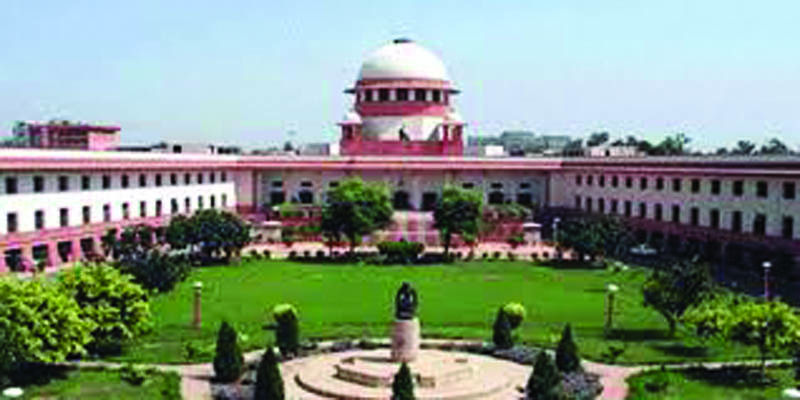
In a politically charged development with legal overtones, the Supreme Court on Tuesday directed the Election Commission of India (ECI) to file its response within two weeks on a batch of petitions filed by the DMK, CPI(M), West Bengal Congress, and Trinamool Congress leaders challenging the Special Intensive Revision (SIR) of electoral rolls in Tamil Nadu and West Bengal.
- Apex Court puts HC proceedings on hold; AIADMK supports EC’s Special Intensive Revision exercise
- DMK, allies stage state-wide protests calling SIR ‘politically motivated’; Stalin vows legal and public battle
- BJP says EC’s exercise is ‘transparent, routine and necessary’ to ensure clean voter rolls ahead of 2026 polls
A Bench comprising Justices Surya Kant and Joymalya Bagchi also requested the Madras and Calcutta High Courts to keep in abeyance ongoing proceedings relating to similar petitions filed against the ECI’s voter list revision exercise.
The apex court further allowed the intervention application filed by the AIADMK, which has extended its support to the ECI’s move, calling it “a legitimate exercise to ensure clean and accurate electoral rolls.”
EC’s Nationwide Roll Revision
The Election Commission had, on October 27, announced the second phase of its Special Intensive Revision (SIR) across 12 States and Union Territories — including Tamil Nadu, West Bengal, Kerala, Gujarat, Rajasthan, Uttar Pradesh, Madhya Pradesh, Puducherry, Goa, and Chhattisgarh.
According to the EC’s schedule, the second phase of SIR began on November 4 and will continue till December 4. Draft rolls will be released on December 9, followed by publication of final electoral rolls on February 7, 2026 — ahead of assembly elections due next year in Tamil Nadu, Kerala, Puducherry, and West Bengal.
DMK, Allies Term SIR a “Political Weapon”
Parallel to the legal proceedings, the Dravida Munnetra Kazhagam (DMK) and its allies in the Secular Progressive Alliance held statewide protests across Tamil Nadu on Tuesday, alleging that the SIR exercise was politically motivated and “threatens to disenfranchise lakhs of genuine voters.”
Chief Minister and DMK President M.K. Stalin, in a post on X, declared: “Stopping the SIR remains our foremost duty. This exercise is nothing but an attempt to snatch away the fundamental right to vote that underpins democracy.”
#SIR-ஐத் தடுப்பதே நம்முன் இப்போதுள்ள ஆகப்பெரும் கடமை!
💪 ஒருபுறம், மக்களாட்சியின் அடிப்படையான வாக்குரிமையையே பறிக்கும் #SIR எனும் ஆபத்துக்கு எதிராகச் சட்டப் போராட்டம் – களப் போராட்டம் –
🛡 மறுபுறம், தொடங்கப்பட்டுவிட்ட #SIR பணிகளில் குளறுபடிகளைத் தடுத்திட #WarRoom #Helpline -… pic.twitter.com/PEhiUVAc7R
— M.K.Stalin – தமிழ்நாட்டை தலைகுனிய விடமாட்டேன் (@mkstalin) November 11, 2025
He said the DMK’s struggle would be fought both in courts and on the streets.
“We have launched a war room and helpline to prevent irregularities and mobilized our legal teams to ensure that the people’s right to vote is protected,” Stalin added.
Across districts, cadres of DMK, Congress, CPI, CPI(M), MDMK, and VCK carried placards reading “Protect Democracy, Stop SIR” and held protests in front of collectorates, taluk offices, and municipal buildings. Party leaders claimed that the voter roll revision could be misused to delete entries in opposition strongholds, especially ahead of the 2026 polls.
BJP, AIADMK Defend EC’s Move
Reacting to the protests, BJP spokespersons in Tamil Nadu dismissed the allegations as “baseless political theatrics.”
BJP national spokesperson Gopal Krishna Agarwal said, “The Election Commission’s Special Revision is a standard pre-poll process aimed at eliminating duplicate and fake entries. The opposition is attempting to politicize a technical exercise meant to strengthen democracy.”
State BJP leader K. Annamalai also remarked that “the ECI’s work must be respected, not ridiculed.”
“Every voter deserves an accurate electoral roll. Transparency is the core of democracy — not selective outrage,” he said, urging all parties to cooperate with the ECI.
Supporting the EC’s position, AIADMK leaders stated that the revision would “ensure fair representation and curb malpractice.”
Legal and Political Implications
The Supreme Court’s intervention has brought temporary relief to opposition parties while keeping the ECI’s schedule intact for now. Political analysts note that the controversy could emerge as a major flashpoint ahead of the 2026 Assembly elections, particularly in Tamil Nadu and West Bengal, where ruling and opposition parties are sharply divided over the transparency of electoral procedures.
As the legal battle unfolds and the protests intensify, the issue of electoral roll integrity — once a bureaucratic routine — has now turned into a defining contest between political trust and institutional autonomy in India’s democratic landscape.
Understanding the Special Intensive Revision (SIR)
What It Means for Voters
What is the SIR?
The Special Intensive Revision (SIR) is a nationwide exercise undertaken by the Election Commission of India (ECI) to update and verify the electoral rolls. It ensures accuracy by including new eligible voters, deleting duplicates, and correcting existing entries.
Why is it conducted now?
The SIR is carried out periodically, especially ahead of major elections, to prepare a clean and updated voter list. The current phase (Nov 2025–Feb 2026) covers 12 States and Union Territories, including Tamil Nadu and West Bengal, both headed for Assembly elections in 2026.
What does it involve?
The revision includes house-to-house verification, field surveys, and digital cross-checking using Aadhaar linkage, where applicable. Draft rolls are published for public scrutiny before the final list is released.
Key Dates to Remember
Exercise Duration: Nov 4 – Dec 4, 2025
Draft Rolls Publication: Dec 9, 2025
Claims & Objections Period: Till Jan 2026
Final Electoral Rolls: Feb 7, 2026
Why it matters
The SIR ensures that every eligible citizen can vote, prevents fake or duplicate entries, and strengthens electoral integrity. However, opposition parties argue that the process must remain transparent to avoid disenfranchisement or political misuse.