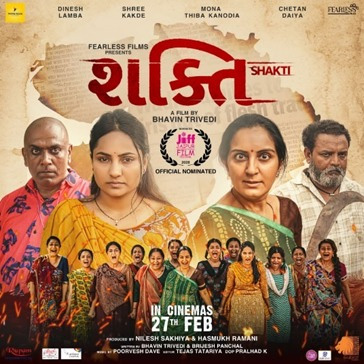
- Gujarati cinema dares to confront lived truths through a fearless women-led narrative
- Award-winning director Bhavin Trivedi turns a real-life story into raw, unfiltered celluloid
- Daring producers choose conviction over comfort to back a film that refuses to soften its voice
- Workshops, no makeup, real locations—cinema stripped to its emotional core
- JIFF 2026 nomination ahead of release signals early recognition for a film that unsettles and awakens
R MANICKAVASAGAM
At a time when cinema often seeks safety in spectacle, ‘Shakti’ arrives as an act of resistance. The trailer launch of the trendsetting Gujarati film—set for theatrical release on February 27—revealed not just a story, but a statement: women’s strength is not symbolic, it is collective, lived, and disruptive.
Directed by Bhavin Trivedi, Shakti is rooted in a real-life narrative that confronts power, silence and survival head-on. The film has already earned an official nomination at the Jaipur International Film Festival (JIFF) 2026, even before its release—an early nod to its courage and craft.
A Director Who Chose Discomfort Over Distance
Speaking at the trailer unveiling, Bhavin Trivedi reflected on the emotional toll of telling a story that does not offer easy answers.
“When the set fell silent, what disturbed me most was how familiar this pain felt,” Trivedi said. “There were moments I questioned whether I had the right to tell this story at all. But that discomfort became my moral compass. If it unsettled me, it meant the story demanded to be told.”
Widely praised for his sensitive yet unflinching storytelling, Trivedi has been lauded by peers and critics alike for transforming lived reality into cinema without dilution—using workshops, immersive rehearsals, and a strict no-makeup policy to preserve authenticity.
Producers Who Backed Conviction, Not Comfort
For producers Nilesh Sakhiya and Hasmukh Ramani, Shakti was never the “safe” choice.
“There are always easier films to produce,” Sakhiya shared. “But the moment we heard this story, we knew comfort was not an option. We were prepared for consequences—because some stories cost you peace before they earn you respect.”
Ramani added that backing Shakti meant trusting the audience’s conscience. “This film doesn’t entertain first—it confronts. And that is exactly why we stood by it.”
Performances That Confront the Self
Veteran actor Dinesh Lamba, returning to Gujarati cinema after many years, delivered what many at the screening described as a morale-boosting address to the team.
“Coming back to Gujarati cinema with Shakti felt like coming home to purpose,” Lamba said. “This role forced me to question my own silences. Acting here was not about performance—it was about responsibility.”
Shree Kakde, making her debut in Gujarati cinema, echoed the sentiment.
“Power and resistance are not abstract ideas in this film,” she said. “They live in the body. I discovered strengths—and fears—I had never named before.”
Actor Mona Thiba Kanodia described the emotional residue the film left behind.
“There is a scene that stayed with me long after the shoot ended,” she shared. “It changed how I see women—not as individuals fighting alone, but as a force that multiplies when united.”
She added that “‘Operation Sindhoor’ had exhibited the power of women to the world. This film will also demonstrate the need for women empowerment for the betterment of humanity as a whole.”
Cinema That Refuses to Soften Its Voice
Asked whether cinema should soften its tone if it makes audiences uncomfortable, the cast and director were unequivocal.
“Discomfort is the first step toward change,” Trivedi asserted. “If Shakti angers or unsettles viewers, then cinema has done its job.”
Shot in authentic locations, stripped of cosmetic gloss, and driven by intensive workshops, Shakti stands apart as a film that prioritises truth over treatment.
A Truth That Matters—Now
As the team reflected on how Shakti should be remembered, one sentiment resonated across voices.
“If this film is remembered for one truth,” a cast member summed up, “let it be this: silence protects power, but courage dismantles it. And today, that truth cannot wait.”
Presented by Fearless Films, Shakti positions Gujarati cinema firmly within the national conversation on women’s empowerment—proving that regional cinema can be both rooted and revolutionary.
The trailer launch was anchored by Gujarati cine veteran Abhilash.
When Shakti releases on February 27, it will not merely seek applause. It will seek awakening.