- 20-month build completed; customer supplies begin from Gujarat
- Plant to power India’s dairy, juice and beverage growth and serve as Asian export hub
- Leaders call it a milestone that strengthens speed, flexibility and future-ready food systems
- Facility expected to generate 300+ jobs and accelerate India’s aseptic packaging manufacturing
NE BUSINESS BUREAU
AHMEDABAD, DEC 11
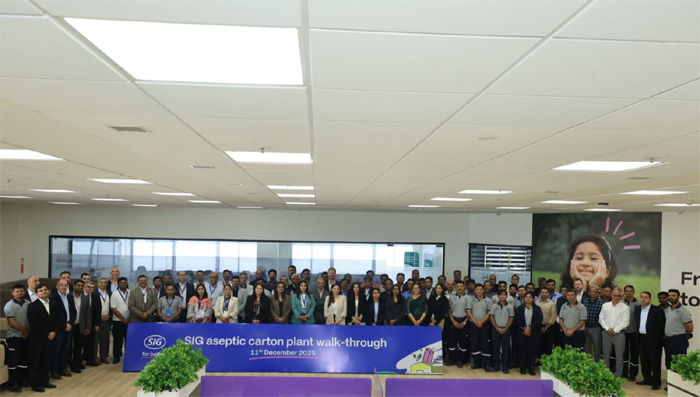
SIG, the global aseptic packaging solutions major headquartered in Neuhausen, Switzerland, announced that its first aseptic carton plant in India is now fully operational. The new Ahmedabad facility—completed in just 20 months—has begun customer supply in one of the world’s most fast-evolving food and beverage markets.
India is the world’s largest milk producer and a leading juice market, creating substantial demand for aseptic packaging. SIG’s Gujarat plant will serve its rapidly expanding filler base across dairy and non-carbonated soft drink brands, while also functioning as an export hub for neighbouring Asian markets—boosting India’s foreign-exchange inflows and export competitiveness.
“Bringing this facility into full operation is an important milestone for SIG and a strong reflection of our global strategy,” said Christoph Wegener, Chief Markets Officer, SIG. “At SIG, technology is meaningful only when it creates real value across the entire ecosystem—for customers, partners, and the planet. This plant will strengthen our ability to serve a fast-growing region with intelligent, future-ready packaging systems that combine speed, performance, and flexibility. We remain committed to building partnerships, unlocking new possibilities for our customers, and supporting India’s position as a rising hub for advanced food and beverage manufacturing.”
The facility has the potential to create over 300 direct jobs in Gujarat and many more across logistics, supply chains and allied industries. It is SIG’s tenth aseptic carton plant globally, signalling deep long-term commitment to India and Asia.
Since entering India in 2018, SIG has expanded at pace. The new plant allows the company to respond faster to rising demand, support export growth, and enhance supply chain resilience for regional markets.
Abdelghany Eladib, President & General Manager, India, Middle East and Africa at SIG, said: “India is an important building block of our regional strategy—dynamic, ambitious, and filled with opportunity. With this world-class facility now running in full swing, we are able to support our customers with greater agility while creating meaningful employment and strengthening local value chains. The plant will not only meet India’s growing demand but also contribute to the country’s presence in regional dairy and beverage exports. This achievement reflects the dedication of our team and the strong partnerships that continue to drive SIG’s progress across IMEA.”
Vandana Tandan, Head of Market India & Bangladesh, SIG, added: “Seeing this plant fully operational is a moment of immense pride for all of us. The state-of-the-art facility strengthens our ability to serve India’s fast-evolving dairy and beverage sectors. Local operations allow us to respond to customer needs with greater speed, flexibility and proximity—all essential in a market as dynamic as India. Over just seven years, SIG has built a strong and trusted presence here. Our commitment remains clear: to drive innovation, support job creation, and deliver sustainable, high-quality aseptic packaging solutions that meet the needs of consumers across India and neighbouring regions.”
With only a small percentage of India’s milk currently packaged and with cold-chain infrastructure still limited, aseptic cartons offer a high-impact, energy-efficient, and preservative-free way to deliver safe nutrition at scale. SIG’s new plant reduces lead times, improves delivery responsiveness, and strengthens the ecosystem for dairy, juice and non-carbonated beverage manufacturers.
With full operations now underway, SIG reinforces its position as a major contributor to India’s packaging transformation—driving sustainable manufacturing, boosting export potential, and powering the country’s rapidly expanding food and beverage sector.